Lately, a lot of people have been searching for Costco meat box giveaway scam on Facebook, and it’s easy to see why. The post looks convincing at first, especially because it’s written like a personal story instead of a typical advertisement.
One version that’s been circulating online involves a Facebook account named Amelia Hartwood, and the way the story is written is exactly what makes it spread so quickly.
If you’ve seen this post, here’s what’s actually going on and why so many people believe it, at least at first.
The Facebook Post That Started Circulating
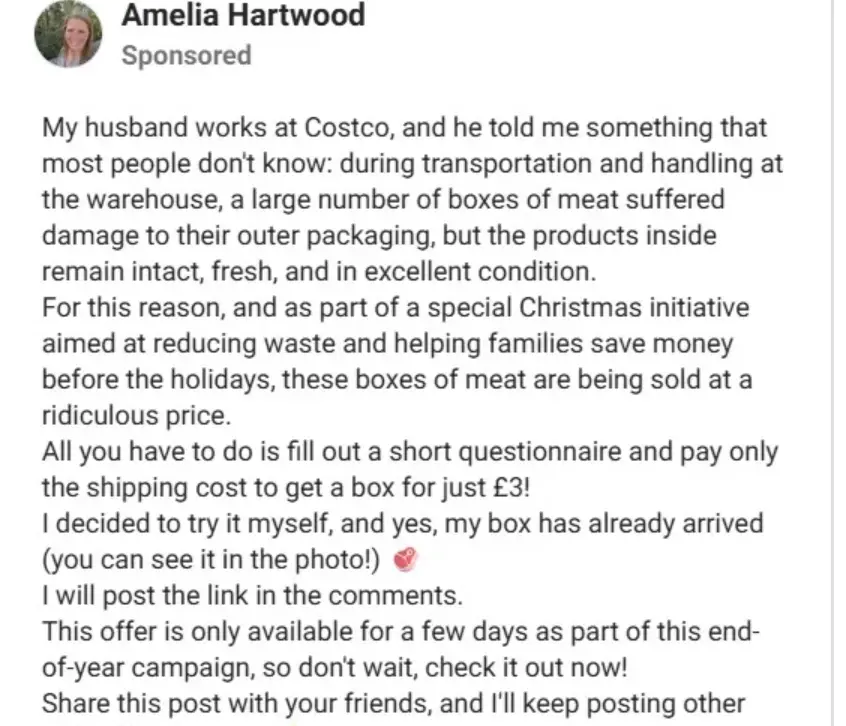
The post from the account claiming to be Amelia Hartwood reads more like a personal update than a promotion, which makes it feel believable.
In the post, she claims that her husband works at Costco and told her something interesting about what was happening at a warehouse.
According to the story, during transportation and handling, large boxes of meat supposedly had damage to their outer packaging, even though the meat inside was still fresh and perfectly fine. The post then says that because of this, Costco decided not to waste the meat. Instead, as part of a Christmas initiative meant to reduce food waste and help families save money, the company was allegedly offering these boxes to the public at extremely low prices.
That’s where the hook comes in.
The “Only Pay Shipping” Offer
The post goes on to say that anyone can claim a box of meat by simply filling out a short questionnaire online.
According to the story, the only cost involved is paying for shipping, which the post says is £3.
The wording makes it sound like a harmless deal:
- Fill out a short form
- Answer a few questions
- Pay £3 for shipping
- Receive a box full of meat
To make the story even more convincing, the post says that Amelia tried the offer herself earlier that day and that her box of meat already arrived. She then encourages others to try it quickly because the promotion is supposedly only available for a few days.
This kind of personal testimonial is what makes the post spread rapidly across Facebook groups.
Why This Story Feels So Convincing
The reason the Costco free meat box scam works so well is that the story is written in a very human way.
Instead of sounding like a corporate advertisement, it sounds like someone sharing a lucky discovery with friends.
The post combines several things that make people trust it:
- A personal story about a husband working at Costco
- A logical explanation about damaged packaging during transport
- A holiday-themed reason for giving the boxes away
- A small payment that doesn’t seem risky
- A time limit that creates urgency
When people see friends sharing the same post or tagging others, it becomes even more believable.
What Happens When People Click the Link
Once someone clicks the link attached to the post, they’re usually taken to a website that looks like a promotional page.
There, visitors are often asked to:
- Complete a short survey
- Enter personal details
- Confirm shipping information
- Pay the £3 shipping fee
At that point, the website may collect payment information or redirect users through various survey pages. The problem is that these pages have nothing to do with Costco.
In many cases, the goal is simply to collect personal data, generate advertising revenue, or charge small payments from as many people as possible.
The Big Problem With This Offer
The biggest issue with the Costco meat box giveaway story is that there’s no evidence Costco is running a promotion like this.
Large companies typically announce real promotions through:
- Their official website
- Verified social media accounts
- Email newsletters to members
Random Facebook posts from personal accounts claiming insider information are not how major retailers distribute promotions.
The emotional storytelling is simply designed to make the offer look legitimate.
Why Scammers Use Stories Like This
Stories like the Amelia Hartwood post are a common tactic in social media scams.
Instead of posting something that clearly looks like an ad, scammers create a relatable story so people feel like they’re hearing about a deal from a friend rather than a business.
Adding details like:
- A spouse working at the company
- Damaged packaging that would otherwise go to waste
- A holiday charity angle
makes the story feel logical enough that people don’t immediately question it.
But when you step back and think about it, the entire scenario falls apart pretty quickly.
What Do You Do When You Suspect A Phishing Attempt
In this digital age and time, almost everyone has at one time received a phishing text or email and often times they fall victim and get scammed. This is why it is imperative that you are always careful when you receive any text or email because one careless click on a link can cause a whole lot of problems for you. Now if you suspect a phishing attempt, here are what I advise you do:
- Do Not Respond to the text, because you responding is actually giving access to the scammers, simply delete it when you receive.
- Quickly change your password if you have mistakenly clicked on the link or given away your login details. Change your password to a strong and unique password.
- Keep an eye on your accounts for any unauthorized transactions.
- Also scan you devices for any malware.
By following these tips, you can significantly reduce your risk of falling victim to phishing scams and keep your personal and financial information safe.
Conclusion
The Costco meat box giveaway scam on Facebook is a good reminder of how easily convincing stories can spread online.
A post from someone like “Amelia Hartwood” claiming her husband works at Costco, explaining damaged packaging, and offering boxes of meat for just £3 shipping sounds believable on the surface. But in reality, these kinds of posts are usually designed to push people toward survey pages or payment forms that have nothing to do with Costco.
Whenever you see an offer that promises expensive products for almost nothing, especially when it’s shared through personal Facebook posts, it’s worth slowing down and double-checking the source. Because in most cases like this, the deal isn’t real… even if the story behind it sounds convincing.
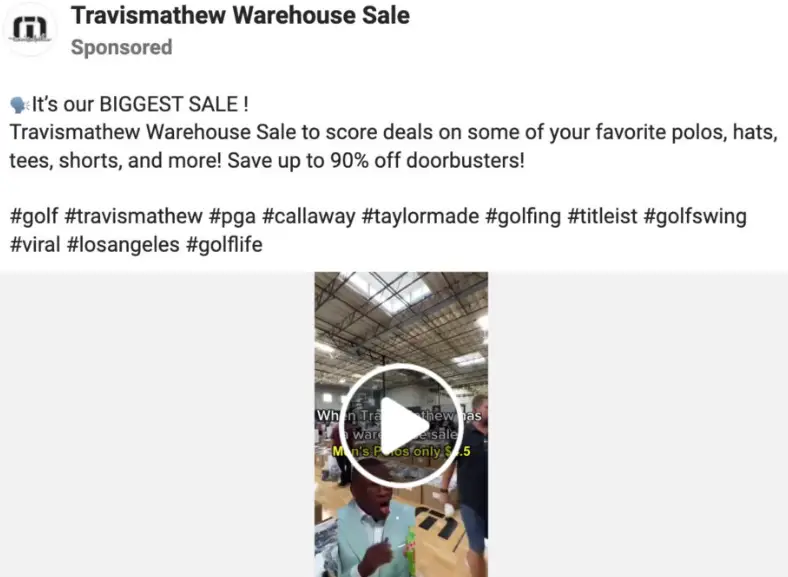
One of such scams we have discussed here is the Travis Mathew Warehouse Sale Scam