
Living with tinnitus isn’t just annoying, it can be exhausting. The constant ringing, buzzing, or humming in your ears can make it difficult to sleep, concentrate, or simply enjoy a quiet moment. That’s exactly why products like the Loera Tinnitus Device get so much attention. When you’ve tried different remedies without success, it’s easy to feel hopeful when a new device promises fast relief.
The Loera Tinnitus Device claims it uses neuromuscular stimulation to reduce tinnitus symptoms in just 30 seconds twice a day. The website also says it’s audiologist recommended and claims that 94% of users experience improvement within one week.
Those are impressive promises. Whenever I see medical claims like these, I always ask one simple question: Where is the evidence?
So I looked beyond the sales page to see what information the company actually provides. Here’s what I found.
If you’re searching for Loera Tinnitus Device reviews, this article should help you make a more informed decision.
What Is the Loera Tinnitus Device?
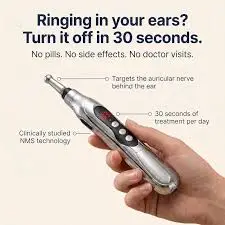
According to the company, the Loera Tinnitus Device is a small wearable device that’s placed behind the ear for about 30 seconds twice each day.
The company says it works by using neuromuscular stimulation to reduce ringing in the ears and improve tinnitus symptoms without medication or invasive procedures.
The product page also advertises:
- Neuromuscular stimulation technology
- 94% success rate
- Audiologist recommendation
- Non-invasive treatment
- 30-day money-back guarantee
- Fast daily treatment sessions
At first glance, it sounds like a breakthrough.
The problem is that several important questions remain unanswered.
The 94% Success Rate Sounds Impressive… But Where Did It Come From?
One of the biggest selling points is the claim that 94% of users experience improvement within one week.
Naturally, I wanted to know where that number came from.
I looked for:
- A published clinical study
- The number of participants
- The hospital or university involved
- The researchers who conducted the study
- Links to independent medical journals
I couldn’t find those details clearly provided alongside the claim.
When a company advertises a specific success rate, shoppers should be able to see exactly how that figure was calculated.
Without that information, it’s difficult to judge how meaningful the statistic really is.
“Audiologist Recommended” But Which Audiologist?
The website also describes the device as audiologist recommended.
Again, that’s a claim that naturally builds confidence.
But I wanted to know:
- Who is the audiologist?
- What are their qualifications?
- Where do they practice?
- Did they actually test this device?
Those answers weren’t clearly available.
Medical endorsements carry much more weight when the professionals involved are identified and their credentials can be independently verified.
An Interesting Detail About the Brand Logo
One detail that caught my attention had nothing to do with tinnitus treatment itself.
While examining the website, I noticed the brand logo image appears to use a filename indicating it was generated using Gemini AI during the design process.
On its own, that isn’t evidence that the device doesn’t work.
Many companies now use AI tools to create logos, graphics, and marketing materials. However, when a medical product relies heavily on trust, details like this naturally encourage people to look more closely at everything else being presented.
What Should a Legitimate Tinnitus Device Show?
Tinnitus is a genuine medical condition, and some forms of neuromodulation and neurostimulation are being researched by scientists.
But products making treatment claims should ideally provide clear supporting evidence.
That usually includes:
- Published clinical studies.
- Named researchers or medical professionals.
- Regulatory approvals where applicable.
- Clear explanations of how the technology works.
- Transparent information about testing and results.
These details help customers separate scientifically supported medical devices from products that rely mainly on persuasive advertising.
What About the Company’s Contact Information?
Before spending money on any health product, I also like checking how easy it is to contact the company.
Clear customer service information, physical business details, and transparent return policies all help build trust.
If basic company information is difficult to find, it’s worth taking extra time before placing an order, especially when buying a product that costs significantly more than a typical supplement.
Can Neuromuscular Stimulation Cure Tinnitus?
This is probably the biggest question people ask.
Current tinnitus research is ongoing, and while some neurostimulation approaches have shown promise in clinical settings, there is no universally proven device that eliminates tinnitus for everyone within a week. Tinnitus has many possible causes, including hearing loss, noise exposure, ear injuries, and certain medical conditions. What works for one person may not work for another. That’s why any product promising near-universal success deserves careful scrutiny
What I Think
I came away with mixed feelings.
The idea of a non-invasive tinnitus treatment is certainly appealing, especially for people who have struggled with ringing in the ears for years. However, strong medical claims require equally strong evidence, and I wasn’t able to find enough transparent information to fully support some of the biggest promises made on the product page. The device may exist, but before spending your money, I’d want to see clearly published clinical studies, identifiable medical professionals supporting the product, and more transparency from the company itself.
Conclusion
If you’re living with tinnitus, it’s completely understandable to look for relief. Just remember that the most convincing advertisements aren’t always backed by the strongest evidence. Taking the time to research a product carefully today could save you disappointment, and money, later.
Check out Horsepower Scrubber I reviewed earlier.