
There is a particular kind of supplement marketing that gets my attention because it speaks directly to something most of us have experienced: sitting down to work and realizing your brain simply isn’t cooperating. You read the same sentence twice, walk into another room and forget why you went there, or hit that familiar afternoon slump where concentrating on even a simple task feels harder than it should. MindWake is aimed squarely at that problem. It is marketed as a daily cognitive-support supplement for memory, focus, mental clarity and alertness, with a formula built around ingredients such as Alpha-GPC, Bacopa monnieri, Huperzine A, pterostilbene and B vitamins.
On paper, MindWake is more interesting than a lot of generic “brain health” supplements because the formula is built around the cholinergic system rather than simply throwing a long list of vitamins into a capsule and calling it a nootropic. Alpha-GPC and Huperzine A are particularly relevant here, while Bacopa has a longer history of being studied for memory and cognitive performance. That doesn’t mean taking MindWake is guaranteed to make someone sharper or give them a better memory, but there is at least a reasonable scientific idea behind why these particular ingredients were chosen.
The question is whether that promising ingredient concept translates into a supplement that is actually worth buying.
What Is MindWake?
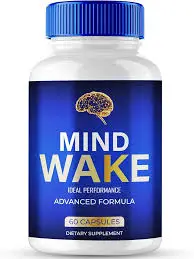
MindWake is a dietary supplement sold as a cognitive support formula. The product is positioned for adults who want everyday support for concentration, memory, mental clarity and alertness rather than as a treatment for Alzheimer’s disease, dementia, ADHD or another medical condition. The current brand materials describe the formula as containing Alpha-GPC, Bacopa monnieri, Huperzine A, pterostilbene, magnesium citrate and vitamins B2, B6, B9 and B12, with rice flour also listed among the other ingredients.
That is worth understanding before getting caught up in the word “memory” in the advertising. MindWake is not an approved medication for memory loss, and the brand itself describes it as a dietary supplement rather than a drug. There is a big difference between supporting normal cognitive function and treating an actual memory disorder.
For somebody who is simply looking for a daily supplement to complement an otherwise healthy lifestyle, that distinction may not be a dealbreaker. But if someone is experiencing significant or worsening memory problems, I wouldn’t use a supplement like MindWake as a substitute for finding out why those symptoms are happening.
MindWake Ingredients: What’s Actually in It?
The ingredient combination is probably the strongest part of the product.
Alpha-GPC is a source of choline and is commonly used in nootropic formulas because choline is involved in the production of acetylcholine, a neurotransmitter involved in memory and attention. MindWake pairs Alpha-GPC with Huperzine A, which works differently: it inhibits acetylcholinesterase, the enzyme responsible for breaking down acetylcholine. In simple terms, the two ingredients are being used to target different parts of the same general pathway.
Then there is Bacopa monnieri, sometimes called Brahmi. This is probably the ingredient I find most interesting from a research perspective because it has been studied in controlled trials involving memory and cognitive performance. A randomized placebo-controlled trial involving older adults, for example, reported improvements in certain memory and cognitive measures after standardized Bacopa supplementation over 12 weeks. That is useful evidence for Bacopa as an ingredient, although it doesn’t prove that the particular Bacopa preparation or dose used in MindWake will produce the same result.
Pterostilbene is a compound related to resveratrol and is generally associated more with antioxidant and cellular-aging research than with dramatic improvements in everyday memory. The formula also contains magnesium citrate and B vitamins including B2, B6, B9 and B12, which have established roles in normal nervous-system function.
So, as an ingredient list, MindWake isn’t random. There is a recognizable logic behind it. The problem comes when we move from “these ingredients have been studied” to “this finished product will improve your memory.” Those are two very different statements.
The Biggest Problem I Found With the MindWake Formula
For me, one of the most important pieces of information missing from the currently available product material is the exact amount of each active ingredient per serving.
Knowing that a bottle contains Alpha-GPC, Bacopa and Huperzine A is useful, but it isn’t enough to judge how strong the formula actually is. Dose matters enormously with supplements, particularly with ingredients such as Huperzine A that are generally used in relatively small amounts.
The MindWake material reviewed for the current product information identifies the ingredients but doesn’t provide the full per-serving Supplement Facts information needed to independently assess every dose. That makes it harder to compare the formula with the amounts used in clinical studies or with competing nootropic supplements.
This is one of those situations where the ingredient list looks impressive at first glance, but I wouldn’t use the number of ingredients as evidence that the product is necessarily stronger or better. Ten ingredients at sensible doses can be useful; ten ingredients without meaningful amounts can simply make a label look busy.
Does MindWake Really Improve Memory?
This is where I would bring expectations back down to earth.
There is research surrounding several individual ingredients in MindWake, particularly Bacopa, Alpha-GPC and Huperzine A. But that isn’t the same as having a clinical trial showing that MindWake itself improves memory in healthy adults.
I couldn’t find a finished-product clinical trial demonstrating that taking MindWake produces the memory improvements promised in its marketing. The available material discusses the ingredients and their mechanisms rather than presenting strong independent evidence on the complete MindWake formula.
That doesn’t mean MindWake cannot work for somebody. It means the evidence needs to be described honestly. If a supplement contains an ingredient that has shown promise in a 12-week trial, you can’t automatically assume the finished capsule will reproduce those results, especially when the exact dose and extract specifications aren’t fully clear.
This is probably the biggest thing I would want readers to understand before buying any nootropic supplement, not just MindWake.
What About the MindWake Reviews?
The customer feedback is a little more complicated than simply looking at the testimonials on the official website.
MindWake’s own site features highly positive customer stories describing improvements in focus, memory, energy and productivity. Those are useful for seeing how the company positions the product, but they are still testimonials presented by the seller.
There is also an Amazon listing associated with MindWake that currently shows a 3.4 out of 5-star rating from 1,653 reviews, which is a much more mixed picture than you would get from reading only the brand’s own testimonials. The same Amazon page shows other MindWake-related listings with different ratings, so it is important not to assume every MindWake product page represents exactly the same formulation.
That 3.4-star rating doesn’t prove that MindWake doesn’t work. It does, however, make it difficult to support the idea that the product produces an obvious cognitive transformation for practically everyone who takes it. When a supplement is genuinely life-changing for a large majority of users, I expect the broader review picture to be considerably more consistent.
There are also a lot of newly published MindWake review pages online, but I would be careful with those as evidence. Some are clearly written around the same search terms and product-marketing language, and one of the most detailed current articles explicitly identifies itself as a paid advertorial.
For me, independent customer experiences are much more useful than a dozen nearly identical articles telling me that a supplement is a “daily brain upgrade.”
MindWake Price: Is It Expensive?
MindWake isn’t a particularly cheap nootropic.
The current pricing information reviewed for the brand lists two bottles at $158, three bottles at $207 and six bottles at $294. That works out to approximately $79, $69 and $49 per bottle respectively, with the larger packages bringing the cost per bottle down.
Whether that is reasonable depends on what you are comparing it with. There are plenty of cognitive supplements available for considerably less, although they may not contain the same combination of ingredients.
Personally, I wouldn’t buy six bottles simply because the per-bottle price looks better. With a supplement like this, I would want to know how my body responds before committing to a six-month supply. Saving money per bottle isn’t much of a bargain if you end up with five unopened bottles sitting in a cupboard.
MindWake Side Effects and Safety
The presence of Huperzine A is another reason I wouldn’t treat MindWake as something completely casual.
Huperzine A affects acetylcholinesterase, meaning it can influence acetylcholine levels in the body. That mechanism is also relevant to certain prescription medications used for cognitive disorders, so anyone already taking medications that affect the cholinergic system should speak with a doctor or pharmacist before adding a Huperzine A-containing supplement.
That doesn’t mean Huperzine A is automatically dangerous, and it doesn’t mean MindWake is unsafe for everyone. It simply means the formula deserves a little more consideration than a basic multivitamin.
The same general advice applies to anyone who is pregnant or breastfeeding, has a medical condition or takes prescription medication. A supplement marketed for memory and cognition isn’t something I’d recommend blindly adding to an existing medication routine.
Is MindWake Legit or a Scam?
I wouldn’t call MindWake a fake supplement simply because the marketing is ambitious.
There is a real product, an ingredient list, retail listings and an established sales operation. The bigger question is whether the advertising creates expectations that are stronger than the evidence.
There is also one odd detail I came across that makes me less comfortable with the brand’s overall presentation. The July 2026 Newswire material noted inconsistencies across MindWake’s own online pages, including pages or metadata referring to unrelated products such as skin rejuvenation or weight-loss support even though the product itself is presented as a cognitive supplement. The reason for those mismatched descriptions isn’t clear, but it is certainly something I would want cleaned up by the company.
I also found a separate domain, mindwake.store, that ScamAdviser currently rates very poorly and describes as potentially unsafe. That does not establish that the MindWake product itself is a scam, but it does mean buyers should be careful about which website they use when searching for the product.
In other words, I wouldn’t take a blanket “MindWake scam” headline at face value. The more useful question is whether you’re buying the actual product from the intended seller and whether its claims are realistic.
Conclusion
MindWake is one of those supplements where I can understand the appeal without being convinced by all of the marketing.
The formula has a sensible nootropic concept behind it. Alpha-GPC, Bacopa monnieri and Huperzine A are not ingredients that were randomly pulled from a hat, and there is legitimate research interest around several of them. Bacopa in particular has a respectable history of cognitive research, while the combination of Alpha-GPC and Huperzine A at least gives the formula a coherent cholinergic angle.
Where I become more cautious is the leap from promising ingredients to predictable results. There isn’t enough independent evidence showing that the finished MindWake supplement itself improves memory, focus or mental alertness to the degree a buyer might expect from some of the advertising. The lack of clearly available per-serving doses also makes it harder to judge how closely the formula corresponds to the research behind its individual ingredients.
And then there is the customer feedback. An Amazon rating around 3.4 stars from more than 1,600 reviews is not disastrous, but it certainly isn’t the picture of a universally effective supplement either.
So, is MindWake legit? It appears to be a real dietary supplement, not an imaginary product. Does MindWake really work? Some people may notice a difference, particularly depending on their baseline nutrition, sleep, stress and individual response, but the current evidence doesn’t justify promising dramatic memory improvement for everyone.
For me, MindWake falls into the category of interesting formula, but not a proven memory booster. I wouldn’t buy it because I was worried about ordinary forgetfulness and expected it to transform my concentration overnight. If I were considering it, I would first want to see the complete Supplement Facts panel with the exact doses and would be much more interested in that information than another glowing testimonial.
The ingredient selection gets my attention, but the finished-product evidence isn’t strong enough for me to give it a higher rating. The product has potential, but potential and proof are two different things, and I think buyers should know that before spending $158 or more on a multi-bottle package.