
My Fairphone Fairbuds 2 arrived today, and after spending some time listening to music, trying the noise cancellation, and testing them with a Nintendo Switch 2, I can already see where Fairphone has made improvements over the previous generation. The biggest difference for me is the sound. The bass is noticeably stronger, and I like that I can adjust it through the companion app rather than being stuck with whatever sound profile the earbuds come with. They also feel well made, with a charging case that has a premium feel when opening and closing it. There are a few things I am still getting used to, particularly the touch controls, but my first impression is that Fairphone has made a worthwhile improvement.
I have two other pairs of earbuds to compare them with: the first-generation Apple AirPods Pro and the Earfun Air Pro 4. Having those around makes it easier to judge where the Fairbuds 2 stand, rather than relying on the specifications or Fairphone’s marketing alone. The Fairbuds 2 hold their own when it comes to sound quality, especially with music, but the noise cancellation is not on the same level as either of my other pairs. That is something worth considering if you spend a lot of time travelling or want to shut out the noise around you.
What Are the Fairphone Fairbuds 2?
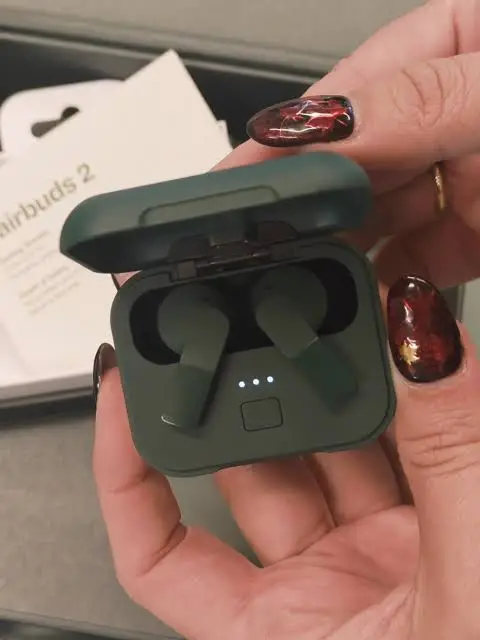
The Fairphone Fairbuds 2 are wireless earbuds designed around an idea that is still unusual in this category: you should be able to repair them instead of throwing them away when a small component stops working. They cost around $119, £99 or €119, depending on the market, and feature replaceable parts, including the batteries in both the earbuds and the charging case. Fairphone says the design includes seven user-serviceable parts, and basic repairs can be carried out with a simple screwdriver.
This approach is a big part of what separates the Fairbuds 2 from many competing wireless earbuds. With conventional models, a failing battery can effectively mean the end of the product because replacing it is difficult or uneconomical. Fairphone’s approach gives owners a better chance of keeping their earbuds for longer, which is particularly appealing if you dislike replacing electronics that are otherwise still working perfectly well.
The Fairbuds 2 also have IP54-rated protection against dust and splashes, support the LDAC audio codec, and include active noise cancellation. Their 11mm bio-cellulose dynamic drivers are intended to deliver a fuller listening experience, while the companion app provides a five-band equalizer for adjusting the sound. The design uses recycled and responsibly sourced materials, and Fairphone also highlights its PFAS-free construction.
Of course, repairability only matters if the earbuds are enjoyable to use in the first place. Fortunately, my early experience with the sound has been positive, even though I have some reservations about the noise cancellation.
Sound Quality: The Bass Is Much Better
The first thing I noticed when I started listening to the Fairbuds 2 was the stronger bass. Compared with the previous generation, the low end feels more substantial, giving modern electronic music more weight without making the whole presentation sound dull. This was the improvement I appreciated most because bass can make a real difference to how enjoyable certain genres are, particularly when a track relies on a strong rhythm.
I also tried classic rock and jazz to see whether the stronger bass came at the expense of everything else. With modern music and classic rock, the standard EQ setting already sounded good to me, so I did not feel the need to start adjusting every frequency. The sound was enjoyable without requiring much work in the app, which is how I prefer my everyday earbuds to behave.
Jazz was where I had some fun experimenting with the equalizer. I tried the treble boost, and the brass instruments stood out in a way I really liked. Treble adjustments can sometimes make music sound harsh or tiring, especially when cymbals and higher notes become too sharp, but I did not find that effect particularly bothersome with the tracks I tested. The extra emphasis helped bring out details that I wanted to hear without ruining the overall listening experience.
Compared with my first-generation AirPods Pro and Earfun Air Pro 4, I would not say the Fairbuds 2 are miles behind in sound quality. They can be enjoyable across different genres, and the equalizer gives you some room to tailor the sound to your taste. I would still encourage people to listen for themselves if possible, since preferences vary, but I have been pleased with what I have heard so far.
The Companion App Is Simple and Works Well
I have had no problems with the Fairbuds app so far. It has been responsive, and I found it straightforward to use when changing the equalizer settings. I did not have to fight with menus or repeatedly try to get a setting to apply, which is always a relief when all you want to do is listen to music.
The app is fairly basic, so there is not a huge amount to explore beyond the available controls and settings. Personally, I do not consider that a major drawback. I would rather have a simple app that works reliably than one packed with features I will probably never touch. The five-band equalizer is useful enough to make a noticeable difference to the listening experience, and the standard profile was already good for the music I played.
I also appreciate being able to adjust the sound without having to rely on a single factory tuning. If you mainly listen to electronic music, you may prefer a different balance from someone who spends most of their time listening to jazz or acoustic recordings. Having that flexibility makes the Fairbuds 2 easier to live with.
Active Noise Cancellation: My AirPods Pro and Earfun Are Better
This is where I noticed a more obvious difference between the Fairbuds 2 and my other earbuds. I compared them with my first-generation AirPods Pro and the Earfun Air Pro 4, and both of those pairs provide noticeably better active noise cancellation in my experience. The Fairbuds 2 can reduce some surrounding noise, but they do not isolate me from the environment as effectively as the alternatives I already own.
That does not make the noise cancellation useless. It can still be helpful for reducing certain background sounds, especially steady environmental noise, but I would not buy the Fairbuds 2 primarily for their ANC performance. If your main priority is making a noisy train journey, a busy office, or a flight feel quieter, the difference may matter more to you than it does to someone who mostly listens to music at home or while walking around.
The transparency mode also deserves a mention. Some users may find the way it reproduces outside sounds a little unnatural, so it is worth trying it yourself if you frequently switch between noise cancellation and transparency. I would have liked the overall noise-control experience to be closer to what I get from my AirPods Pro or Earfun earbuds, but the sound quality and repairable design remain strong reasons to consider the Fairbuds 2.
The Touch Controls Take Some Getting Used To
The touch controls have been one of the less straightforward parts of my first day with the Fairbuds 2. I am still getting used to exactly where to touch the earbuds and how to avoid accidentally interacting with the wrong part. The small microphone used for active noise cancellation sits quite close to the touch-sensitive area, and I found that touching the microphone accidentally could produce an unpleasant sound distortion.
It is an irritating little issue because you want to adjust your earbuds naturally without worrying about whether your finger is in the right place. When you are pushing an earbud back into position or trying to operate a control quickly, it is easy to make contact with an area you did not intend to touch. I have not used them long enough to know whether this will become second nature, but it is something I noticed immediately.
The earbuds otherwise feel well made, and I have no major complaints about their physical construction at this stage. I particularly like the charging case, which feels solid and has a satisfying, premium feel when I open and close it. Since they only arrived today, I cannot make a meaningful judgment about long-term durability, but the initial impression is encouraging.
Bluetooth Connection and Latency
The Bluetooth connection has been stable during my initial testing. I moved away from my phone and into another room, and the connection continued working until I was more than five metres away with a wall between us. The exact distance will depend on the layout of your home and other sources of wireless interference, but I did not experience the sort of constant dropouts that would make listening frustrating.
I also watched ordinary YouTube videos and did not notice any significant delay between the picture and the sound. That is important for anyone who watches videos on their phone or tablet because even good-sounding earbuds can become annoying if the audio consistently falls behind what is happening on screen.
I then ran a latency test, which gave me results of approximately 20–50 milliseconds. I was happy with that result for general listening and video use, although latency can vary depending on the device, codec, and testing method. It is also worth remembering that a result from one test does not guarantee the same performance across every phone, computer, or application.
Overall, the connection and latency have been good in my early use. I have not had to keep reconnecting the earbuds, and everyday video watching has felt natural enough that I have not been distracted by audio delay.
Gaming With the Fairbuds 2 on Nintendo Switch 2
I also connected the Fairbuds 2 to my Nintendo Switch 2 because I wanted to see how they handled gaming. Pairing was straightforward, and the audio was perfectly enjoyable for casual games such as Mario Kart and Zelda. The sound quality was good, and I had no trouble getting started, so they can certainly be used for gaming when precise timing is not the main concern.
Competitive games are another matter. I noticed more latency than I would want for shooters or games where you rely on hearing a sound and reacting immediately. When a footstep, gunshot, or other important audio cue arrives late, it can affect how responsive the game feels. For casual play, this was not a major problem, but I would choose a different audio setup if I were playing competitively.
The Switch 2 may also be part of the explanation because its Bluetooth audio support and available codecs can affect latency. I have not established exactly how much of the delay comes from the console, the Bluetooth connection, or the earbuds themselves, so I would not blame the Fairbuds 2 alone. The important thing is that the combination worked well for relaxed gaming but was less suitable for situations where every millisecond counts.
If gaming is a major reason you are considering these earbuds, I would look at a low-latency gaming headset or a wired option instead. The Fairbuds 2 are primarily everyday wireless earbuds, and I would not expect them to replace dedicated gaming audio equipment in competitive situations.
Repairability Is the Fairbuds 2’s Biggest Advantage
One reason I find the Fairbuds 2 interesting is that Fairphone has made repairability a central part of the design rather than treating it as an afterthought. The ability to replace the batteries in the earbuds and charging case is particularly useful because battery degradation is one of the reasons people eventually stop using wireless earbuds. Even if the speakers and electronics are still working, a battery that no longer holds enough charge can make the whole product inconvenient.
Being able to replace individual components also offers a more sensible alternative to discarding the entire set when one part fails. That is a practical benefit, not just an environmental talking point, provided replacement parts remain available and repairs are affordable. Fairphone’s modular approach gives buyers a reason to consider the long-term ownership experience rather than judging the product solely by its first few weeks of use.
The environmental benefits also depend on how long people actually keep the earbuds, whether replacement components can be obtained, and how easy repairs are in practice. Still, the design is a welcome change in a market where small electronics are often difficult to repair. If you care about reducing electronic waste, the Fairbuds 2 offer something that many competing earbuds do not.
Are the Fairphone Fairbuds 2 Worth $119?
At around $119, the Fairbuds 2 are competing with several established wireless earbuds, including models that may provide stronger noise cancellation or different sound profiles. Their value therefore depends on what you want most. If your main priority is the strongest possible ANC, my early comparison suggests that the AirPods Pro Gen 1 and Earfun Air Pro 4 are better choices in that particular area.
If sound quality, a customizable equalizer, stable everyday connectivity, and repairability matter more to you, the Fairbuds 2 make a stronger case for themselves. I have enjoyed listening to different genres on them, and the improved bass is a noticeable step forward from the previous generation. The app has also worked well for me, and I like the solid feel of the charging case.
There are still a few things I want to learn through longer use, especially how comfortable the earbuds remain over extended listening sessions, how the battery holds up, and whether I get more accustomed to the touch controls. Since my pair only arrived today, it would be premature to make sweeping claims about durability or long-term reliability. My impressions so far are positive overall, but they are based on initial testing rather than months of ownership.
My First Impressions of the Fairphone Fairbuds 2
After testing the Fairphone Fairbuds 2 against my AirPods Pro Gen 1 and Earfun Air Pro 4, I think Fairphone has made a meaningful improvement in sound quality. The bass is stronger, the equalizer gives me useful control over the sound, and both modern electronic music and classic rock sound good with the standard setting. I also enjoyed using the treble boost for jazz, particularly when listening to brass instruments.
The weaker point is noise cancellation, which does not match what I get from my other two pairs. The touch controls will also take some getting used to, especially because accidentally touching the small ANC microphone can cause unpleasant distortion. On the positive side, the charging case feels premium, the app has worked reliably, and the Bluetooth connection has been stable during my initial tests.
I would recommend considering the Fairbuds 2 if you want enjoyable sound and genuinely repairable earbuds rather than a product you may have to replace when its batteries wear out. I would be less enthusiastic about recommending them to someone whose number-one priority is class-leading ANC or competitive gaming performance. My pair has only just arrived, so I will need more time to judge battery life, comfort, and durability, but my first impression is that the Fairbuds 2 get the fundamentals of everyday music listening right while offering a repairable design that sets them apart.
Check out Necklow Sleep Pillow that I reviewed, earlier.