
The Rokid Max 2 AR Glasses are designed for people who want to enjoy a large screen without having to carry around a television or sit in front of a computer monitor. They look like ordinary glasses, but they have two small displays built into the lenses that allow you to watch movies, play games and view content from a connected device on what feels like a much larger screen. Rokid advertises a virtual display of up to 215 inches, which is one of the main attractions of these glasses.
I already owned the original Rokid Max, so I was particularly interested in seeing what Rokid had improved with the Max 2. I have just received my new pair, and after comparing them with the original model, I can already see some changes that make me happy with the purchase. The biggest improvement for me is the picture quality, especially around the edges of the display. The original glasses had some noticeable blur around the edges, but the image on the Max 2 looks much clearer in those areas. The colours also look better, and the overall build quality feels excellent. I will get into my experience further down, but first, let’s look at what these glasses offer and what you should expect before spending your money.
What Are Rokid Max 2 AR Glasses?
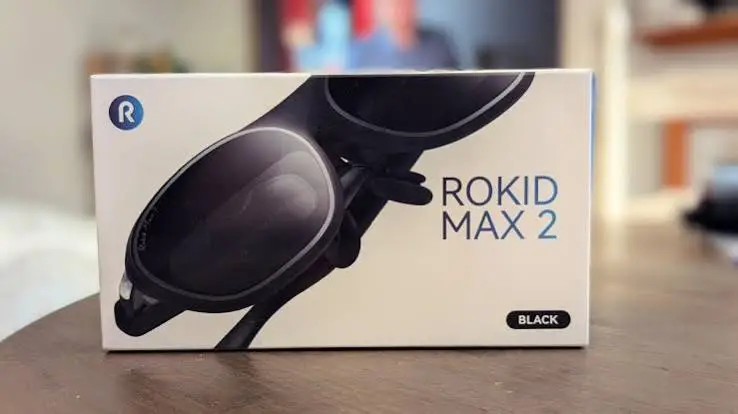
The Rokid Max 2 are wearable AR display glasses that give you a private viewing screen without needing a physical television or monitor. They use two Sony Micro-OLED displays, one for each eye, to create a large virtual screen in front of you. Instead of watching a movie or playing a game on your phone’s small display, you can connect the glasses to a compatible device and enjoy the content through the lenses.
One thing worth understanding is that these are primarily display glasses, not a standalone VR headset or a complete mixed-reality computer. They do not replace your phone, laptop or gaming device. You still need a compatible device to provide the content, but the glasses give you a much larger screen to view it on. This makes them useful for watching movies while travelling, playing games when you do not have access to a television, or simply enjoying videos without having to hold your phone in front of your face.
The 215-inch virtual screen is probably the feature that will attract most people’s attention. Imagine being able to watch a film on what appears to be a huge screen while sitting on a train, relaxing at home or travelling. You do not need to find space for a large television, and you are not sharing the screen with everyone around you. It is a more personal way to enjoy entertainment, particularly if you travel frequently or like watching content on a bigger display.
Rokid Max 2 Features and Specifications
Rokid has included several features to make the Max 2 suitable for everyday entertainment and gaming. Here is a closer look at the main specifications.
- Display: Dual Sony Micro-OLED displays.
- Resolution: 1920 x 1080 pixels per eye.
- Refresh rate: Up to 120Hz.
- Field of view: Approximately 50 degrees.
- Brightness: Up to 600 nits.
- Virtual screen: Up to 215 inches.
- Myopia adjustment: Built-in adjustment dials for users with short-sightedness.
- Audio: Built-in speakers.
- Connectivity: Connects to compatible devices for displaying video content.
The dual Micro-OLED displays are particularly important because they are responsible for the image you see through the glasses. Each eye gets a Full HD display, giving you a combined viewing experience that is much more immersive than looking at a small phone screen. The 120Hz refresh rate is also useful for gaming because it allows for smoother motion when the connected device and content support it.
The 600-nit brightness helps make the picture visible, although your viewing experience will still depend on your surroundings. The glasses are designed to give you a personal screen rather than completely block out the world around you, so they are not the same as wearing a traditional VR headset.
Another useful feature is the built-in myopia adjustment. People who are short-sighted often have to think about prescription lenses when buying display glasses, but Rokid has included adjustment dials that allow users to adjust the focus. This is convenient because you can make adjustments directly on the glasses instead of immediately having to buy additional prescription inserts. However, anyone with vision requirements outside the supported adjustment range will still need to consider their prescription needs.
My Experience With the Rokid Max 2: What Has Improved From the Original?
Since I already had the original Rokid Max, I was not going into this purchase without knowing what to expect. I had used the first version, so I had something to compare the new glasses against. This is also why I was interested in the Max 2 rather than simply buying another pair of the original model.
My first impression after receiving the new glasses was that the image quality had improved. The difference around the edges was particularly noticeable to me. With my original Rokid Max, there was more blur around the edges of the image, which was something I would have liked to see improved. The Max 2 handles this much better, and the picture looks clearer across the display. I find this a worthwhile improvement because when you are watching something on a virtual screen, you want to be able to enjoy the picture without constantly noticing blurry areas.
I also think the colours look better on the new model. The image seems more pleasing to look at, and this adds to the viewing experience. It is not just about having a large virtual screen; the quality of what you are watching matters too. A massive display would not mean much if the picture was disappointing, so I am glad to see an improvement here.
The build quality has also impressed me. The Rokid Max 2 feels very well made, and I like the overall finish. It does not give me the impression of a cheaply made gadget, which is important when buying something that you are going to wear and handle regularly. I also noticed that the sound quality is slightly better than what I got from the original Rokid Max. It is not a huge difference, but I can hear an improvement, and it is another small change that makes the new model feel better.
I am also happier with the carrying case. The new case is nicer than the one that came with my original glasses, and I prefer it for storing and carrying the device. It may not be the biggest selling point, but I appreciate these little improvements, especially when they come together with changes to the actual display.
Overall, my first impression has been very positive. I was hoping Rokid would improve some of the things I noticed with the original model, and so far, I am happy with what I have received. I think the money was well spent.
Are Rokid Max 2 AR Glasses Good for Gaming and Watching Movies?
One of the biggest reasons people consider AR glasses is the ability to enjoy a large screen without being tied to a television. The Rokid Max 2 is particularly interesting for this because it can display content from compatible phones, laptops and gaming devices.
For gaming, the 120Hz refresh rate is a welcome feature. A higher refresh rate can make movement look smoother, although the actual result depends on the device and game being used. Rather than playing on a small handheld screen, you can enjoy your games on a much larger virtual display. This could be particularly appealing to people who use portable gaming devices and want a more comfortable viewing experience.
Movie watching is another area where these glasses make sense. The large virtual screen gives you a more cinema-like experience without needing to buy a projector or television. You can connect a compatible device and watch your favourite shows and films through the glasses. The built-in speakers also mean you do not necessarily have to wear separate headphones just to hear your content.
However, it is worth remembering that the 215-inch screen is a virtual display, not an actual screen sitting in front of you. Your experience will depend on how the glasses fit, how well you adjust them and the device you connect. People expecting a complete VR experience may also find that these glasses are not what they are looking for. Their main purpose is to give you a large personal display for entertainment and other screen-based activities.
What I Like About the Rokid Max 2
Having owned the original model, I appreciate that Rokid has made improvements rather than simply releasing another pair with a different name. The clearer image around the edges is probably my favourite change because it addresses something I noticed with the previous glasses. The colours also look better, and the sound quality has improved slightly.
I also like the build quality and the new carrying case. These things contribute to the overall experience, and I would rather spend money on a product that feels properly made than something that feels cheap as soon as I take it out of the box.
The myopia adjustment dials are another useful feature, particularly for people who normally need glasses to see clearly. Having that adjustment built into the device makes it more convenient, although buyers should still check whether the supported range works for their prescription.
Are There Any Downsides?
Since I have only just received the Rokid Max 2, I do not want to pretend that I have already tested every feature or used the glasses long enough to comment on their long-term durability. My experience so far has been positive, but there are a few things prospective buyers should understand.
First, these glasses need a compatible device to display content. They are not a replacement for a smartphone, laptop or gaming console, so you should check your device’s compatibility before buying. Having a USB-C port alone does not automatically mean that a device will work; it needs to support the appropriate video output.
Secondly, the large virtual display may sound like a television replacement, but it is still a wearable screen. Some people may prefer watching content on a traditional television, especially when watching with family or friends. These glasses are better suited to personal viewing.
Finally, although the improvements over the original model are noticeable to me, someone who already owns the first Rokid Max will have to decide whether those changes justify spending more money. If you are happy with your existing pair, you may not feel the need to upgrade immediately.
Is the Rokid Max 2 Worth Buying?
After owning the original Rokid Max and now receiving the Max 2, I am happy with my decision to buy the newer version. The picture looks clearer, particularly around the edges, the colours are better, the build quality is excellent, and even the sound has improved slightly. I also prefer the new carrying case.
I think the Rokid Max 2 is worth considering if you want AR glasses mainly for watching movies, enjoying videos and playing games on a large virtual screen. The 1080p Micro-OLED displays, 120Hz refresh rate, 600-nit brightness and built-in myopia adjustment make it an interesting option for people who want a portable personal display.
Would I recommend upgrading from the original Rokid Max? Based on what I have seen so far, yes, especially if you were bothered by the edge blur on the older model. That improvement alone makes the new glasses more enjoyable for me. I have only just started using them, but my first impressions are good, and I genuinely think the purchase was worth the money.
For anyone buying their first pair, the Rokid Max 2 is also worth a look, provided your main interest is portable entertainment rather than a standalone augmented-reality headset. I am pleased with the improvements Rokid has made, and I am looking forward to using my new glasses more.
Check out Necklow Sleep Pillow that I reviewed, earlier.