
I came across Dermiqua while looking into products advertised for keratosis and other skin conditions. The company sells a botanical body oil that supposedly helps improve the appearance of rough, raised skin, and its sales pages make some very impressive claims about how the oil works. It is advertised as a treatment that can penetrate deep into the skin, reach hidden problem areas and deliver results that ordinary treatments supposedly cannot provide.
The marketing sounded convincing enough to make me look closer, but the more I checked, the less I trusted the product. I also made the mistake of ordering it before discovering some of the things I am going to discuss in this review. I cancelled my order and requested a refund almost immediately, but dealing with the company was another problem altogether. The customer service was terrible, and the product information I later found raised even more questions about what Dermiqua is actually selling.
If you are considering buying Dermiqua Keratosis Oil, I would strongly advise you to read this before handing over your money. There are problems with the medical claims, the people supposedly behind the product, the refund policy and even the way the company handles cancellation requests.
What Is Dermiqua Keratosis Oil Supposed to Do?
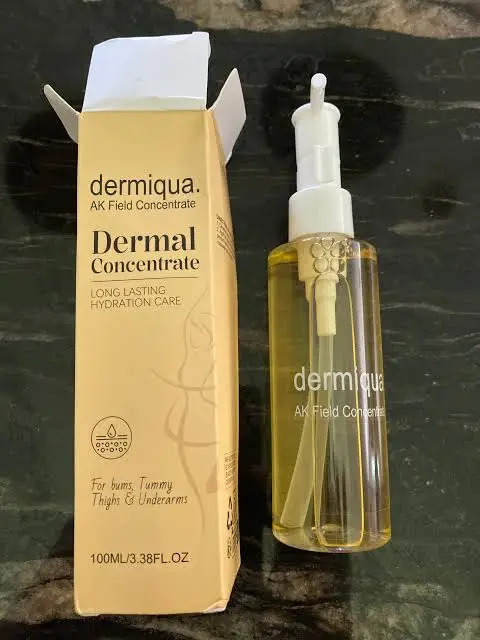
Dermiqua is a botanical body oil sold through the official website, dermiqua.com. The company markets different versions of the oil for conditions including seborrheic keratosis, actinic keratosis and dermatoporosis. Although the names and sales pages change depending on the condition being targeted, the products appear to follow the same basic formula and marketing approach.
A 3.4 fl oz bottle costs $44.95, reduced from an advertised regular price of $90. The store describes it as a 30-day supply, although the same product page also says one bottle should last four to six weeks. That is already a slightly confusing way to describe the product, but my bigger concern is what Dermiqua claims the oil can actually do.
The sales pages say the oil penetrates all seven layers of the skin to reach what the company calls a hidden subclinical field. It also describes its ingredients as clinically proven and claims that clinical trials showed 76% more improvement than traditional treatments. These are big medical claims, especially for a bottle of botanical oil, but I could not find a named clinical trial, published study or research paper on the website to support them.
I would expect a company making claims like these to show customers the actual research. Simply saying that something is clinically proven does not make it so.
The Strange Doctor Profiles Behind Dermiqua
One of the first things that made me question Dermiqua was the way its sales pages are written. The company uses different doctor names depending on which skin condition the product is being sold for, giving the impression that each page has been prepared by a medical professional with years of experience.
The seborrheic keratosis page is attributed to Dr Linda Hargrove. Her biography says she spent 24 years at Johns Hopkins, treated more than 9,000 patients and published 54 peer-reviewed papers. The actinic keratosis page is credited to Dr Sarah Mitchell, who supposedly spent 28 years at Johns Hopkins and also treated over 9,000 patients and published 54 papers. The dermatoporosis page introduces Dr Victoria Langford, with the same Johns Hopkins background, the same patient count and the same number of published papers.
That is quite a coincidence. Three different doctors supposedly have almost identical professional records, including the same number of patients treated and the same number of published papers. I also found the name and biography of Dr Linda Hargrove appearing on other websites selling unrelated products, including vein cream and scalp psoriasis shampoo. The years of experience and patient numbers changed depending on the website.
This does not give me confidence in the medical authority being used to sell Dermiqua. The company appears to be using impressive-looking doctor profiles to make the product seem more trustworthy, but the information needs to be independently verifiable. I would not accept a doctor’s name and a long biography on a sales page as proof that a product has been medically tested or recommended by a genuine specialist.
The Same Oil Appears to Be Sold for Different Skin Conditions
Dermiqua’s store lists eleven products, ten of which are corrective oils marketed for different conditions. Most of them sell for exactly $44.95, even though they are presented as solutions for different skin problems.
I also compared the seborrheic keratosis and actinic keratosis sales pages. They are almost word for word identical, with the condition name changed in the relevant places. This is not what I would expect from a company claiming to offer specially developed treatments for different medical conditions.
The pricing is also inconsistent. The actinic keratosis sales page advertises the oil at $34.95, but when you visit the store, the same bottle costs $44.95. That is a $10 difference between the price shown in the sales pitch and the actual store price.
I find this kind of marketing frustrating because customers are being encouraged to believe they are buying a specialised treatment, when the same basic product appears to be offered across several unrelated skin conditions. Where is the evidence that one botanical oil can address all these different problems?
Is Dermiqua Really Made in the United States?
The advertisements describe Dermiqua as an American-made product, which may give buyers the impression that it is produced and shipped from the United States. However, the website footer identifies the seller as C D J Business, based in Maassluis in the Netherlands.
That is not the same thing as proving where the oil is manufactured, so I would not automatically conclude that the product is made in the Netherlands. But the company should be much clearer about its manufacturing and shipping arrangements.
In my own case, I was shocked to discover that the product was made in and sent from China. I had not understood that when I placed my order. If a company is advertising a product as made in the United States, customers deserve clear and honest information about where it is actually manufactured and where their orders are coming from.
This is especially important when the company is charging nearly $45 for a small bottle of oil. Buyers should not have to discover the real origin of a product only after placing an order.
My Dermiqua Experience: I Cancelled, But Customer Service Was Terrible
Unfortunately, I ordered Dermiqua before I discovered all these problems. Once I started looking into the company, I immediately regretted the purchase and requested that my order be cancelled and refunded.
I did not even want to go ahead with the order anymore, but getting a straightforward response from customer service was difficult. I was not happy with the way the company handled my request, and the whole experience left me with a very poor impression. I also discovered that the product was coming from China, which was something I had not expected when ordering.
The product itself was another disappointment. The oil was like water, and when I applied it, it burned my skin. That is not the kind of experience I expected from something being promoted as a gentle botanical skin treatment. I would not recommend anyone put up with skin irritation just because a company has made impressive claims about what its oil can do.
I also came across another buyer’s complaint about trying to cancel a subscription. The customer said they repeatedly asked the company to cancel, but instead of processing the request, customer service kept asking them to extend the trial period to 60 days and then 90 days. Despite making it clear that they wanted to cancel, the customer was charged again.
That is unacceptable. When someone says they want to cancel a subscription, the company should process the cancellation rather than keep trying to persuade them to stay. Customers should not have to repeat the same request over and over or worry about another payment being taken after they have already asked to stop the subscription.
Dermiqua’s 90-Day Money-Back Guarantee Is Not What It Sounds Like
Dermiqua advertises a 90-day money-back guarantee, which sounds generous until you read the actual refund conditions. According to the policy, returned products must be unopened and show no signs of use. Customers also have to pay the return shipping themselves.
I have a problem with this because the only way to find out whether a skincare product works for you is to open it and try it. But if you do that, you may no longer qualify for a refund under the company’s stated conditions.
So what exactly is the customer supposed to do with a 90-day guarantee if the product has to remain unopened? The headline makes it sound as though buyers have three months to try the oil and decide whether they are happy with it, but the conditions make that much less useful.
My own experience trying to cancel and obtain a refund did not make me any more confident in the company. I would not rely on the guarantee without understanding the restrictions and getting clear confirmation of what happens if you are unhappy with the product.
The Medical Claims About Keratosis Need to Be Taken Seriously
There is another reason I would not treat Dermiqua as an ordinary beauty oil. The company markets versions of this product for different forms of keratosis, but these conditions are not all the same.
Seborrheic keratoses are generally benign skin growths, while actinic keratoses are different. Actinic keratosis is a precancerous skin condition caused by sun damage, and some lesions can develop into squamous cell skin cancer. It needs proper assessment by a qualified healthcare professional, usually a dermatologist, who can recommend suitable treatment.
A bottle of botanical oil should not be presented as a substitute for that assessment. I could not find the clinical evidence needed to support Dermiqua’s claims that it can penetrate deep into the skin and improve these conditions better than traditional treatments.
If you have a rough, scaly or changing skin growth that you suspect could be actinic keratosis, please have it checked by a dermatologist rather than relying on an online oil. It is not worth taking chances with a condition that can be precancerous.
Is Dermiqua Keratosis Oil a Scam?
I have serious concerns about Dermiqua, and I would not recommend buying it. The company makes impressive medical claims without providing the studies to support them, uses suspiciously similar doctor biographies across different product pages, and sells what appears to be the same type of oil for several unrelated skin conditions.
The pricing is inconsistent, the advertised American origin does not match what I discovered about my own order, and the refund policy is much less generous than the 90-day guarantee suggests. There are also complaints about customers being sent a different product, skin irritation and customer service failing to deal properly with cancellation requests.
I cannot establish every detail of the company’s operations from these findings alone, but there is more than enough here to make me question the business and its marketing. My own experience was disappointing, and I would not trust the medical promises being made on the sales pages.
Conclusion
My advice is simple: do not buy Dermiqua Keratosis Oil. I ordered it, regretted the decision almost immediately and tried to cancel and get my money back. The customer service was terrible, I discovered the product was coming from China, and the oil itself was watery and burned my skin. That is not something I would want anyone else to go through.
What makes this worse is the way Dermiqua uses medical-sounding language and impressive doctor biographies to sell a product without showing the clinical evidence behind its claims. The 90-day guarantee also has conditions that make getting a refund difficult once you have opened and used the oil.
And if you are looking at the actinic keratosis version, please do not use this oil as a replacement for medical care. Actinic keratosis needs to be checked by a real dermatologist, not treated with a product making unverified promises on a sales website.
Save yourself the disappointment and keep your money. I certainly would not order from Dermiqua again.
Check out Necklow Sleep Pillow that I reviewed, earlier.