
If you’ve received a weird notification from PayPal saying someone sent you +Ft 1 HUF, you probably brushed it off. It’s basically nothing, just 1 Hungarian forint. Not even worth thinking about, right? That’s exactly what scammers are counting on. This small payment isn’t random. It’s bait, and once you understand how the trick works, it starts to make a lot more sense.
What the +Ft 1 HUF PayPal Scam Looks Like
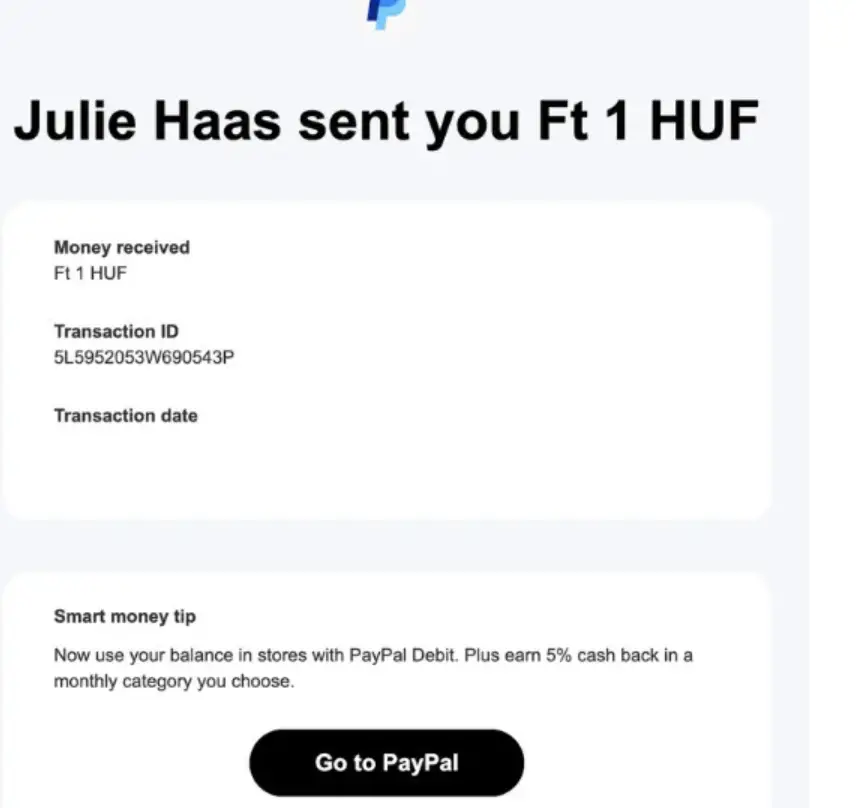
It usually starts with a tiny incoming payment. Could be from a random name, something that looks like a company, or even a “support” account. Along with it, there’s often a message, sometimes subtle, sometimes urgent.
You might see something like:
“Unauthorized transaction detected.”
“Coinbase purchase pending.”
“Call support immediately to cancel.”
The amount is small, but the message is designed to trigger panic. That’s the whole point.
Why Scammers Use Tiny Payments
Here’s the trick: small amounts don’t raise suspicion. You’re less likely to report it, and it slips through mentally as “not a big deal.” But the real scam isn’t the money, it’s the message attached to it.
They want you to:
- Call a fake support number
- Click a link
- Respond with personal or financial info
Once you do that, you’re no longer dealing with a harmless notification. You’re talking directly to the scammer.
The Fake Identities Behind It
One thing that throws people off is the sender name. It might look like a legit business, a billing department, or even a refund center. Sometimes it’s just a normal-looking personal name.
Don’t read too much into it. Scammers rotate names constantly. They can use fake business profiles, hacked accounts, or newly created accounts designed to look official.
So even if it “looks real,” that doesn’t mean it is.
The Real Goal of the Scam
The endgame is always the same, get access to your information or your money.
If you call the number, you might be told to “verify” your account. That usually means giving away login details, card info, or even remote access to your device. Some scams go further and try to convince you to send money to “reverse” a fake charge.
And it all started with 1 forint.
What You Should Do If You See This
First thing, don’t panic, and don’t interact with the message.
Ignore any instructions in the payment note. Don’t call any numbers listed there, don’t click links, and don’t reply.
If you’re concerned, log in to your PayPal account directly (not through any link) and check your activity. If nothing looks wrong, you’re fine.
You can also report the transaction through PayPal so they’re aware of the account sending these messages.
Why This Scam Works So Well
It’s simple psychology. A tiny amount lowers your guard, while the message creates just enough urgency to make you act without thinking too much.
That combination, low risk on the surface, high emotional trigger underneath, is what makes this scam surprisingly effective.
What Do You Do When You Suspect A Phishing Attempt
In this digital age and time, almost everyone has at one time received a phishing text or email and often times they fall victim and get scammed. This is why it is imperative that you are always careful when you receive any text or email because one careless click on a link can cause a whole lot of problems for you. Now if you suspect a phishing attempt, here is what I advise you do:
- Do Not Respond to the text, because you responding is actually giving access to the scammers, simply delete it when you receive.
- Quickly change your password if you have mistakenly clicked on the link or given away your login details. Change your password to a strong and unique password.
- Keep an eye on your accounts for any unauthorized transactions.
- Also scan you devices for any malware.
By following these tips, you can significantly reduce your risk of falling victim to phishing scams and keep your personal and financial information safe.
Conclusion
Just like the Parisi Invoice scam, the Julie Haas PayPal scam is a scam invoice sent by fraudsters.
The PayPal +Ft 1 HUF scam is a good reminder that not every threat looks obvious. Sometimes it’s not a big charge or a dramatic warning, it’s something small that slips under your radar.
If you see a random tiny payment with a message attached, treat it as suspicious by default. Because in cases like this, the amount doesn’t matter at all, it’s the reaction they’re trying to get from you that does.