
I recently started seeing warnings about a scam that looks surprisingly harmless at first, a fake Punchbowl invitation. The message usually appears like a normal party invite, birthday invitation, wedding announcement, or event reminder. It looks friendly, personal, and convincing enough that many people click without thinking twice.
The problem is that these fake Punchbowl invites are not actually about attending an event. They are designed by scammers to trick people into handing over private information or downloading harmful software. What looks like a simple invitation can turn into a serious cybersecurity problem within seconds.
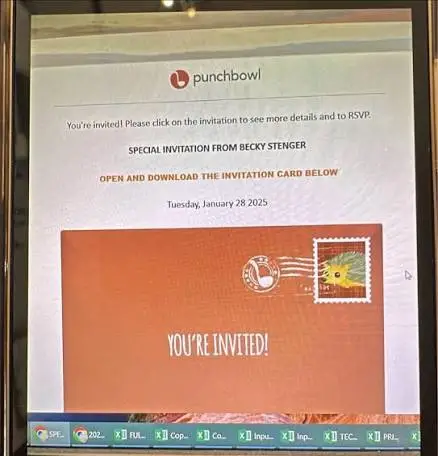
What Is the Punchbowl Invite Scam?
The Punchbowl invite scam is a phishing attack where criminals copy the appearance of legitimate Punchbowl invitations and use them to trick victims.
The scam usually starts with an email or text message saying something like “You’ve been invited” or “View your invitation.” The message may even appear to come from someone you know, which makes it feel more believable.
But instead of taking you to a real event page, the link sends you to a fake website designed to steal your login information or install malware on your device.
How the Fake Punchbowl Invitation Scam Works
There are usually two main ways scammers use these fake invitations.
1. Fake Login Pages That Steal Your Password
One common method is credential theft.
You receive a fake Punchbowl invite and click the link to view the details. Instead of opening an invitation, you are redirected to a fake login page pretending to be a trusted service like Google, Microsoft, or Yahoo.
The page may say you need to sign in before viewing the invitation.
This is where the trap happens.
If you enter your email and password, the scammers can capture those details. Sometimes the page shows an error message and asks you to try again, making you think you simply typed something wrong. In reality, your login information may already have been stolen.
If scammers gain access to your email account, they can potentially:
- Read private messages
- Reset passwords for other accounts
- Access saved information
- Send more fake invitations to your contacts
This is how phishing scams spread so quickly.
2. Malware Hidden Behind Fake Invitation Links
The second method is even more dangerous because it involves malicious software.
The fake Punchbowl invitation may contain a button, image, or link that appears normal. When clicked, it can redirect you to an unfamiliar website and attempt to download malware onto your device.
Some scams use fake domains that look similar to real websites to trick users. Others may use random file-hosting links or cloud storage links to deliver harmful programs.
The malware can potentially allow criminals to:
- Monitor your activity
- Steal personal information
- Access files
- Install additional harmful software
Some attacks involve Remote Access Trojans (RATs), which are designed to give attackers control over infected devices.
Signs You Are Looking at a Fake Punchbowl Invite
Not every invitation message is a scam, but there are warning signs you should watch for.
Some red flags include:
- You were not expecting an invitation
- The sender’s email address looks unusual
- The message creates urgency (“respond immediately” or “last chance”)
- The link does not go to the official Punchbowl website
- You are asked to log in unexpectedly
- The invitation contains strange spelling or grammar mistakes
- The link redirects somewhere unrelated
A real event invitation usually does not require you to enter your email password just to view party details.
What To Do If You Receive a Suspicious Punchbowl Invitation
If you receive a suspicious Punchbowl invite, avoid clicking the link immediately.
Instead:
- Run a security scan if you accidentally downloaded anything.
- Check who sent the message.
- Contact the person directly if you know them and ask if they actually sent an invitation.
- Hover over the link before clicking to see where it goes.
- Delete the message if it looks suspicious.
If you entered your password into a suspicious page, change that password immediately and enable two-factor authentication where possible.
Is the Punchbowl Invite Scam Real?
Yes, fake Punchbowl invitation scams are a real phishing threat. The danger is that they do not look like typical scams. They are designed to feel personal, friendly, and trustworthy.
The invitation itself is not the problem, the fake links behind it are.
Conclusion
My advice is simple: never enter your email password through an invitation link unless you are completely sure it is legitimate. If an unexpected Punchbowl invitation appears in your inbox, treat it carefully before clicking.
A party invite should not come with a hidden risk of losing your account or infecting your device.
From the foregoing, it is crystal clear that it is a scam like the Kelly Services scam,