
I have a confession, the first thing that caught my attention about Luma Labs The Formula was not the peptide serum. It was the little stamping device. I have tried enough skincare products to know that brands can put “peptides,” “collagen,” and “anti-aging” all over a bottle and still leave you wondering whether you actually bought anything more useful than an expensive moisturizer. The idea of pairing a serum with a micro-infusion tool at least makes the product a little more interesting.
Luma Labs The Formula is an at-home micro-infusion system designed to help the included peptide serum get onto and into the skin more effectively. The brand says its fine cosmetic-grade touchpoints create temporary micro-channels on the skin’s surface, allowing ingredients such as hyaluronic acid and peptides to interact more closely with the skin. It is marketed for smoother-looking skin, firmness, texture, fine lines and that plump, fresh “just had a facial” appearance many of us are chasing.
But does Luma Labs The Formula really work, or is this just another skincare gadget dressed up with impressive terminology? I looked closely at what is actually included, how the treatment is supposed to be used, the formula itself, the company’s claims and the purchasing terms. Here is what stood out to me.
What Is Luma Labs The Formula?
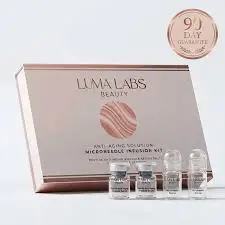
Luma Labs The Formula is essentially a two-part skincare treatment: a peptide serum supplied in individual ampoules and a micro-infusion stamping device with sterile, single-use heads.
The basic idea is pretty straightforward. Instead of simply rubbing a serum over the surface of your face, you use the stamp to make very tiny temporary channels in the outer layer of the skin while applying the Luma Labs serum. The company says this is intended to improve interaction between the serum and the skin and help create a smoother, plumper and more radiant appearance over time.
The recommended schedule is also different from an ordinary serum. Luma Labs says to use one new sterile head and one serum vial every two weeks. The one-month package contains two treatments, the two-month package contains four, and the three-month package contains six.
That is important because this isn’t something I would look at as a normal daily skincare product. It is a periodic treatment.
How Does Luma Labs The Formula Work?
The device is designed to be stamped gently across the skin rather than dragged around like a traditional microneedling roller.
According to the company’s instructions, you open the device, add one serum vial, attach a new sterile head and allow the serum to flow toward the tip by turning the device upside down for one to two minutes. You then stamp the skin, with the instructions calling for two to three passes. Afterward, any remaining serum can be applied to the skin and left to absorb.
The company says the treatment takes about five minutes, and the recommended areas include the face, neck, décolleté and lips.
That sounds much less intimidating than some of the at-home microneedling devices I have seen. There is no motorized pen involved, and the idea of using a fresh head for each treatment is reassuring from a hygiene standpoint.
Still, “simple” does not mean you should treat it like applying moisturizer. You are deliberately creating temporary micro-channels in your skin. Technique and cleanliness matter.
Luma Labs The Formula Ingredients
This is one area where I actually wanted more detail rather than less.
The product page lists ingredients including water, glycerin, sodium hyaluronate, butylene glycol, mannitol, acetyl hexapeptide-8, acetyl tetrapeptide-9, acetyl tetrapeptide-11, ergothioneine, palmitoyl tripeptide-1 and palmitoyl tetrapeptide-7. It also lists bitter orange flower oil and additional stabilizers.
There are some recognizable skincare ingredients here.
Sodium hyaluronate is a form of hyaluronic acid commonly used for hydration and a plumper appearance. Glycerin is another familiar humectant that helps attract and retain water in the skin.
The peptide portion is where the anti-aging positioning becomes more obvious. Acetyl hexapeptide-8, palmitoyl tripeptide-1 and palmitoyl tetrapeptide-7 are all ingredients commonly seen in products aimed at the appearance of fine lines and firmness.
That doesn’t mean the serum is going to erase wrinkles. It means the formulation contains ingredients that make sense for a cosmetic product targeting hydration, texture and the appearance of aging skin.
I would also pay attention to the inclusion of citrus aurantium amara flower oil. Anyone with reactive or easily irritated skin should be cautious about introducing a new treatment, particularly one that is designed to increase skin exposure to a serum.
Does Luma Labs The Formula Really Work?
This is the part where I would separate the interesting technology from the advertising.
There is a reasonable idea behind using a micro-infusion device to deliver a topical cosmetic serum. The company isn’t simply selling a bottle of moisturizer and calling it revolutionary. The treatment is specifically designed around temporary micro-channels and the use of a dedicated serum.
However, the existence of a plausible mechanism does not guarantee that every person will get dramatic anti-aging results.
Luma Labs says users may notice hydration and texture changes within the first two treatments and says more noticeable improvement in fine lines and radiance can develop over six to twelve weeks of consistent use. The site also states that individual results vary.
That timeline sounds considerably more believable to me than the kind of skincare advertisement promising that ten years of wrinkles will disappear after one session.
I would be especially skeptical of anyone expecting a professional microneedling result from a home cosmetic device. They are not the same thing, and they should not be treated as interchangeable.
My Experience With the Luma Labs Micro-Infusion Kit
The first thing I noticed was that the treatment feels more serious than putting on a serum, but it isn’t nearly as dramatic as the word “microneedling” might make you imagine.
The sensation is more of a light prickling than outright pain, assuming you are gentle with the device. That is probably why Luma Labs describes the experience as a light tingling for most users.
The part I liked was the routine itself. There is something satisfying about having a specific treatment day rather than adding yet another product to an already crowded morning and evening skincare routine.
What I would not do is rush the process. The temptation with anything that promises faster absorption is to press harder or keep going over the same area because you assume more must mean better. With this type of treatment, I think that is exactly the wrong approach.
Your skin does not need to be attacked for a product to work.
After treatment, the brand recommends avoiding makeup and direct sunlight for 24 hours. It also advises avoiding retinol and other strong actives for 24 hours after treatment.
That aftercare is worth taking seriously.
The 90-Day Money-Back Guarantee Sounds Good, But Read the Fine Print
Luma Labs promotes a 90-day money-back guarantee and says customers can request a full refund if they are not satisfied, even after using the entire kit.
That is certainly better than a company offering a short return window on a skincare product and leaving customers stuck with it.
There is one purchasing detail I would not overlook, though. The product page states that the purchase can be a deferred, subscription or recurring purchase depending on the selected supply, with the customer’s payment method authorized for charges according to the selected delivery schedule until the order is fulfilled or canceled where permitted.
So before clicking the checkout button, I would make sure I understood exactly which option I was selecting. A recurring purchase isn’t necessarily a scam, but it is something buyers should notice rather than discovering it later on a bank statement.
Is Luma Labs The Formula Safe?
This is where I would be a little more careful than the glossy product page.
The company says each micro-infusion head is sterile, individually sealed and intended for one use only. It specifically says the heads should not be reused.
That’s good practice for a product that makes temporary micro-channels in the skin.
But I would not describe an at-home micro-infusion treatment as completely risk-free. Any time you deliberately disturb the skin’s surface, there is potential for irritation, redness or other problems if the device is used incorrectly or hygiene is poor.
Luma Labs itself says people with active eczema flare-ups, open wounds or active breakouts should consult a dermatologist before using the system. It also recommends checking with a provider after injectable cosmetic treatments and says users should patch-test if they have known sensitivities.
That advice makes sense.
If your skin is already angry, inflamed or damaged, this is not the moment to experiment with a treatment that creates micro-channels.
Luma Labs The Formula Pros and Cons
What I Like
- The system is relatively simple to understand and doesn’t require a complicated machine.
- The serum contains a mixture of hydrating ingredients and peptides that fits the product’s anti-aging positioning.
- The heads are designed to be sterile and single-use rather than repeatedly reused.
- The every-two-weeks schedule is manageable for someone who doesn’t want another daily skincare chore.
- The 90-day guarantee gives buyers more breathing room than a very short return period.
What I Don’t Like
- The marketing can make the results sound more predictable than they really are.
- At-home micro-infusion requires more care than ordinary skincare.
- People with sensitive or compromised skin need to be especially cautious.
- The recurring-purchase language on the product page is something buyers should notice before checkout.
And while the ingredient list is available, I would still like to see more independent evidence specifically demonstrating how much additional benefit this particular device-and-serum combination provides compared with simply using a good topical peptide serum.
Is Luma Labs The Formula a Scam?
After looking through the product information, I would not call Luma Labs The Formula a scam.
There is an identifiable product, a clearly described micro-infusion system, single-use treatment heads, a listed serum formula, usage instructions and a stated 90-day refund policy.
That doesn’t mean every marketing claim should be accepted without question.
The company uses phrases such as “visible improvements,” “firmer, smoother looking skin” and “fast” results, while also acknowledging that results vary. Its homepage additionally describes the products as dermatologist tested and third-party tested, but those statements are company claims and I would not confuse them with independent clinical evidence proving that everyone will get the advertised outcome.
For me, that distinction matters.
Luma Labs The Formula vs. Regular Skincare
Would I replace my entire skincare routine with this? No.
I see The Formula more as an occasional treatment that could sit alongside a sensible skincare routine.
You still need basic things such as cleansing, moisturizing and sun protection. A micro-infusion treatment cannot compensate for spending every day in the sun without adequate protection, nor can it magically undo years of inconsistent skincare. And if your main goal is simply hydration, you can find considerably simpler products that don’t involve a stamping device. The appeal here is really the combination of the treatment method and the peptide serum.
Who Should Try Luma Labs The Formula?
I think it makes the most sense for someone who already enjoys skincare treatments and wants something more involved than another serum but less intimidating than visiting a professional for every treatment.
It could also appeal to someone focused on early signs of aging, uneven texture, dull-looking skin or a loss of that plump appearance that tends to become more noticeable with age.
I would not recommend jumping into it simply because an advertisement promises a “younger-looking face in two weeks.” That’s not how I would judge this product.
Give it realistic expectations and follow the instructions carefully.
Final Verdict: Is Luma Labs The Formula Legit?
So, is Luma Labs The Formula legit? Yes, I would consider it a legitimate at-home skincare product rather than a scam.
The more interesting question is whether it is worth buying.
For me, the answer is possibly, but only if you actually want a micro-infusion treatment. The peptide serum itself is not what makes this product unusual. It is the combination of the serum with the single-use micro-infusion heads.
I also appreciate that the company gives detailed instructions, recommends replacing the head after every treatment and acknowledges that results vary.
What I would not do is buy it expecting the same results as professional microneedling or expecting deep wrinkles to disappear after a couple of sessions. That expectation is going to leave you disappointed regardless of how good the product is.
My final take: Luma Labs The Formula is not a scam, but it is also not a miracle anti-aging treatment. It is a fairly interesting at-home micro-infusion system with a peptide-based serum, and the people most likely to appreciate it are those who enjoy a more hands-on skincare routine and are willing to use it consistently and carefully.
If you’re considering buying Luma Labs The Formula, check the ingredients, treatment instructions and checkout terms first. And if your skin is particularly sensitive, you’re dealing with an active skin condition, or you’ve recently had an injectable or other cosmetic procedure, getting professional advice before using an at-home micro-infusion device is the smarter move.
Check out the Beplain Cleansing Oil that I reviewed earlier.