
I bought Alevia Pomegranate because the product sounded like a fairly simple way to add some extra support for blood sugar and general health without getting into a complicated supplement routine. The advertisement talks about pomegranate extract, steady energy, digestion and healthy aging, and at first glance it is easy to think you’re simply buying a bottle of pomegranate capsules and giving it a try. What I didn’t expect was the subscription problem that came with my order, and that ended up being much more frustrating than the supplement itself.
After looking more closely at Alevia Pomegranate, the 700 mg pomegranate extract and the research behind pomegranate supplementation, I also came away with questions about how much of the advertising is actually supported by human evidence. Pomegranate is certainly not a useless ingredient, and there is research into its possible effects on blood pressure, blood sugar and other aspects of health. The problem is that research on pomegranate in general isn’t the same as clinical evidence proving that Alevia Pomegranate itself will deliver the results being advertised.
For me, though, the biggest issue was the way the order turned into a subscription that I didn’t knowingly agree to.
What Is Alevia Pomegranate?
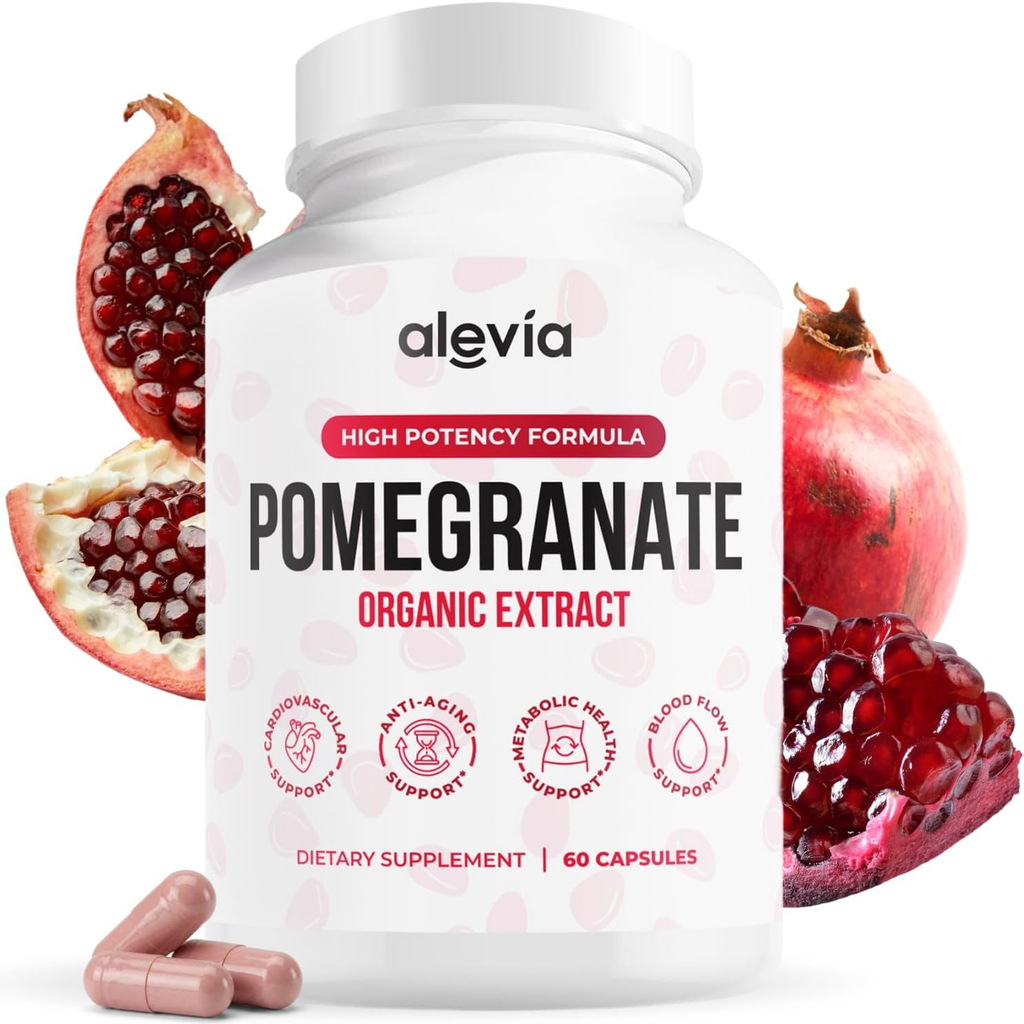
Alevia Pomegranate, sometimes searched for as Avelya Pomegranate Extract, is marketed as a dietary supplement containing 700 mg of pomegranate extract. The product is promoted for several different benefits, including blood sugar support, steady energy, digestion and healthy aging.
That is quite a lot of territory for one supplement to cover. Whenever I see a product marketed for blood sugar, energy, digestion and aging all at once, I want to look beyond the sales page and see what evidence actually exists for the individual claims.
Pomegranate itself has been studied for various potential health effects, so this isn’t a situation where the ingredient has never been researched. The problem is that the evidence is not as straightforward as the marketing can make it sound. Results from studies vary depending on the form of pomegranate used, the amount taken, the population being studied and the length of the trial.
That matters because you can’t take a study involving a particular pomegranate juice, extract or standardized preparation and automatically assume that a 700 mg capsule of Alevia will produce the same result.
My Experience Ordering Alevia Pomegranate
The reason I wanted to include my own experience in this Alevia Pomegranate review is because the subscription issue completely changed how I felt about the company.
When I placed my order, I was not aware that I had signed up for an ongoing subscription. I thought I was purchasing the product, receiving my order and deciding later whether I wanted to buy it again. I certainly wasn’t expecting another shipment to turn up automatically.
After the first unwanted subscription order arrived, I contacted the company by email and asked them to cancel the subscription and make sure there were no further orders. I received a response confirming that the subscription had been cancelled, so I assumed the problem had been dealt with.
It wasn’t.
Three months later, another Alevia order arrived at my door.
At that point I contacted the company again because I had already cancelled the subscription and had confirmation in writing. Instead of simply acknowledging the cancellation and arranging the return, I was told that I had supposedly requested to skip an order and that I could send the product back for a refund at my own expense.
That was the point where I decided I couldn’t recommend this company to other buyers. I had specifically asked for the subscription to be cancelled, received an email saying it had been cancelled and still ended up with another shipment months later.
Alevia Pomegranate Subscription Complaints
My experience isn’t something I would ignore when researching Alevia Pomegranate reviews.
There are also customer discussions concerning unwanted subscriptions, recurring charges and difficulties cancelling orders. When a customer believes they have made a one-time purchase but later discovers that another payment and shipment has been scheduled, that can turn an ordinary supplement purchase into a much bigger headache.
The cancellation process is particularly important with products sold through online checkout pages. A supplement can have a perfectly ordinary ingredient list and still become an expensive purchase if the billing terms aren’t clear or if cancelling doesn’t work as expected.
In my case, the frustrating part was not simply receiving another bottle. I had already contacted the company after the first unwanted shipment, explicitly asked for the subscription to be cancelled and received confirmation that it had been cancelled. Receiving another order three months later made that confirmation feel meaningless.
I would be very careful about entering payment information on the Alevia website and would keep screenshots and copies of every email connected with an order.
Does Alevia Pomegranate Really Work for Blood Sugar?
This is where I think the advertising needs to be separated from the actual research.
Pomegranate has been studied in relation to blood glucose and other metabolic markers, and some research has found potentially beneficial effects. There have also been studies and reviews examining pomegranate consumption in people with metabolic conditions. That makes pomegranate an interesting ingredient, but it doesn’t mean Alevia Pomegranate has been proven to control blood sugar.
The human evidence isn’t strong enough for me to look at a bottle containing 700 mg of pomegranate extract and say, “Yes, this will keep your blood sugar steady.”
There are too many variables involved. Different studies use different preparations, doses and forms of pomegranate, and a supplement containing pomegranate extract isn’t automatically equivalent to the product used in a clinical trial.
Someone taking Alevia because they believe it is a proven blood sugar supplement could therefore come away with a very different impression from what the research actually shows.
What About the 700 mg Pomegranate Extract?
The 700 mg figure sounds impressive when it appears on a product page, but the number alone doesn’t tell you how effective the supplement is.
The source of the extract, its standardization, the concentration of active compounds and the way the extract was prepared all matter when you’re trying to compare a supplement with published research.
This is something I wish more supplement advertisements explained. A larger number on the front of a bottle doesn’t automatically mean a stronger or better product.
If a company wants to make specific blood sugar claims, I’d want to see evidence involving its actual finished product or, at the very least, enough information about the extract to make a meaningful comparison with the studies it is using to support its marketing.
The FDA Disclaimer Is Worth Reading
Alevia’s own website includes the standard dietary supplement disclaimer stating that its claims have not been evaluated by the Food and Drug Administration and that the product isn’t intended to diagnose, treat, cure or prevent disease.
That disclaimer is important because some of the advertising language can make the product sound much more established than it actually is.
A supplement company can legally market products for certain forms of general health support, but that doesn’t mean the FDA has tested the product and confirmed that it lowers blood sugar or prevents diabetes.
So when you see phrases about supporting healthy blood sugar, steady energy or healthy aging, it’s better to read them as marketing claims rather than as proof that the supplement has been clinically established to produce those outcomes.
Alevia Pomegranate for Energy and Digestion
The company also promotes Alevia for steady energy and digestive support, but these claims run into the same problem.
Pomegranate contains various compounds that researchers have investigated for antioxidant and other biological effects, but that doesn’t mean taking a pomegranate extract capsule will noticeably improve your everyday energy or digestion.
For someone who already eats a balanced diet and enjoys pomegranate, there is nothing particularly strange about wanting it in supplement form. What I don’t like is when a product takes an ordinary ingredient and turns it into an answer for half a dozen unrelated health concerns.
Blood sugar, energy, digestion and healthy aging are very different areas. Supporting one does not automatically mean supporting all four.
Are There Any Good Things About Alevia?
I don’t think the product should be judged solely on the subscription problem.
Pomegranate is a legitimate food ingredient with a considerable amount of scientific interest behind it, and there is nothing inherently suspicious about taking a pomegranate extract as a dietary supplement. If Alevia were sold with straightforward information, transparent billing and modest claims that matched the available evidence, I would have a much easier time discussing the product on its merits.
The problem is that the customer experience matters too.
A supplement can contain a perfectly respectable ingredient and still be a poor purchase if the company makes cancellation difficult or if customers aren’t adequately informed about recurring orders. I wasn’t happy with how my own subscription was handled, and that experience is enough to make me look elsewhere.
Is Alevia Pomegranate a Scam?
I would be careful with the word “scam” when talking about the supplement’s ingredients because pomegranate extract itself is a real ingredient and there is genuine research into its potential health effects.
What concerns me is the way Alevia is marketed and sold.
The blood sugar claims are broader than the available product-specific evidence, the FDA disclaimer makes it clear that the claims haven’t been evaluated by the agency, and customer complaints about subscriptions and recurring charges raise concerns about the purchasing experience.
My own experience is especially hard for me to overlook because I specifically contacted the company to cancel after receiving an unwanted subscription shipment, received confirmation that the subscription had been cancelled, and still received another order three months later.
That isn’t the kind of customer experience I want to have when buying a bottle of supplements.
What Should You Do If Alevia Keeps Charging You?
If you’ve already ordered Alevia Pomegranate and are seeing recurring charges that you didn’t expect, start by checking your order confirmation and any emails you received when you originally purchased the product. Look for language about auto-renewal or recurring shipments and save copies of anything that shows you requested cancellation.
I would also keep the email confirming that your subscription was cancelled, especially if another order was subsequently sent. That gives you a written record of what happened and is much more useful than relying on a phone conversation that you can’t document.
If the company refuses to resolve an unwanted recurring charge, contact your bank or credit card company and explain the situation. If you paid by credit card, ask about the process for disputing charges for a subscription you attempted to cancel.
Don’t throw away the unwanted product or the packaging until you’ve figured out what the seller expects you to do with it, particularly if they are telling you that you must return it before issuing a refund.
My Alevia Pomegranate Review Verdict
I went into this purchase thinking I was simply trying a pomegranate supplement. I didn’t expect the order to turn into a subscription problem, and that experience is ultimately what makes me uncomfortable recommending Alevia to other people.
As far as the actual ingredient is concerned, pomegranate is not some made-up substance with no research behind it. There is legitimate human research looking at pomegranate and various health outcomes, including some research involving blood sugar. What I don’t see is enough evidence to conclude that Alevia Pomegranate 700 mg has been proven to deliver the blood sugar, energy, digestion and healthy aging benefits advertised on the sales page.
The subscription experience is the bigger issue for me. I was not aware that I had agreed to recurring shipments, contacted the company after the first unwanted order and received confirmation that the subscription had been cancelled. When another shipment arrived three months later, I was told I had supposedly asked them to skip an order and would have to pay the return shipping myself to get a refund.
That left a very bad impression.
Conclusion
So if you’re searching for Alevia Pomegranate reviews, my experience is that I would not order it.
There are plenty of ways to get pomegranate into your diet without dealing with an unwanted subscription, and if you’re specifically looking for a supplement to support blood sugar, I’d rather choose a product with transparent ingredients, clearly stated doses, straightforward billing and evidence that actually matches the claims being made. For me, Alevia didn’t clear that bar, and the trouble I had cancelling the subscription was enough to make sure I won’t be ordering another bottle.
Check out the Beplain Cleansing Oil that I reviewed earlier.