
I can understand why MedicGLP caught my attention. The name immediately makes you think of the GLP-1 weight-loss drugs that have become so popular, while the sales page promises a more natural approach that can supposedly boost metabolism, burn fat, reduce cravings and help with weight loss. For someone who wants the effects of a GLP-1 medication without taking a prescription drug, that sounds pretty tempting. I decided to look beyond the sales pitch and see what is actually inside MedicGLP, whether the ingredients have good evidence behind them and what customers are saying after placing orders.
The formula contains a long list of familiar weight-loss ingredients, including berberine, green tea extract, cayenne, bitter orange, ginseng, ginger, apple cider vinegar, cinnamon and resveratrol. Some of these ingredients have been researched individually, so MedicGLP isn’t simply filled with substances nobody has ever heard of. The problem is that the existence of research on an ingredient doesn’t prove that MedicGLP itself can reproduce the effects of GLP-1 medications or deliver the kind of weight loss being suggested in its advertising. In fact, MedicGLP’s own website acknowledges that its health claims have not been scientifically proven or evaluated by doctors, which is something I would want to know before spending money on it.
What Is MedicGLP?
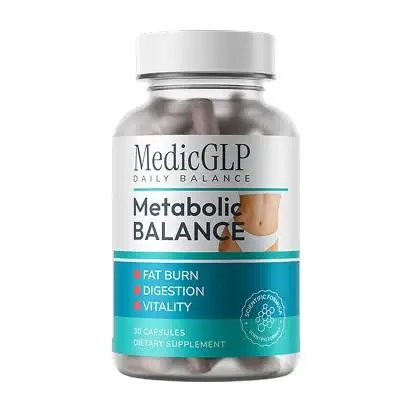
MedicGLP is a dietary supplement marketed as a natural weight-loss alternative to GLP-1 medications. The advertising focuses on several things people struggling with their weight are usually looking for: fewer cravings, increased metabolism, better fat burning and easier weight management.
The name is also doing a lot of work here. When you see “GLP” attached to a weight-loss product, it is easy to assume that you’re getting something comparable to prescription GLP-1 medications such as semaglutide or tirzepatide. MedicGLP is not the same thing as those medications, however. It is a dietary supplement containing a collection of botanical extracts and other ingredients, and there is no reason to assume that putting “GLP” in the name means the capsules have the same effects as an approved GLP-1 drug.
That is the first thing I would keep in mind when reading MedicGLP reviews. The branding can make the product sound more medically established than a regular supplement, but the contents and the evidence behind them are what really matter.
What Ingredients Are in MedicGLP?
MedicGLP contains berberine, green tea extract, cayenne, bitter orange, ginseng, ginger, apple cider vinegar, cinnamon and resveratrol. At first glance, it looks like the company tried to cover every popular natural weight-loss ingredient in one formula.
Berberine is probably the ingredient that will catch most people’s attention because it has been widely discussed as a “natural alternative” to certain metabolic medications. There is research into berberine and glucose metabolism, insulin sensitivity and other metabolic markers, but that doesn’t mean taking berberine produces the same weight-loss effects as a GLP-1 medication.
Green tea extract has also been studied for metabolism and body weight, while cayenne contains capsaicin, which researchers have investigated for its possible effects on appetite and energy expenditure. Ginger, cinnamon, apple cider vinegar and resveratrol have all appeared in studies looking at various metabolic or health outcomes as well.
The problem comes when all of those individual studies are used to make a much bigger claim about the finished product. Knowing that several ingredients have been studied doesn’t tell me whether this exact MedicGLP formula has been tested in humans or whether the amounts included are enough to produce the effects being advertised.
Does MedicGLP Really Work Like a GLP-1?
This is probably the biggest question behind the product, and I wouldn’t expect MedicGLP to work like prescription GLP-1 medication.
GLP-1 drugs work through a specific pharmacological mechanism and have been studied extensively in large clinical trials. MedicGLP is a dietary supplement containing plant extracts and other compounds. Those are completely different categories of products.
A supplement can potentially support certain aspects of metabolism or appetite without being a replacement for prescription medication. Calling something a “natural GLP-1” doesn’t turn it into a GLP-1 receptor agonist, and the MedicGLP marketing shouldn’t be interpreted as evidence that the supplement can reproduce the degree of weight loss associated with prescription treatments.
If you’re searching “Does MedicGLP work?” because you’re hoping to get the same results as Ozempic, Wegovy or another prescription GLP-1 drug, I wouldn’t set your expectations that high.
Berberine and the Natural GLP-1 Claims
Berberine is one of the more interesting ingredients in the formula because there is genuine research surrounding it. It has been investigated for blood glucose regulation, lipid metabolism and other metabolic measures, which explains why it has become so popular in weight-loss supplements.
What I don’t like is when that research gets turned into a simple story that makes berberine sound like a natural version of a prescription GLP-1 drug.
The evidence doesn’t justify that leap.
Even if berberine has useful metabolic effects, the amount used in a study, the specific form of berberine and the length of treatment all matter. You can’t simply point to a study on one ingredient and use it as clinical proof that a completely different supplement will cause substantial weight loss.
MedicGLP needs to be judged as MedicGLP, not as a collection of unrelated studies about its ingredients.
Green Tea, Cayenne and Bitter Orange
The stimulant side of the formula is also worth considering. Green tea extract and bitter orange are both commonly found in weight-management products because of their associations with metabolism and energy expenditure.
Bitter orange in particular is something I would want to pay attention to rather than treating it as just another harmless herb. It contains compounds such as synephrine, which can have stimulant effects. When a supplement combines stimulant-containing ingredients, someone who is sensitive to stimulants or already consumes a lot of caffeine may not have the same experience as someone who rarely uses them.
Cayenne is included for its capsaicin content, and there is some research into whether capsaicin can modestly influence appetite or energy expenditure. But “modest effect” and “burns significant amounts of body fat” are two very different claims.
That’s one of the recurring problems I see with natural weight-loss advertising. A small effect observed in a controlled study can become a much bigger promise once it reaches a sales page.
The Other Ingredients Don’t Automatically Make It Better
Ginseng, ginger, apple cider vinegar, cinnamon and resveratrol round out the MedicGLP formula. These ingredients are familiar enough that the label initially looks reassuring, especially to someone who prefers natural supplements.
Still, I don’t think a long ingredient list should be mistaken for a strong formula.
A product containing nine popular ingredients isn’t necessarily more effective than a product containing three well-studied ingredients at clearly disclosed doses. In fact, I would rather have fewer ingredients with transparent amounts and good evidence than a long list where the marketing can point to a study for each individual ingredient without proving that the finished combination works.
That is the problem I keep coming back to with MedicGLP. The ingredient names are not enough.
What Does MedicGLP Say About Its Own Claims?
One thing that stood out to me while researching the product is the wording on the company’s own website.
MedicGLP states that its health claims have not been scientifically proven or evaluated by doctors. That statement is important because it puts the aggressive weight-loss advertising into context.
You can have a product page talking about burning fat, boosting metabolism and controlling cravings while the company’s own disclaimer makes it clear that those claims haven’t been clinically established for the supplement.
I’m not saying every dietary supplement has to go through the same approval process as a prescription medication. That’s not how supplements work. I am saying that consumers should understand the difference between a marketing claim and a clinically demonstrated result.
With MedicGLP, that difference is especially important because the product’s name and advertising can easily make it sound like something closer to a medical treatment.
What About the 4.8-Star Trustpilot Rating?
The MedicGLP reviews on Trustpilot are another part of the sales pitch that deserve a closer look.
A high overall rating can certainly make a company appear trustworthy, and some customers report positive experiences or claim to have lost several kilograms after using the product. I wouldn’t dismiss those people, but I also wouldn’t treat their experiences as proof that MedicGLP causes weight loss.
A testimonial tells you what one customer says happened to them. A clinical trial is designed to determine whether a treatment actually caused the change being measured.
Those are two very different things.
The “verified buyer” label on a review is also easy to misunderstand. It can help establish that the person actually made a purchase, but it doesn’t prove that their weight loss was caused by MedicGLP or that the same result will happen to everyone else.
So if you see a MedicGLP testimonial claiming five, seven or nine kilograms of weight loss, I’d take it as a personal experience rather than evidence of what the product can reliably do.
The One-Star Reviews Are Worth Reading Too
The positive reviews aren’t the only customer feedback that matters.
According to the information available about the Trustpilot profile, roughly 22% of the reviews are one-star reviews, with complaints involving ordering problems, unexpected charges and difficulties cancelling or reversing transactions.
That doesn’t mean every MedicGLP customer has had a bad experience. It does mean the company’s overall rating doesn’t tell the entire story.
Whenever I research an online supplement, I like to read the negative reviews because they often reveal problems that aren’t obvious from the product page. In MedicGLP’s case, complaints about billing and cancellation are more concerning to me than someone saying they didn’t personally lose weight.
A supplement not working for one person doesn’t automatically make it a scam. A customer believing they were charged unexpectedly or having trouble cancelling an order is a completely different issue.
Is MedicGLP a Scam?
I wouldn’t say that the available information proves MedicGLP is a fake product. There is an actual supplement being sold, and the ingredients listed are recognizable substances that have been used in other dietary supplements.
What I do think is misleading is the impression that the product is somehow equivalent to a GLP-1 weight-loss medication.
MedicGLP is a supplement, not a prescription GLP-1 drug. Its ingredients have varying levels of research behind them, but the individual studies don’t establish that this particular combination produces significant weight loss. The company’s own disclaimer also acknowledges that its health claims have not been scientifically proven or evaluated by doctors.
Then there are the customer complaints about ordering and recurring charges, which make me even less comfortable recommending the product without reservations.
For me, that’s enough to move MedicGLP into the “I would pass” category.
If You’re Thinking About Ordering MedicGLP
I would pay close attention to the checkout page before entering your card information. Make sure you understand whether you’re purchasing one bottle or enrolling in a recurring order, and look for the actual terms covering future shipments, cancellations and refunds.
I’d also save the order confirmation and take a screenshot of the final checkout page. It takes a minute, but having that information later can make a huge difference if the amount charged doesn’t match what you thought you were buying.
Most importantly, I wouldn’t purchase MedicGLP because you believe it will give you the same results as a prescription GLP-1 medication. The evidence simply doesn’t support that expectation.
My MedicGLP Review Verdict
MedicGLP is a good example of why I don’t think a supplement should be judged by its ingredient list or star rating alone.
There are legitimate ingredients here. Berberine has been researched for metabolic health, green tea extract and capsaicin have been studied for their possible effects on energy expenditure and appetite, and several of the other ingredients have their own areas of scientific interest. None of that proves that MedicGLP will boost your metabolism enough to produce substantial fat loss or that it can mimic the effects of a prescription GLP-1 medication.
The lack of product-specific clinical evidence is the biggest issue for me. The company is making broad promises about metabolism, cravings and weight loss while acknowledging that its health claims haven’t been scientifically proven or evaluated by doctors. That’s a much weaker foundation than the advertising might lead you to believe.
The customer feedback also gives me pause. A 4.8-star Trustpilot rating may look impressive, but the one-star reviews and complaints about unclear orders, unexpected charges and cancellation problems shouldn’t be ignored simply because the overall score is high.
Conclusion
So if you’re searching for MedicGLP reviews, I wouldn’t spend my money expecting a natural version of Ozempic or Wegovy.
The formula may contain ingredients that are worth studying on their own, but that isn’t enough to prove the finished product works the way the sales page suggests. For me, the combination of ambitious weight-loss claims, no convincing clinical evidence on the actual formula and customer complaints about ordering and billing makes MedicGLP a product I’d rather leave on the shelf.
Check out the Beplain Cleansing Oil that I reviewed earlier.