I have a soft spot for unusual lighting gadgets, especially the kind of little projector that can make an ordinary bedroom look completely different at night. That is what caught my attention with the Comauo Ocean & Galaxy Projector. The advertisements make it look far more impressive than a typical star projector, with glowing galaxies, moving ocean scenes, layered light effects and what the sellers call “5D holographic” projection. It is the sort of product that looks fantastic in a short social-media video, and I can understand why someone would be tempted to order one after seeing those demonstrations.
The more I looked into it, though, the less convinced I became that this is the advanced holographic projector the advertising makes it sound like. The same basic product is appearing under names including, Topacme and Billhol, and some of the product pages use almost identical wording, including “HD 5D Holographic Projection,” “Smart Dynamic Scene Generation,” “Galaxy & Ocean Mode” and “Smart Network Sync.” Once you compare those claims with actual buyer feedback, a very different picture starts to emerge.
What Is the Comauo Ocean & Galaxy Projector?
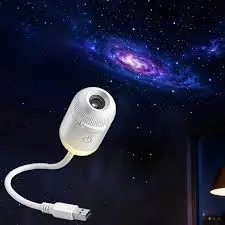
At its core, this appears to be a small USB-powered projection light designed to throw colorful images onto a wall or ceiling. Product listings describe versions with interchangeable film discs, galaxy and underwater-style scenes, a flexible 360-degree neck and a compact design that can be used in a bedroom, children’s room or living space. A Walmart listing, for example, describes a version with three films and a flexible gooseneck that can be rotated to direct the image.
There is nothing wrong with that type of projector. In fact, a simple galaxy projector can be a fun little bedroom accessory when it is priced and advertised honestly. What makes this particular product interesting is the language being used to sell it. Calling it a “5D holographic” night light creates the impression that you are getting some kind of advanced hologram floating in the room, when the available product descriptions point much more toward conventional optical projection.
The product page I found for Comauo says the 5D system creates “clearer light layers,” smoother motion and a deeper room-filling visual effect. It also promotes Smart Dynamic Scene Generation and Smart Network Sync, but the description does not provide much technical information explaining what makes the system genuinely 5D or what the network-sync technology actually does.
Is It Really a 5D Holographic Projector?
This is the part I would be most skeptical about.
The word “holographic” sounds impressive, but not every product advertised with that word is producing a true hologram. A conventional projector can create very attractive three-dimensional-looking patterns, especially when the room is dark and the image is moving. That does not automatically make the projection a true holographic display.
The Comauo Ocean & Galaxy Projector appears to rely on optical projection and physical image films rather than some groundbreaking holographic display technology. The Walmart listing specifically describes multiple films that project different themes, while the product marketing talks about an HD optical lens and light layers. That is a long way from the sort of futuristic hologram many people will picture when they read “5D holographic.”
I would therefore treat “5D” as marketing language rather than a technical specification. The projector may create a nice layered or atmospheric light effect, but I would not buy it expecting a floating, room-sized hologram that looks like something from a science-fiction movie.
The “Smart Network Sync” Claim Also Needs a Closer Look
Another phrase that caught my attention was “Smart Network Sync.” It sounds like the projector connects to a network, communicates with other devices and perhaps synchronizes scenes automatically. That would be a useful feature if it were properly explained.
The problem is that the product descriptions I found are surprisingly vague about it. The Comauo listing says the technology supports intelligent connectivity and more flexible scene performance and dynamic visual updates, but it does not clearly explain what devices are supported, whether an app is required, what network is being used, or exactly what can be synchronized.
That makes the feature difficult to evaluate. When a product has genuinely useful smart functionality, I expect the seller to explain how it works. Instead, “Smart Network Sync” seems to be doing more work as a sales phrase than as a clearly documented feature. I would not place much value on that claim unless the seller provides proper instructions and technical specifications.
What Are Buyers Saying About the Projector?
This is where things become considerably more concerning.
A Walmart listing for the Comauo Ocean & Galaxy Projector currently shows an average rating of just 2.6 out of 5 from 18 ratings, with half of the listed ratings being one-star reviews. Recent verified-purchase feedback includes complaints about the product not matching expectations, tiny buttons and discrepancies between the number of films shown in the advertising and what was actually supplied.
Those complaints might sound fairly minor on their own, but other reviews are much more serious. On Desertcart, buyers describe the image as very small, difficult to focus and blurry, while another reviewer said the projector component did not work even though the night-light portion did. One customer described the product as essentially a cheap night light rather than the impressive projector shown in the advertisement.
That particular complaint comes up repeatedly: the actual projected image can be much smaller and less impressive than people expect after watching the advertising. A projector can technically work and still be a disappointment if the image is tiny, dim or poorly focused.
The Projected Image Seems to Be the Biggest Problem
This is probably the most useful thing to understand before buying one.
The promotional pictures make the room look as though it has been transformed into a giant moving galaxy or underwater world. The actual product appears to be considerably more modest. One recent buyer described the images as a small circle of colors on the ceiling or wall, with poor definition even after adjustment. Another complained that the projector produced such a small viewing area that it was not worth the money.
A separate review said the projector could produce a picture but that it was extremely difficult to focus properly. Another buyer reported that the projector was top-heavy on its flexible neck and struggled to stay pointed in the desired direction.
This is exactly the kind of thing that can be missed when watching a polished product video. A dark room, carefully positioned camera and edited footage can make a relatively small projection look much bigger and brighter than it feels in an ordinary bedroom.
The Same Projector Is Being Sold Under Different Names
Another reason I would be careful is the number of names attached to what appears to be the same or closely related product.
I found current listings using the Comauo name, while other listings use Topacme and Billhol. The product descriptions are strikingly similar, with the same phrases about HD optical projection, 5D holographic glow, galaxy and ocean scenes, and Smart Network Sync.
That does not automatically mean every seller is fraudulent or that every listing comes from exactly the same company. Products like these are commonly sold through different online retailers and marketplaces. But it does mean shoppers should not assume that a fancy brand name represents a unique piece of technology.
In fact, one recent Trustpilot review concerning Billhol claimed the buyer ordered two 5D holographic projectors but received cheap plastic dome-style lights instead. The reviewer also alleged that the seller was operating under other names. That is a customer allegation, so I would not treat it as independently proven, but it is still relevant when assessing the broader pattern of complaints surrounding these products.
Comauo Reviews Are Not as Reassuring as the Advertising
Comauo’s product pages make a very polished impression. One current page displays a 4.9 rating alongside 19,544 reviews and describes the product as a “2026 Design Pick.” It also says the product was designed and developed in Los Angeles.
The problem is that almost identical product pages appear on unrelated-looking stores, sometimes with the same 4.9 rating and exactly the same 19,544-review figure. I found versions of the same marketing presentation on multiple storefronts.
That makes those headline review numbers difficult for me to use as evidence of quality. A large number displayed on a sales page is not the same thing as a large body of independently verified customer experiences. When marketplace reviews are substantially more mixed or negative, I would put more weight on those actual buyer reports than on the giant rating displayed in an advertisement.
Topacme Reviews Show Similar Problems
Topacme is another name attached to this product, and the marketing is almost identical. The product is described as a smart holographic night light with galaxy and ocean scenes, an HD optical lens and Smart Network Sync.
There are some positive comments from people who appear to enjoy the basic lighting effect, but the more useful complaints are about the physical limitations of the projector. Buyers have reported small images, weak projection, focusing problems and a product that simply does not resemble the impressive advertisements closely enough.
TikTok Shop reviews for a closely matching HD Smart Dynamic 5D projector are also mixed, with the current listing showing 3.7 out of 5 from 74 global reviews. One verified buyer specifically complained that the product was small and the pictures were not very clear.
That actually sounds much more believable to me than the idea that every unit produces a spectacular room-filling holographic display. The product seems capable of producing an atmospheric light effect, but the quality can vary considerably depending on expectations, room conditions and the specific version received.
Some Customers Also Complain About Returns
The return experience is another part of this story that I would not overlook.
A number of recent reviews describe customers trying to obtain refunds after deciding that the projector did not match the advertising. On Trustpilot, a buyer described receiving a product that was not what they expected and said the seller offered progressively larger partial refunds rather than simply resolving the problem with a straightforward return. Another buyer complained about the amount actually charged being higher than the amount displayed or expected at checkout.
There are also complaints about long delivery times and the difficulty of getting customer service to resolve problems. Again, these experiences appear to vary depending on which seller or storefront the customer purchased from, so I would not automatically apply every complaint to every version of the projector.
Still, if a product is inexpensive-looking hardware being sold at a premium price through an overseas storefront, the cost and inconvenience of returning it can completely change whether the purchase was worthwhile.
Is the Comauo Ocean & Galaxy Projector Worth It?
I can see why people buy this thing. The idea is fun, and there is nothing wrong with wanting a little galaxy or ocean effect in the bedroom. If you treat it as a small ambient projector and find a reasonably priced version from a retailer with a straightforward return policy, you may get something enjoyable.
The problem is that the advertising encourages you to expect much more than that. The words “5D holographic,” “next-gen smart projection” and “Smart Network Sync” make the product sound like a genuinely new type of display. The actual specifications and customer feedback suggest something much simpler: a compact optical projector with interchangeable scenes and a decorative lighting function.
That does not make the gadget useless. It just means the price needs to make sense for what you are actually receiving.
Conclusion
After looking through the product listings and buyer feedback, I would not call the Comauo Ocean & Galaxy Projector a genuine 5D hologram in the way most shoppers would understand that term. It looks much more like a conventional mini projection light that has been given a futuristic marketing makeover.
The biggest concerns for me are the exaggerated-sounding technology claims, the lack of clear technical information about “Smart Network Sync,” the very different review experiences, and the number of complaints about small, blurry or weak projections. The current Walmart rating of 2.6 out of 5 and the recent complaints appearing on other marketplaces do not support the idea that this is some revolutionary home entertainment device.
My final take is simple: the Comauo Ocean & Galaxy Projector may work as a basic ambient night-light projector, but I would not buy it expecting a true 5D holographic experience. If the price is high because you believe you are getting advanced holographic technology, I would save the money. If you only want a small galaxy-style light, there are much simpler projectors that can do that without dressing the product up with impressive-sounding technology claims.
And that is really what I think gets lost in all the advertising. A little projector that throws stars onto your ceiling can be perfectly enjoyable. It does not need to pretend to be something from the future to be worth buying.
Check out Ecosaver that I reviewed earlier.