
I bought the Sani Spiral Fruit & Veggie Cleaner because the advertisements made it look like one of those genuinely useful kitchen gadgets that could save me time while making my family’s food safer. The videos were everywhere, showing people putting apples, strawberries, grapes and vegetables into a bowl of clean water, switching on the little device and then watching the water turn brown and murky. The message was pretty obvious: all of that disgusting-looking stuff had supposedly been pulled off the produce. Pesticides, wax, dirt and other chemicals were being removed right before your eyes.
I wanted to believe it, which is why I bought several Sani Spiral cleaners so I could share them with family. I actually tested mine instead of simply relying on the advertisements, and what I found completely changed my opinion. After washing two apples, the water was brown, which initially seemed to support everything I had seen in the videos. But then I cleaned the bowl, filled it with fresh clear water and ran the device without putting a single fruit or vegetable into it. The water turned brown again.
I did it again because I thought maybe something had been left behind from the first test. The same thing happened. I have now run it four times in clear water alone, with no produce whatsoever, and each time brown, nasty-looking material has come out of the machine or appeared in the water. As I write this, I have another cycle running and the water is becoming brown again. At this point, I am not asking myself whether the Sani Spiral is removing pesticides from my apples. I am asking why a device that is supposed to show me what it removed from my food is producing the same dirty-looking water when there is no food in the bowl at all.
For me, that is enough to call this what it is: a scammy product marketed with a misleading dirty-water demonstration.
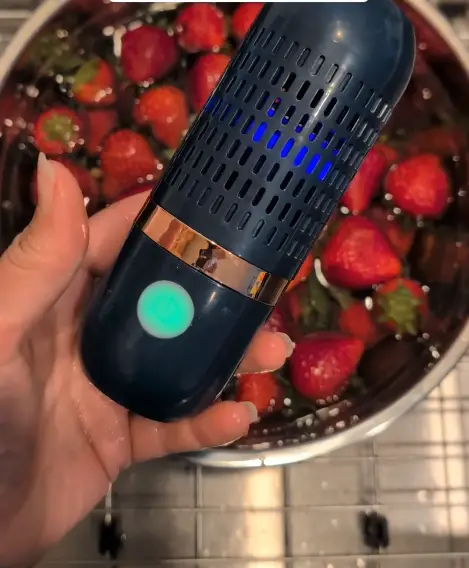
Sani Spiral Fruit Cleaner Scam: The Brown Water Is the Whole Sales Pitch
The entire Sani Spiral marketing campaign depends heavily on making the customer believe that the color of the water is evidence of what was removed from their food. The company’s current website claims that the device uses “natural ions” to break the molecular bonds of surface pesticides and industrial wax, and says it can clean an entire bowl of fruit in under three minutes. Another Sani Spiral sales page claims that the device can remove up to 99% of common pesticides and says its electrolysis process creates an active solution that eliminates pesticides and kills bacteria.
Those are extremely strong claims for a little consumer gadget, and the advertisement makes the brown water do most of the convincing. You aren’t shown a laboratory result showing a pesticide concentration before and after treatment. You aren’t shown an independent scientist testing the water. Instead, you’re shown something that looks disgusting and are encouraged to assume that the disgusting material came from your food.
My own test made that argument impossible for me to accept. If the device produces brown water when two apples are inside, that could be explained in many different ways. But when the same device produces brown water after I have cleaned the bowl and placed it in nothing but clear water, the color cannot reasonably be presented to me as proof that pesticides were pulled from the apples.
That is not a minor disappointment. It goes directly to the main reason I bought the product in the first place.
I Tested Sani Spiral Without Fruit and the Water Still Turned Brown
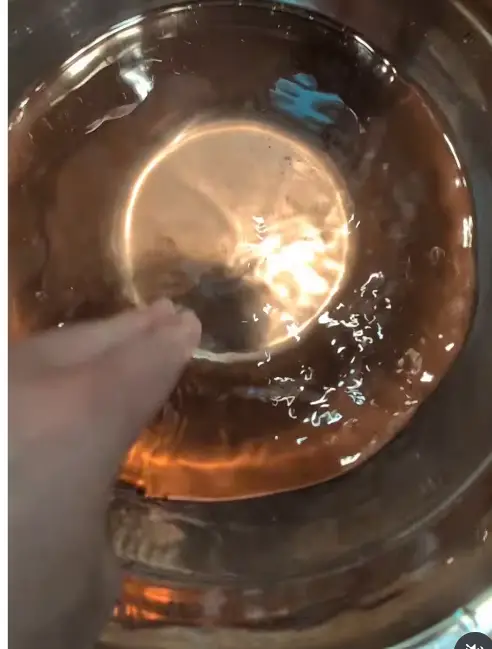
This was the test that made me stop giving the product the benefit of the doubt.
I washed the bowl properly and filled it with fresh water. There were no apples, no grapes, no strawberries, no lettuce and no vegetables of any kind. I wanted to know whether the device itself could change the water, because I had started wondering whether the dramatic brown color in the advertisements might have another explanation.
It did.
The water became brown, and I saw material coming out of the device. I repeated the experiment several times because I wanted to make sure I wasn’t reacting to one strange result. The result kept happening. Clear water went in, and brown water came out.
At that point, I would have to be incredibly gullible to look at another Sani Spiral advertisement showing brown water and automatically conclude, “Those are all the pesticides coming off the fruit.”
Maybe there is a chemical or electrochemical reaction occurring inside the device. Maybe minerals in tap water are reacting with the electrodes. Maybe the device is producing some other residue. I am not going to pretend I can identify the brown material simply by looking at it. But that uncertainty actually makes the advertising problem worse, because the company is asking customers to make an assumption that my own testing did not support.
People online testing similar Pure Pod-style electrolysis produce cleaners have reported the same basic problem, including users who say the water turned brown when the device was operated without fruit or vegetables. Some users specifically described the brown material as coming from the device itself or being produced by reactions with minerals in the water. These are user reports rather than laboratory findings, but they are remarkably consistent with what I experienced.
So What Is Actually Making the Water Brown?
This is where I think these advertisements cross the line from clever marketing into deception.
I cannot scientifically identify the material in my bowl without having it analyzed, and I am not going to make up a laboratory explanation just to make the article sound authoritative. What I can say is that the machine repeatedly produced brown discoloration in water without any produce being present.
That means the brown water itself cannot be treated as a reliable measurement of how much dirt, pesticide or wax has been removed from your food.
This is not some obscure technical complaint either. The same question has been raised by consumers testing similar devices. One recent discussion about Pure Pod described users running the unit in plain water and seeing the water turn brown without any produce inside. Another user described the brown material as a reaction involving minerals in tap water.
And this is exactly why the social-media videos bother me. The viewer sees the water change and immediately thinks, “That was on my food.” The advertisement rarely stops to prove that conclusion.
It simply lets the viewer make it.
Don’t Confuse Brown Water With Pesticide Removal
The Sani Spiral website currently claims that its technology can remove up to 99% of common pesticides. That’s a very specific-sounding number, but what matters is what independent evidence exists behind it.
I have not seen independent laboratory evidence that makes the brown-water demonstration proof of that claim. I have seen the company’s own marketing claims and testimonials, but those are not the same thing as independent testing.
That distinction matters because there is nothing inherently magical about washing produce. The FDA recommends washing fruits and vegetables thoroughly under running water and gently rubbing them, with a clean produce brush appropriate for firm produce such as apples and melons. The agency does not tell consumers that they need an electronic “purifier” to make their produce safe.
A gadget that helps agitate water may have some usefulness. But that is very different from selling a machine as a high-tech pesticide remover and using dirty-looking water as the visual proof.
My Apples Made the Sani Spiral Look Convincing at First
I want to be fair about my own experience because the first test really did make me question whether I had discovered something useful.
I put two apples into the bowl and ran the cleaner. When I saw the water turn brown, I understood immediately why these advertisements are so effective. It looks horrible. You start imagining everything that could have been sitting on the surface of the fruit, and the whole thing suddenly feels like a smart investment rather than another gadget.
If I had stopped there, I probably would have written a completely different review.
The problem is that I didn’t stop there. I cleaned the bowl and repeated the test without the apples. That’s when the story stopped making sense.
This is why I think consumers should be particularly skeptical of those before-and-after Sani Spiral videos. The “before” is clear water and the “after” is dirty-looking water, but without a proper control test, you have no way of knowing what caused that change. My own control test, clear water with no produce, gave me the exact reason to question the entire demonstration.
Is Sani Spiral a Scam or Legit?
After using it myself, I consider the Sani Spiral Fruit Cleaner a scam.
I’m not saying that because I expected some miracle machine to make my apples chemically perfect. I’m saying it because the product is being marketed around a dramatic claim that the brown water represents pesticides, wax and other contaminants being removed from produce, while my own testing showed the device producing brown water when there was no produce present.
The marketing also makes claims that go far beyond what I would expect from an ordinary produce washer. The current Sani Spiral website says the device can break down pesticide and wax bonds, kill bacteria, keep produce fresh for twice as long and clean an entire bowl of fruit in minutes.
That would require convincing independent evidence, instead, the customer is shown murky water, that isn’t good enough for me.
The Sani Spiral Website Is Another Reason I Would Stay Away
There is another issue that caught my attention while researching the product. The domain currently used to market Sani Spiral was registered in August 2026, making the website extremely new. Scam Detector currently gives sanispiralfruitcleaner.com a score of 20.5 out of 100 and labels it “Suspicious. Unsafe. Doubtful.” That score is an automated assessment rather than proof of criminal activity, so I wouldn’t use it by itself to call a company fraudulent. But combined with everything else I found, it certainly doesn’t make me more comfortable buying from the site.
The sales pages also lean heavily on the usual direct-response marketing techniques: dramatic claims, supposed customer results, strong discounts and urgency designed to get you to order before you have time to question the presentation. None of that proves a product doesn’t function, but when the core demonstration itself fails my most basic test, I don’t see a reason to take the sales pitch on faith.
What Should You Do If Your Sani Spiral Is Producing Brown Gunk?
If you already bought one and you’re seeing the same thing I saw, I would stop running it repeatedly in the hope that the water will eventually become clear.
That was my own question after the fourth test: Should I keep running cycles until the brown stuff disappears?
No. I’m returning it.
I don’t see a good reason to keep putting an unexplained device-generated residue into water that is supposed to be used for washing food. Take photographs or video of what you’re seeing, keep your order confirmation and contact the seller to request a refund. If the seller refuses to resolve the problem and you believe you were misled about what you purchased, contact your payment provider and explain the situation.
I also wouldn’t put more fruit into the bowl simply to see whether the brown water becomes even darker. You’ve already learned the important part from the empty-water test.
Sani Spiral vs. Normal Produce Washing
The funny thing is that after all of this, I have gone back to something extremely boring: washing my produce normally.
The FDA recommends washing fruits and vegetables under running water and gently rubbing them. Firm produce can be scrubbed with a clean produce brush when appropriate. The FDA also advises against using soap, detergent or commercial produce washes because those substances can leave residues on food.
That doesn’t produce a dramatic bowl of brown water for a TikTok video, but at least I know what I’m actually doing. I’m physically rinsing the food, rubbing the surface and removing visible dirt rather than staring at the color of a bowl and trying to guess what the machine has supposedly extracted.
And after my experience with Sani Spiral, I would rather spend my money on good produce than pay for a device that needs a dramatic visual trick to convince me that it works.
It’s a Scam, and I Would Return It
I bought the Sani Spiral because I genuinely thought it might be useful. I bought several because I wanted to share them with family. I washed two apples and saw brown water, and for a moment I thought the advertisements might have been telling the truth.
Then I cleaned the bowl and ran the device in clear water with nothing inside it, the water still turned brown.
I repeated the test. Same problem. I repeated it again. More brown residue. At that point, I couldn’t look at another Sani Spiral advertisement showing dirty water and pretend that I knew the brown stuff had come from the fruit.
For me, that is the end of the story. Sani Spiral is a scam, and I do not recommend buying it. The product is marketed as though the dirty-looking water is proof that pesticides, wax and other contaminants are being pulled from your food, yet my own testing showed the machine could create that same effect without any food being washed. The current marketing makes aggressive pesticide-removal and bacteria-killing claims, but I have not seen independent evidence that justifies treating the brown-water demonstration as proof of those claims.
Conclusion
If you already bought one and you’re seeing brown or “moldy” material appear in clean water, I would not keep running cycle after cycle hoping it eventually clears. Stop using it, document what happened and ask for your money back.
I know how disappointing that feels because I bought several of these expecting to give something useful to my family. Instead, I’m left with a product that looked impressive in an advertisement but raised even more questions once I actually tested it. And that’s the part these viral videos don’t show you.
Check out Mansculpt wave therapy plus that I talked about earlier.