
There is something particularly disturbing about the latest Memo Honey dementia cure advertisements because they are not simply trying to sell another ordinary memory supplement. The sales pitch is built around a much bigger story: Bill Gates supposedly discovered or endorsed a special honey recipe that can reverse Alzheimer’s disease and dementia, a breakthrough that the medical establishment supposedly does not want people to know about. The videos can be extremely convincing at first glance, especially when they use familiar news graphics, artificial versions of famous people and long interviews that appear to explain the science behind the supposed discovery. But once you start looking past the presentation and checking the claims themselves, the story falls apart.
The Memo Honey name is part of a much wider pattern that has been circulating online throughout 2026. Similar advertisements have promoted products under names such as Brain Honey, Mind Boost, Memopezil and CogniHoney, while changing the product name, website and sometimes the celebrity used in the video. Forbes recently reported on this broader “brain honey” scam pattern and noted that false advertisements have claimed Bill Gates and other celebrities endorsed honey-based products for Alzheimer’s disease. Snopes also found no evidence that Gates created, endorsed or sold these products.
So, is Memo Honey a legitimate Alzheimer’s treatment? Based on the evidence behind the viral Bill Gates campaign, no. There is no credible evidence that Bill Gates endorsed a Memo Honey dementia cure, discovered a secret honey recipe for reversing Alzheimer’s, or recommended these capsules as a treatment for memory loss.
What Is the Memo Honey Bill Gates Scam?
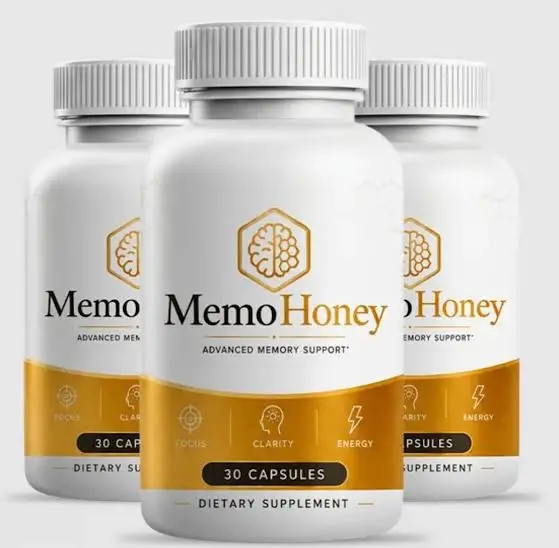
The advertisement usually begins with a story that sounds almost too good to ignore. Bill Gates is presented as someone who has spent years researching dementia or investing in Alzheimer’s research before supposedly revealing a natural breakthrough involving honey. The viewer is then led through an extremely long video explaining how a particular combination of foods or ingredients can supposedly repair damaged brain cells, reverse cognitive decline or even stop Alzheimer’s disease.
The exact recipe and product name can change, which is one of the reasons these advertisements are difficult to track. One version might promote “Brain Honey,” another might use “Mind Boost,” while another landing page sells something called Memo Honey or MemoHoney. The basic story remains remarkably similar: a famous person supposedly knows about a simple natural solution, mainstream medicine supposedly ignored it, and the viewer is given a limited-time opportunity to purchase capsules containing the mysterious formula.
That format is not just something I would dismiss because it looks suspicious. There are actual consumer reports documenting this exact type of Bill Gates brain-honey promotion. A BBB Scam Tracker complaint from July 2026 described an AI-generated presentation promoting a brain honey “cure” for Alzheimer’s and claiming Bill Gates and the Gates Foundation endorsed it. Another complaint from August described a Bill Gates presentation promoting a brain supplement using honey and reported a $177.99 loss.
There is also a March 2026 BBB report involving a product called Mind Boost. The consumer said a roughly 30-minute video appeared to show Bill Gates discussing dementia research and a honey-based formula involving lithium orotate and anthocyanins. The buyer described the video as a deepfake and said the ingredients discussed in the presentation did not appear on the product label.
That is important because it shows this isn’t simply a case of somebody misunderstanding an ordinary supplement advertisement. Consumers have actually reported losing money after being exposed to these fabricated celebrity presentations.
Did Bill Gates Endorse Memo Honey?
I could not find credible evidence that Bill Gates endorsed Memo Honey, Memo Honey pills, a “dementia honey recipe,” Brain Honey or any other supplement being sold through these viral advertisements.
The fact that Bill Gates has a genuine connection to dementia research makes the scam considerably more believable. Gates has publicly supported Alzheimer’s research, so using his name in a story about a supposed breakthrough gives the advertisement an appearance of credibility. That legitimate background, however, does not mean he is connected to a particular supplement being sold online.
This is where the scammers are clever. They don’t necessarily have to invent every part of the story. They take something true — Bill Gates has an interest in Alzheimer’s research and attach a completely different claim to it. The result is a story that feels plausible to someone watching a 30-minute video without independently checking where the product came from.
Forbes reported that the same false “brain honey” story has circulated under multiple product names and that advertisements have falsely associated the products with Gates and other well-known figures. The publication also noted that the advertisements often begin with a supposed natural remedy involving honey and other foods before eventually directing viewers toward paid supplements.
The AI Bill Gates Video Is a Major Part of the Trick
The use of AI-generated or manipulated celebrity footage is one of the most troubling parts of this campaign. A person watching a video of Bill Gates apparently explaining dementia research may naturally assume that the video itself is evidence of an endorsement. It isn’t.
Artificial intelligence can now produce remarkably convincing video, voices and lip movements, and scammers have learned that putting a recognizable face at the beginning of a sales funnel makes people much more willing to keep watching. The same technique has been used with doctors, television personalities and other celebrities in advertisements for questionable supplements.
The problem becomes even worse when the fake video is surrounded by familiar-looking news branding. Some versions have used the appearance of CNN, ABC News or other established media organizations to make the story look like a genuine television investigation. Forbes specifically reported that false brain-honey promotions have used fake news-style material and fabricated celebrity endorsements.
A genuine Bill Gates interview about Alzheimer’s research would not automatically prove that a supplement is legitimate anyway. But in this case, there is an even simpler issue: there is no credible evidence that the supposed endorsement exists in the first place.
What About the Positive Memo Honey Reviews?
This is another part of the sales funnel that deserves a closer look. The MemoHoney websites I found currently display enthusiastic customer testimonials, including people claiming improvements in memory, mental clarity and cognitive function. One current MemoHoney website even labels the testimonials as “verified” and promotes a 4.9-out-of-5 rating across thousands of orders. Those are claims made by the seller, however, and they should not be confused with independent clinical evidence.
There is also an important complication: MemoHoney is not one single clearly identifiable product online. I found multiple websites using variations of the MemoHoney name and different formulations. One current site describes a four-ingredient capsule containing L-arginine, L-citrulline, niacin and beta-alanine, while another 2026 announcement describes a different ten-ingredient MemoHoney formula containing ingredients such as Bacopa monnieri, Alpha-GPC, lion’s mane, green tea extract, acetyl-L-carnitine, bilberry, vitamin B6, coleus forskohlii, cinnamon bark and Himalayan pink salt.
That alone is a good reason not to assume that every MemoHoney bottle advertised online is the same product.
More importantly, none of those ingredient lists establishes that the capsules cure Alzheimer’s disease or dementia. A supplement can contain ingredients that have been studied individually without the finished product being proven to reverse a neurodegenerative disease. Seller testimonials cannot fill that gap.
So when you see dozens of five-star Memo Honey reviews underneath one of these advertisements, I would treat them as marketing material rather than proof that the product works. In some versions of this scam, the entire sales environment, the video, testimonials, celebrity endorsement and supposed news story, is designed to move the viewer toward the checkout page.
Can Honey Cure Alzheimer’s or Dementia?
There is a huge difference between saying that honey or another food may be part of a healthy diet and claiming that a particular honey recipe can cure Alzheimer’s disease. The latter is an extraordinary medical claim, and the viral Memo Honey advertisements do not provide the kind of clinical evidence that would justify it.
The Alzheimer’s Association and other major medical organizations recognize Alzheimer’s as a complex disease requiring proper medical evaluation and management. A dramatic online video cannot replace that process, particularly when it promises to reverse a progressive neurological condition with a secret recipe that somehow has remained hidden from the medical community.
The biggest concern here isn’t that somebody might spend $50 or $100 on an ordinary supplement that doesn’t live up to its advertising. It is that someone experiencing real memory problems could believe they have found a cure and postpone speaking with a doctor. That can be especially serious when memory loss has another underlying cause that should be evaluated.
The MemoHoney sites themselves now contain disclaimers that are much more cautious than the viral sales videos. For example, one current MemoHoney FAQ explicitly says the product is a dietary supplement and not a treatment for Alzheimer’s disease or dementia. Another current product announcement similarly states that MemoHoney is not intended to diagnose, treat, cure or prevent those conditions.
That tells you something important about the difference between the sensational claims made in scam-style videos and the language used on the product pages themselves.
Why Does the Product Keep Changing Names?
This is probably the most revealing part of the whole story. Once one product name becomes widely reported as a scam, it is relatively easy for whoever is behind the marketing to create another website, change the bottle, rename the supplement and start running essentially the same advertisement again.
That’s why searching only for “Memo Honey scam” may not tell the whole story. The same Bill Gates dementia narrative has appeared alongside Brain Honey, Mind Boost, Memopezil, CogniHoney and other names. Forbes specifically documented this pattern, while BBB complaints show consumers encountering different products while being exposed to remarkably similar Bill Gates presentations.
This is also why I would be careful about making the blanket statement that every supplement carrying the words Memo Honey is necessarily the same operation. There are currently several websites using the name, and at least some present themselves as ordinary dietary supplements rather than Alzheimer’s cures. The stronger conclusion is about the Bill Gates dementia-cure campaign itself: the celebrity endorsement and miracle-cure story are not supported by credible evidence.
That distinction matters because it keeps the review focused on what can actually be established instead of lumping every product with a similar name into one accusation.
Why the Long Video Matters
One thing I noticed repeatedly with these types of advertisements is how much time they ask the viewer to invest before revealing what they are actually selling. You may watch what appears to be an interview or documentary for 20 or 30 minutes before the presentation finally transitions into a product pitch.
That format is effective because the longer you stay, the more emotionally invested you become in the story. You hear about people supposedly recovering their memories, watch a celebrity appear to explain the science, hear that doctors are supposedly hiding the information, and then are told that the opportunity is available for a limited time. By the time the bottle appears on screen, it doesn’t feel like you are buying a supplement anymore. It feels like you are taking advantage of a medical breakthrough before somebody takes it away.
That is precisely why these advertisements should be judged by evidence rather than production quality. A convincing video isn’t a clinical trial, a celebrity’s AI-generated face isn’t an endorsement, and a page full of five-star testimonials isn’t proof that dementia can be reversed.
Is Memo Honey Legit or a Scam?
My verdict depends on which claim we’re talking about.
If the question is whether Bill Gates endorsed Memo Honey as a cure for Alzheimer’s or dementia, I found no credible evidence supporting that claim. The broader Bill Gates “brain honey” campaign has been independently reported as a scam pattern involving false endorsements, manipulated media and unproven supplements.
If the question is whether every product currently sold under the MemoHoney name is automatically fraudulent, I would not make that blanket accusation. There are multiple MemoHoney websites and formulations online, including pages that explicitly state the product is a dietary supplement and not a treatment for dementia or Alzheimer’s.
But if the Memo Honey advertisement you are looking at tells you that Bill Gates discovered a secret honey recipe that can reverse Alzheimer’s, shows an AI-generated Gates video, uses fake news branding, promises a dementia cure and then funnels you toward capsules, I would not buy it. The evidence behind that particular marketing story simply isn’t there.
What To Do If You Already Bought Memo Honey
If you already placed an order because you believed Bill Gates was endorsing the product, don’t panic, but don’t ignore the transaction either. Keep your order confirmation, emails, receipts, screenshots of the advertisement and any information you received from the seller. If the charge looks suspicious, contact your bank or credit card issuer and explain that you believe you were deceived by a fraudulent or misleading online advertisement.
You can also report internet fraud through the FBI’s Internet Crime Complaint Center, commonly known as IC3. If you supplied sensitive financial information during the purchase, keep an eye on your account for additional charges and contact your financial institution promptly if anything unexpected appears.
Most importantly, don’t let the advertisement convince you that you need to replace legitimate medical care with a bottle of capsules. Memory loss can have many causes, and persistent or worsening cognitive problems deserve a proper medical evaluation rather than an internet “secret” that supposedly cures everything.
Don’t Confuse a Famous Face With Proof
The Memo Honey Bill Gates dementia cure story is a good example of how modern online scams have changed. The old-fashioned fake supplement advertisement has been replaced by something much more elaborate: an AI-generated celebrity, a fake interview, a manufactured medical breakthrough, a dramatic story about information being suppressed and a product waiting at the end of a very long video.
That presentation can look impressive, but the basic question remains simple: Did Bill Gates actually endorse Memo Honey as an Alzheimer’s or dementia cure? There is no credible evidence that he did. Independent reporting has already identified the wider “brain honey” campaign as a false endorsement scheme, and BBB complaints show that consumers have lost real money after encountering these promotions.
So if you came across a Memo Honey review claiming that Bill Gates discovered a secret honey recipe, don’t let the video quality or the number of glowing testimonials make the decision for you. The name on the bottle can change, the website can disappear and the celebrity in the video can change, but the sales tactic remains much the same. A supposed Alzheimer’s cure needs far more than a famous face and a persuasive story, and this particular Bill Gates endorsement claim does not hold up.
Check out Mansculpt wave therapy plus that I talked about earlier.