
VapoCept is being sold as a daily memory and focus supplement for people who want better concentration, mental clarity and support for their cognitive performance. The marketing makes it sound like a fairly simple routine: take one capsule a day and give your brain some extra nutritional support. The formula is said to contain six nutrients, including arginine, citrulline-related compounds, niacin and beta-alanine, and the website presents these ingredients as part of a broader approach to memory and mental performance.
That sounds promising until you start looking at what is actually known about the finished product. I went through the VapoCept claims, the ingredient information, pricing and website details, as well as the customer complaints and concerns surrounding the way it has been promoted online. I also came across claims that some of the promotional material uses AI-generated versions of celebrities, which is particularly concerning when those images or videos could make it look as though a well-known person is personally recommending a supplement. After putting everything together, I don’t think VapoCept is something I would buy simply because an advertisement promises better memory and concentration.
What Is VapoCept?
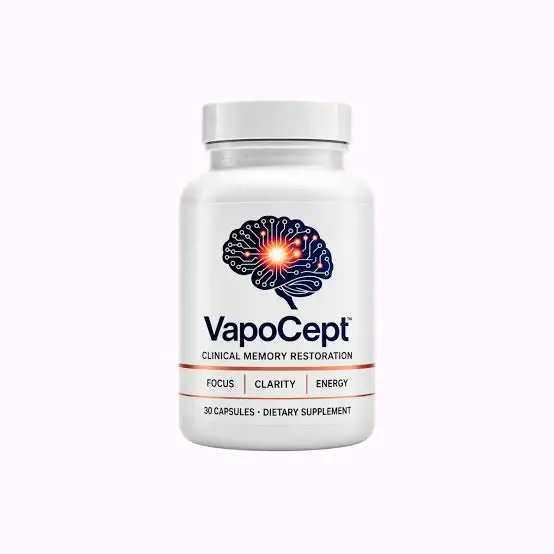
VapoCept is a dietary supplement marketed primarily for cognitive support. According to the product’s advertising, it is intended to help with memory, focus, concentration and mental clarity rather than being presented as a prescription treatment for a neurological condition. The recommended use is one capsule per day.
The ingredient list is what makes this product a little different from the typical memory supplements that contain familiar ingredients such as ginkgo biloba, bacopa or large doses of vitamins and minerals. VapoCept’s formula reportedly includes arginine, citrulline compounds, niacin and beta-alanine among its six listed nutrients. These are real nutritional compounds, but their presence in a supplement does not automatically mean that the product has been proven to improve memory.
That is an important point when looking at any supplement marketed for the brain. An ingredient can have a legitimate role in the body without a finished product being clinically demonstrated to improve memory or concentration. VapoCept needs to be judged on the evidence for the actual formula and the doses being used, not simply on whether its ingredients sound scientific.
VapoCept Ingredients: What Are You Actually Taking?
Arginine is an amino acid involved in the production of nitric oxide, which plays a role in blood vessel function. Citrulline is also associated with nitric oxide production because the body can convert citrulline into arginine. These compounds are more commonly discussed in relation to blood flow and exercise performance than as established memory-enhancing ingredients.
Beta-alanine is another amino acid that you may recognise if you have ever looked at sports supplements. It is particularly associated with exercise because it contributes to carnosine levels in muscle. That makes it an interesting ingredient in a performance supplement, but it does not automatically translate into better memory or sharper concentration.
Niacin, or vitamin B3, is a legitimate nutrient that the body needs for normal energy metabolism and other functions. A deficiency can cause health problems, but that does not mean taking additional niacin when you already get enough from your diet will suddenly make you more focused or improve your memory.
This is where I think the VapoCept advertising needs to be viewed realistically. There is nothing inherently suspicious about these ingredients, but the leap from “these nutrients have biological functions” to “this supplement will improve your memory and concentration” is much bigger than the sales pitch may make it seem.
Does VapoCept Really Improve Memory and Focus?
This is the part I would pay the most attention to before ordering.
VapoCept is marketed around some fairly strong cognitive claims, but I have not seen convincing independent clinical evidence showing that the finished VapoCept formula improves memory, focus or mental clarity in healthy adults. There is a substantial amount of research into individual nutrients and compounds that can be used to support various functions in the body, but that is not the same as having a clinical trial showing that VapoCept itself produces meaningful improvements in cognition.
If you are expecting to take one capsule and suddenly find yourself concentrating better, remembering everything more easily and getting through mentally demanding work without distractions, I would keep expectations firmly in check. There are many reasons why someone may experience problems with concentration or memory, including poor sleep, stress, medications, diet and underlying health conditions. A supplement advertisement cannot reasonably reduce all of that to a lack of the right capsule.
I also wouldn’t be impressed by a marketing page simply because it uses words such as “neuro,” “cognitive,” “brain health” or “mental performance.” Those terms can make a product sound medically sophisticated without actually proving that the product delivers the results consumers are looking for.
VapoCept Reviews and Customer Complaints
The customer feedback surrounding VapoCept is another area where I would do some homework before spending money. There are positive testimonials and promotional reviews online, but there are also complaints concerning the product and the way it is marketed. As usual with supplements sold heavily through online advertising, I would be careful about treating testimonials on sales pages as independent proof that the product works.
A person saying that they felt more focused after taking VapoCept may genuinely believe that it helped them, but one person’s experience cannot establish that the formula improves memory for everyone. Supplements can also be affected by expectations and other changes people make at the same time, such as sleeping more, drinking less alcohol, changing their diet or simply paying closer attention to their health.
The complaints are more useful when they concern the actual buying experience. If customers are reporting problems with ordering, communication, pricing or getting a satisfactory resolution, those are things I would want to know before handing over my card details. A memory supplement is still an online purchase, and the company selling it should be as transparent about the transaction as it is about the ingredients.
VapoCept and the Celebrity Videos
One of the stranger concerns surrounding VapoCept is the promotional material that has reportedly used AI-generated versions of celebrities. This is something I would take seriously because artificial images and videos can make it appear that a famous person has personally endorsed a product when they have not.
There is a big difference between a normal advertisement using a celebrity-style presentation and a video that creates the impression that an actual celebrity, doctor or public figure is speaking about a supplement. AI makes it increasingly easy for scammers and aggressive marketers to create convincing fake endorsements, particularly in social media advertisements where viewers may never stop to check the original source.
I would therefore be very cautious if you came across VapoCept through a video claiming that a famous person discovered, recommends or personally uses the supplement. Before believing it, check whether the celebrity’s official channels or reputable news sources actually contain that endorsement. If they don’t, the video should not be treated as evidence that the person supports VapoCept.
Is VapoCept FDA Approved?
VapoCept is a dietary supplement, not an FDA-approved medication for memory loss, concentration problems or cognitive decline. The product’s website includes the familiar FDA disclaimer stating that the claims made about the supplement have not been evaluated by the Food and Drug Administration.
That wording is not unusual for dietary supplements, but consumers sometimes misunderstand what it means. It does not mean the FDA has tested VapoCept and determined that it works. It also does not mean that the FDA recommends it for memory or focus. It is essentially a reminder that the product’s marketing claims have not gone through the type of premarket approval process required for an FDA-approved drug.
So if an advertisement gives you the impression that VapoCept has been medically approved because it contains certain nutrients or is manufactured according to particular standards, I would not make that assumption.
VapoCept Price: Is It Worth the Money?
Price is another reason I would hesitate. VapoCept is not being positioned as an inexpensive bottle of basic vitamins that you can casually add to your shopping basket. The pricing is relatively high considering the limited independent evidence available for the finished formula.
That changes the way I look at the product. If a supplement costs very little and you are simply buying it as a source of a nutrient you know you need, the decision is fairly straightforward. When a company charges a premium because its product supposedly improves memory, focus and mental clarity, I expect much stronger evidence to justify that price.
I would also look carefully at the final checkout amount rather than focusing on the advertised price of a single bottle. Supplement websites sometimes make larger packages appear dramatically cheaper per bottle, which can encourage people to spend considerably more than they originally intended.
So, Is VapoCept a Scam?
I would not say that the mere fact that VapoCept is a supplement makes it a scam, and I have not seen enough evidence to claim that the bottle itself does not exist or that every customer is being deliberately defrauded. There are identifiable ingredients and a real product being marketed as a dietary supplement.
The bigger problem is the gap between what the product appears to contain and what consumers may think it can actually do. VapoCept makes strong claims around memory, concentration and mental clarity, yet the independent evidence for the finished formula does not appear strong enough to justify treating those claims as established facts. Add in the high price, customer complaints and reported use of AI-generated celebrity promotional material, and I think there are plenty of reasons to approach the product carefully.
If the marketing had simply said that VapoCept provides nutritional ingredients and may support general wellness, I would have far fewer reservations. Once the advertising starts presenting it as a solution for significant cognitive improvement, the standard for evidence needs to be much higher.
Conclusion
After looking at VapoCept as a whole, I would not recommend buying it based on its memory and focus claims alone. The ingredients are not necessarily bad, and several of them have legitimate functions in the human body, but that does not establish that the finished VapoCept supplement can noticeably improve memory, concentration or mental clarity.
The strongest reason I would hesitate is that the marketing appears to promise more than the available evidence can comfortably support. Paying a high price for a supplement is one thing when there are good independent studies behind the exact formula. Paying that price because an advertisement makes the product sound like a breakthrough for memory is something else entirely.
And if you encountered VapoCept through a social media video featuring what appears to be a celebrity recommending the product, I would be even more careful. AI-generated celebrity endorsements are becoming an increasingly common way of making ordinary supplements look far more credible than they really are.
would skip it unless the company can provide much stronger independent evidence for the finished formula and much clearer information to support its cognitive claims. There may be nothing inherently dangerous or fraudulent about every ingredient in the bottle, but that is not enough to make VapoCept a proven memory supplement or a good value for your money.
Check out Mansculpt wave therapy plus that I talked about earlier.