
If you came across an advertisement for Blood Pril and ended up wondering whether Blood Pril is legit, I can understand why. The promotion is made to look much more like a medical news story than an ordinary supplement advertisement. It brings in familiar names, shows what appears to be a television investigation, talks about clogged arteries and blood pressure, and then introduces a simple honey recipe that supposedly works like an “arterial flush.” It is a lot to take in before you ever get to the part where somebody wants your credit card number.
I looked into the Blood Pril promotion because the presentation did not sit right with me, particularly the way it uses the names and likenesses of people who appear to have nothing to do with the product. The campaign has been built around fake news-style pages and a long video made to resemble a 60 Minutes report, with unauthorized AI-generated or manipulated appearances of people including Dr. Sanjay Gupta, Dr. Mehmet Oz, Lesley Stahl, Mick Jagger, Denzel Washington, David Letterman, Bryant Gumbel, Harrison Ford and Dr. Caldwell Esselstyn. A recent investigation into BloodPril found the same pattern and found no evidence that CBS News produced the supposed segment or that the people shown endorsed the supplement.
That changes the way I look at the entire offer. The question is not simply whether there are capsules inside a bottle called BloodPril. There appear to be real products being sold under that name. The much bigger problem is the deceptive campaign being used to make people believe those capsules are connected to a major television investigation, famous doctors or celebrities who supposedly discovered a secret way to clean their arteries.
What is Blood Pril supposed to do?
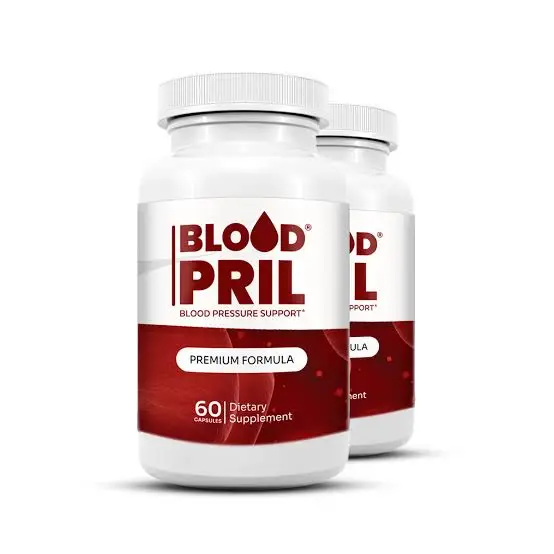
Blood Pril, also written as BloodPril, is marketed online as a dietary supplement for blood pressure and cardiovascular support. One current BloodPril website describes the formula as containing L-Citrulline DL-Malate, L-Arginine Alpha-Ketoglutarate and L-Arginine HCl, while another BloodPril site describes a completely different formula involving ingredients such as white mulberry leaf and juniper berry and talks about blood sugar and metabolic health instead.
That was one of the first things that made me stop and look closer.
These are not slightly different descriptions of the same formula. One website is selling BloodPril as a blood pressure supplement built around nitric oxide and amino acids, while another page using the same product name describes it as a blood sugar support formula with a different collection of ingredients.
There are also several domains presenting themselves as an “official” BloodPril website. That does not automatically prove that every page is fraudulent, but it makes it difficult for an ordinary customer to know exactly which company, formula and seller they are dealing with.
If I am buying a supplement for something as serious as blood pressure, I would want that information to be straightforward.
The fake 60 Minutes story is where this gets much worse
The most memorable part of the Blood Pril advertisement is the supposed television investigation.
The video is designed to give the impression that a major news program exposed a hidden cause of artery problems and then revealed a simple solution. It uses television-style graphics, familiar presenters and celebrity footage to make the story feel as though you have stumbled across something that was broadcast to the public.
The problem is that the supposed 60 Minutes segment is not a genuine 60 Minutes report.
A recent investigation into the BloodPril campaign found that the presentation imitates a CBS/60 Minutes report and uses unauthorized AI depictions of prominent doctors, celebrities and broadcaster Lesley Stahl. The investigation also found no evidence that CBS News produced the segment or that the public figures appearing in it endorsed Blood Pril.
That is not a small detail in the marketing. It is the foundation of the marketing.
The whole reason the sales video feels authoritative is because it is borrowing the appearance of a respected news program and attaching recognizable people to a product they did not establish as their own.
Did Dr. Sanjay Gupta really endorse Blood Pril?
I found no credible evidence that Dr. Sanjay Gupta endorsed Blood Pril or appeared in a genuine 60 Minutes report promoting it.
His name is particularly effective for this kind of advertisement because viewers recognize him as a physician and CNN medical correspondent. Put his face into a professionally edited video and have an AI-generated voice say something about blood vessels, arteries and blood pressure, and it can look convincing if you do not stop to check where the footage came from.
That is precisely the problem with AI-generated celebrity advertising. The person on the screen can be real while the words coming out of their mouth are completely fabricated.
The BloodPril investigation identified unauthorized AI-generated portrayals of Gupta and several other public figures in the campaign.
So if you searched “Dr. Sanjay Gupta Blood Pril,” I would not take the video itself as evidence of an endorsement.
What about Dr. Oz, Lesley Stahl and the other celebrities?
The same issue applies to the other names used in the presentation.
The campaign reportedly brings in Dr. Mehmet Oz, Lesley Stahl, Mick Jagger, Denzel Washington, David Letterman, Bryant Gumbel, Harrison Ford and Dr. Caldwell Esselstyn, among others. Their presence is not there because they have collectively reviewed Blood Pril. It is being used to create the impression that respected medical figures, celebrities and television personalities all support the same discovery.
That is a very different thing from having a legitimate endorsement.
A celebrity’s face appearing in a video is not evidence that the celebrity approved the video. With AI technology, scammers can take genuine interview footage and manipulate the audio or generate new material around it. The result can look surprisingly polished while being completely unauthorized.
And that is why I would be particularly skeptical of any Blood Pril advertisement that tells you famous people have personally discovered or recommended the product.
The “arterial flush ritual” is the real hook
The supplement is not usually what grabs your attention at the beginning.
Instead, the video promises an “arterial flush ritual” or a simple kitchen recipe involving honey and other ordinary ingredients. That is clever marketing because almost everyone wants to hear about a remedy that costs next to nothing and can supposedly be made at home.
You are not thinking about buying capsules when the story starts.
You are thinking, “What is this recipe?”That curiosity keeps you watching. The presentation then spends a very long time explaining its version of the blood-pressure story, discussing arteries and supposedly hidden causes of poor circulation, bringing in the fake medical experts and repeatedly suggesting that the answer has been deliberately overlooked. Eventually, after all that buildup, the kitchen recipe becomes a bridge to the supplement. At that point the product is presented as the more convenient or powerful way to get the supposed benefits. That is why I would not describe the honey recipe as the real product being offered. It is the hook that gets you into the sales presentation.
Does the honey recipe really clean your arteries?
I would not rely on the Blood Pril video’s claim that a honey-based kitchen recipe can perform an “arterial flush” or remove whatever material the presentation says is responsible for clogged arteries.
The language is deliberately dramatic because it turns a complicated medical subject into a simple story: something is supposedly stuck inside your arteries, the medical establishment has failed to tell you about it, and this particular ritual can flush it away.
Real cardiovascular disease is not something that can responsibly be reduced to an internet recipe.
If somebody has high blood pressure, atherosclerosis or another cardiovascular condition, that person needs proper medical evaluation rather than an hour-long video promising that a spoonful of kitchen ingredients can solve the problem.
That is particularly important because somebody watching the video may already be taking prescribed medication. A supplement advertisement should never be allowed to convince someone to stop or change prescribed treatment without speaking to their doctor.
There isn’t even one consistent Blood Pril formula online
This is probably the most interesting part of my research because it goes beyond the fake celebrity video.
When I searched for Blood Pril, I found multiple sites using the BloodPril name and presenting different versions of the product.
One current site says BloodPril is a blood-pressure supplement containing a 500 mg proprietary blend of L-Citrulline DL-Malate, L-Arginine Alpha-Ketoglutarate Dihydrate and L-Arginine HCl. It says the product is intended to support nitric oxide production and healthy circulation.
Another BloodPril website describes a completely different formula based on white mulberry leaf and juniper berry and markets the product around maintaining healthy blood sugar levels.
That is a serious problem for anyone trying to research Blood Pril ingredients before buying.
Which bottle are you actually buying?
Which manufacturer is behind it?
Which formula is being discussed in the advertisement?
And which website is actually authorized to sell it?
Those are ordinary questions that should have simple answers when you are dealing with a health supplement.
The “FDA registered facility” claim doesn’t mean Blood Pril is FDA approved
Several BloodPril pages use language about being manufactured in an FDA-registered facility or being produced under GMP standards. One page even displays an “FDA Approved” heading before later explaining that the product is made in an FDA-registered facility.
Those statements should not be confused with FDA approval of BloodPril itself.
A dietary supplement is not the same thing as an FDA-approved prescription medicine. The FDA does not approve dietary supplements for safety and effectiveness before they go onto the market in the way it approves prescription drugs.
So when a supplement website uses phrases such as “FDA registered facility,” that tells you something about the facility’s registration status. It does not mean the FDA has reviewed BloodPril and determined that it treats high blood pressure or clears arteries.
What about the Blood Pril money-back guarantee?
The websites I found advertise a 60-day money-back guarantee. One BloodPril site says customers can request a refund within 60 days and gives an email address for that purpose.
Another site says the purchase is a one-time order with no hidden autoship charges and makes similar claims about a 60-day guarantee.
On paper, that sounds reassuring.
But a money-back guarantee printed on a sales page is still just a promise from the seller. If you are dealing with a confusing network of domains and cannot clearly establish who owns the site, who processes your payment and where the seller is located, I would not treat the guarantee as the same thing as a guarantee from a major retailer.
The recent investigation also noted that the web trail surrounding BloodPril is unusually confusing, including different domains, inconsistent formulas and unclear seller information.
That is much more useful information to a potential buyer than another five-star testimonial on a sales page.
The fake reviews are another part of the sales pitch
The Blood Pril websites display customer testimonials designed to make the product appear well established and widely used. One current site, for example, displays a large collection of written reviews and a claimed average rating of 4.74 out of 5.
I would not use testimonials published on the seller’s own website as independent proof that Blood Pril works.
There is nothing unusual about a company publishing positive customer feedback, but those reviews are controlled by the seller. They do not establish that the product has been clinically proven to lower blood pressure or clean arteries.
The fake-news campaign makes this even more important. Once the advertisement has already fabricated a television report and celebrity endorsements, I am not going to treat anonymous testimonials on the resulting sales page as stronger evidence.
Is Blood Pril itself a fake product?
This is where I would phrase the conclusion carefully.
There are clearly websites selling products under the BloodPril name, and current pages provide prices, ingredient lists and ordering information. So saying that there is literally no product behind the name would be too broad.
The problem is the promotion surrounding the product.
The campaign I investigated uses a fake 60 Minutes-style presentation, unauthorized AI representations of well-known people and a supposed arterial-flush discovery to push viewers toward a purchase. A recent independent investigation found the same issues and also identified conflicting BloodPril formulas and confusing seller information.
That is enough for me to stay away from the offer being promoted through that campaign.
So, is Blood Pril legit or a scam?
If you are asking “Does Blood Pril really work?”, I would not accept the answer given by the sales video as proof. I found no credible evidence that the supposed 60 Minutes report is real, no evidence that the celebrities and doctors shown in the promotion genuinely endorsed BloodPril, and no evidence that the product has been proven to perform the dramatic “arterial flush” described in the presentation.
If you are asking “Is Blood Pril a scam?”, the answer depends on what you mean by BloodPril because several different websites are currently using the name. But the fake-news campaign promoting Blood Pril is deceptive, and I would not buy a supplement because of that advertisement.
The most troubling part is not the bottle. It is the story used to sell the bottle.
A fake television report makes the product appear medically investigated. AI-generated doctors make it appear medically endorsed. The honey recipe makes the whole thing feel simple and harmless. Then, after you have spent an hour watching the presentation, you are taken to a sales page where the supplement suddenly becomes the answer.
That is a very different experience from independently researching a supplement, checking its ingredients, speaking with a doctor and deciding whether it belongs in your routine.
Conclusion
I would stay away from the Blood Pril offer promoted through the fake 60 Minutes and celebrity videos.
There are too many things that do not line up for me to treat the campaign as a trustworthy way of buying a blood-pressure supplement. The fake news presentation is the biggest problem, but the conflicting websites and formulas make the situation even harder to understand. One BloodPril page markets the product for blood pressure using arginine and citrulline, while another sells a different formula for blood sugar support.
That is not how I would want a product presented when it concerns something as important as cardiovascular health.
If you searched “Blood Pril reviews,” the biggest thing to remember is that the viral video itself is not evidence.
Don’t let a familiar face on the screen make the decision for you. Don’t assume a fake CBS-style report was actually broadcast because it looks professional. And don’t replace medical advice with a honey recipe or an online supplement presentation.
If you have high blood pressure or another cardiovascular concern, speak with an actual healthcare professional who can evaluate your situation rather than relying on a sales video pretending to be medical journalism.
As for the Blood Pril campaign I investigated, I would not buy the capsules based on the claims being made in that advertisement. The product may exist, but the story being used to sell it is where the real trouble begins.
Check out Mansculpt wave therapy plus that I talked about earlier.