
If you have been searching for Vital BP reviews after watching one of those extremely long blood pressure videos online, you are probably trying to figure out whether this is a genuine supplement or another internet health product wrapped in a very convincing sales story. I went through the Vital BP marketing, the claims made in the video presentation and the customer complaints I could find, and there is quite a bit more to look at than the bottle itself.
The sales pitch is built around a supposed “Japanese paradox” and a man presented as Dr. Luis Martinez, who is portrayed as a medical authority explaining why conventional thinking about blood pressure is supposedly wrong. The presentation takes its time. Rather than simply showing you a bottle, telling you what is in it and letting you decide whether you want it, the video spends a long time building a story around blood pressure, Japanese health habits, medical research and the supposed discovery that is eventually connected to Vital BP.
That kind of presentation can be very persuasive, particularly if you are already worried about your blood pressure. But when I started looking past the sales video and into what actual customers were saying, the picture became much less comfortable.
What is Vital BP?
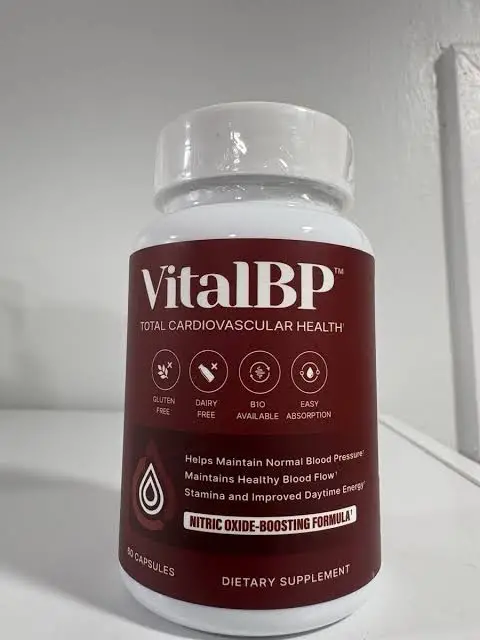
Vital BP is an online dietary supplement marketed for cardiovascular and blood-pressure support. Available product information describes ingredients including CoQ10, L-citrulline, vitamin K2 and vitamin D3, with the marketing connecting the formula to circulation, nitric oxide production and arterial health. It is sold as a supplement rather than as a prescription blood-pressure medication.
That difference matters because there is a tendency in these sales presentations to make a supplement sound much closer to a treatment than it actually is. A bottle being sold as a dietary supplement does not mean it has been approved by the FDA to treat hypertension, and supplements are not subjected to the same premarket approval process for safety and effectiveness as prescription drugs.
So when you see Vital BP described as though it has uncovered the answer to high blood pressure, I would not take that claim simply because it appears inside an impressive-looking medical presentation.
The “Japanese paradox” story
The Japanese paradox is one of the things that caught my attention because it gives the sales video a much bigger story than “here is a supplement that contains these ingredients.”
The presentation suggests that something about Japanese health or dietary habits provides an explanation for blood-pressure problems that mainstream medicine has supposedly overlooked. From there, the viewer is introduced to the product and encouraged to keep watching for the explanation.
This is a very effective way of selling something online because it gives the viewer a reason to stay. You are not just being asked to buy capsules. You are being told that there is a hidden piece of information that doctors, pharmaceutical companies or conventional health advice have somehow missed.
The problem is that the existence of an interesting theory does not establish that Vital BP can lower blood pressure, reverse hypertension or replace medical treatment. The available reporting I found does not establish that the product has been clinically proven to do what the dramatic sales presentation suggests.
Who is Dr. Luis Martinez?
Another major part of the presentation is the man identified as Dr. Luis Martinez.
The video gives him the appearance of being an accomplished medical expert and uses his supposed credentials to make the explanation sound authoritative. That is exactly the kind of thing I would investigate rather than simply accepting because somebody is wearing a doctor’s coat or being introduced with an impressive biography.
A health product does not become clinically proven because a person presented as a doctor explains it in a video. What matters is whether the claims can be independently verified and whether there is good evidence behind the actual product being sold.
I also would not repeat every credential attributed to “Dr. Luis Martinez” as an established fact unless it can be independently verified from a reliable medical or professional source. The sales presentation is the source making those claims, and that is not enough by itself.
This is particularly important with online health advertisements because the FTC has repeatedly warned about deceptive health marketing, including unsupported claims and advertising that creates a misleading impression about scientific or medical endorsement.
The sales video is doing a lot of work
One thing I noticed about the Vital BP promotion is how little of the actual buying decision is based on straightforward information about the capsules.
You are given a problem, a medical-sounding explanation, a supposedly overlooked discovery, a doctor figure, references to Japan and science, and then eventually the supplement appears as the answer. By the time you reach the offer, you have already spent a considerable amount of time listening to the story.
That can make the product feel more credible than it would if you simply saw a bottle on a shelf with a list of ingredients.
I am not saying that every long-form supplement video is automatically fraudulent. There are legitimate companies that use video sales pages. What concerns me here is the gap between the confidence of the presentation and the amount of independently verifiable evidence behind the specific claims being made.
What are people saying about Vital BP?
This is where the Vital BP reviews become particularly interesting because the customer experience is not uniformly positive.
The Trustpilot profile currently associated with Vital BP Consumer Reports contains recent one-star complaints involving refunds, billing, delivery and customer service. One reviewer said an order was out of stock and that the company refused to cancel it before shipment, while another said they had to dispute the payment with their bank after experiencing problems getting their money back.
Another recent complaint from August 2026 alleged that Vital BP was advertised at $26.99, but the customer said more than $300 was charged. The reviewer said they contacted the company only minutes after placing the order and were told the order could not be cancelled, with a $50 gift card offered instead. That is a consumer allegation, not an independently established finding, but it is exactly the kind of billing complaint I would want to know about before entering my card details.
A separate Australian reviewer said three bottles were displayed at a checkout price of $147, but the company allegedly attempted to charge $237.60. The customer said they contacted the seller and were asked to provide screenshots of the transaction.
There are also complaints about the product itself. One customer said they purchased several bottles after being convinced by the marketing video but noticed no benefit and had difficulty getting a response from customer service. Another recent reviewer described the company as having little useful contact information and said they had trouble obtaining a refund.
These are individual customer reports, so I would not present every allegation as an established fact. What they do show is that there are enough recent complaints about the purchasing and refund experience to make the checkout process worth examining carefully.
The Trustpilot reviews are not as reassuring as the sales page
The review situation is also more complicated than simply saying “Vital BP has bad Trustpilot reviews.”
The current Trustpilot page under the name “Vital BP Consumer Reports” is hosted at a vercel.app address rather than the main Vital BP domain, and it currently contains a small number of reviews, all of them one-star. That makes it a weak standalone measure of the company’s overall reputation, but the recent complaints themselves are still worth reading because they describe specific experiences with orders, charges and refunds.
Vital BP is also mentioned in reviews of Konscious Keto, which appears to be connected to the store selling the product. That page contains both positive and negative customer experiences, including a March 2025 complaint from a buyer who said they were unhappy with customer service and a return-related charge. The company publicly responded to that particular review and disputed one of the customer’s claims about vitamin D2 and D3.
That response is worth mentioning because it shows why I would not simply copy a negative review and call it proof of a scam. There are complaints, but complaints still need to be treated as reports from individual buyers rather than automatic proof that every allegation is true.
Are the Facebook reviews genuine?
This is another part of the Vital BP promotion I would approach carefully.
When a supplement is being heavily advertised through Facebook, it is easy to look at a page full of enthusiastic comments and assume those comments represent hundreds of independent customers. They may not. Comments on a seller-controlled Facebook page are not the same thing as independently verified customer reviews.
The better question is whether you can find people discussing the product outside the company’s own advertising environment, particularly when those people are talking about what they were actually charged, whether the product arrived, whether they tried it and what happened when they attempted to return it.
That is why the recent Trustpilot complaints caught my attention more than generic five-star comments underneath a sales advertisement. They contain specific details about prices, orders, refunds and communication with the company.
Is Vital BP actually a fake product?
This is where I would be careful with the word “scam.”
Vital BP appears to be a real supplement that is sold online and shipped to customers. There are enough customer reports and product listings to establish that this is not simply a nonexistent product where somebody takes your money and nothing is ever sent. Independent reviews have also found the website and commercial operation to be functioning.
That does not automatically make the marketing trustworthy.
A real company can sell a real bottle while making claims that deserve scrutiny. A customer can receive the product and still have a bad experience with the price, refund process or customer service. And a supplement can contain real ingredients without being proven to deliver the dramatic health results suggested by an advertisement.
For me, that is the bigger issue with Vital BP. The question is not simply whether a bottle arrives in the mail. The question is whether the sales presentation gives consumers a fair and accurate understanding of what they are buying.
What about the blood pressure claims?
This is the part I would take most seriously because blood pressure is not something I would experiment with based on an internet video.
Some of the ingredients associated with Vital BP, such as CoQ10 and L-citrulline, have been studied individually in relation to cardiovascular health. That does not mean the finished Vital BP formula has been proven to treat hypertension, and it certainly does not mean someone should stop taking prescribed blood-pressure medication and replace it with an online supplement.
The available reporting I found does not establish Vital BP as an FDA-approved treatment for high blood pressure. Dietary supplements generally do not go through the FDA’s premarket approval process for safety and effectiveness that prescription medicines do.
That is why the wording used in the sales video matters so much. “Supports healthy blood pressure” and “cures hypertension” are very different claims, and consumers should not confuse the two.
My problem with the Vital BP marketing
After looking at the presentation alongside the customer complaints, I would not buy Vital BP simply because the sales video features a supposedly authoritative doctor explaining a “Japanese paradox.”
The product may be real, and there are reports of customers receiving it, but the online marketing is doing far more convincing than the independent evidence I could find. On top of that, the recent complaints about unexpected charges, refunds, order problems and customer service make me uncomfortable with the buying process.
One recent Trustpilot reviewer said they ordered three bottles at a stated price of $147 but saw an attempted charge of $237.60. Another reported a supposed $26.99 offer resulting in a charge of more than $300. Those are exactly the kinds of experiences I would want to investigate before giving an online supplement seller my card information.
So, is Vital BP a scam or legitimate?
My conclusion is that Vital BP is a real supplement being sold online, but I would not consider the marketing credible enough to trust the dramatic health claims in the sales presentation.
Calling the entire operation a completely fake product would go further than the evidence supports. Customers clearly report receiving Vital BP, and there are functioning sales channels behind it. At the same time, calling it a proven blood-pressure solution would also go further than the evidence supports. Recent customers have reported billing and refund problems, while the product’s advertised health benefits are not established simply by the claims made in the video.
Conclusion
So if you searched “Vital BP reviews,” I would look beyond the polished sales presentation. Read the actual complaints, check exactly what your card will be charged before submitting an order, look for recurring billing terms and keep your prescription blood-pressure treatment separate from an online supplement pitch.
And if you already ordered Vital BP and the charge on your card does not match what you believed you agreed to pay, or you cannot obtain the refund you were promised, contact your bank or card issuer promptly and keep copies of your order confirmation, emails and screenshots. You can also report suspected internet fraud through the FBI’s Internet Crime Complaint Center at IC3.gov.
The bottle may be real. The sales story is a different question, and that is where I think Vital BP deserves the most scrutiny.
Check out Mansculpt wave therapy plus that I talked about earlier.