
If you own a Chevy Silverado, GMC Sierra, Tahoe, Yukon, Suburban, Cadillac Escalade or another GM vehicle with AFM or DFM, you have probably heard the same advice over and over: disable the cylinder deactivation system before it gives you trouble. That is basically the market NexDrive is targeting with its AFM/DFM Disabler, a small OBD-II device that plugs underneath the dashboard and claims to keep the engine running in full-cylinder mode instead of switching between different cylinder configurations.
NexDrive says the device takes about 10 seconds to install, requires no tools, makes no changes to the factory ECU and can be unplugged whenever you want. More importantly, the company says it can prevent lifter failure and engine shudder by stopping the repeated AFM/DFM cylinder-deactivation cycle. The product is advertised for more than 80 GM V6 and V8 applications from roughly 2004 through 2022, with a current advertised price of $89.95 compared with a claimed regular price of $179.95.
The basic idea isn’t some made-up automotive technology. GM itself documents AFM as a system that can deactivate cylinders under light-load conditions, while DFM can use several different cylinder configurations depending on driving conditions. GM’s own material explains that AFM is intended to improve fuel economy by reducing the number of active cylinders when the engine doesn’t need its full output. The question I had was whether NexDrive’s particular device deserves all the confidence its website is asking buyers to have in it.
What Does the NexDrive AFM/DFM Disabler Actually Do?
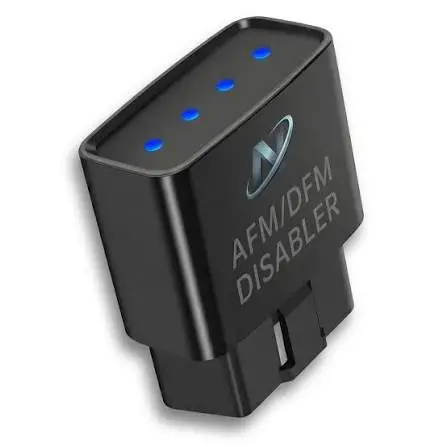
NexDrive is a plug-in OBD-II module. Instead of physically removing AFM or DFM hardware from the engine, the company says the device communicates through the vehicle’s diagnostic port and keeps the engine in full-cylinder operation. In simple terms, the idea is to stop the vehicle from dropping cylinders during situations where the factory system would normally do so.
That approach is quite different from a mechanical AFM/DFM delete. There is no camshaft, lifter, valley cover or other engine hardware being removed according to NexDrive’s description. The company also says that unplugging the device returns the vehicle to its original state because it does not permanently reprogram the ECU.
That part of the sales pitch is at least consistent with how an OBD-II disabler is supposed to work. There are already established products in this category, including Range Technology modules, and owners have been using this general approach for years. In a recent discussion among GM owners, people were comparing NexDrive with other AFM/DFM devices rather than treating the idea of an OBD-II disabler as something completely new.
Does NexDrive Really Prevent Lifter Failure?
This is where I would be careful with the wording on the website.
NexDrive doesn’t simply say that its device may reduce AFM-related operation. It repeatedly uses much stronger language, including “Prevents lifter failure & engine shudder.” Its sales page also describes AFM cycling as the cause of lifter wear and presents the $89.95 device as a way of avoiding potentially expensive engine repairs.
There is a reasonable mechanical argument behind disabling cylinder deactivation. GM’s own AFM documentation explains that special valve lifters are used for cylinders that are deactivated, with the system using oil pressure and solenoids to collapse the lifters during cylinder deactivation. GM service documentation has also addressed mechanically collapsed or stuck AFM lifters as an actual diagnostic issue.
That does not mean an OBD-II module can guarantee that your lifters will never fail.
A lifter is still a mechanical component, and an engine can develop problems for reasons that have nothing to do with cylinder deactivation. Oil condition, lubrication, manufacturing defects, wear, contamination and other valvetrain problems can all matter. Even owners discussing AFM disablers point out that disabling the system doesn’t magically repair a lifter that is already damaged. A recent GM-owner discussion included the same distinction: disabling AFM may reduce the cycling associated with the locking mechanism, but it is not the same thing as physically deleting the AFM/DFM hardware.
So I would not interpret “prevents lifter failure” as a guarantee. A more reasonable way to describe the potential benefit is that keeping the engine out of cylinder-deactivation operation may reduce the amount of work performed by the AFM/DFM components, which is one reason some owners choose to disable the system.
Can NexDrive Fix Engine Shudder?
NexDrive also heavily promotes its ability to eliminate engine shudder. The product page features customer testimonials claiming that long-standing shudder disappeared almost immediately after plugging the device in.
This is another claim where the cause of the particular vehicle’s symptoms matters.
If a vibration or roughness is actually associated with cylinder deactivation, keeping the engine in full-cylinder mode could change the way the vehicle feels while cruising. But “engine shudder” isn’t a diagnosis by itself. Transmission problems, ignition problems, fuel delivery issues, engine mounts, driveline components and other faults can also produce vibrations or shuddering.
That means I wouldn’t buy a NexDrive because a truck is shuddering and assume the device will fix the problem. If a vehicle already has a noticeable mechanical problem, it makes more sense to diagnose it first. NexDrive may change the behavior of the cylinder-deactivation system, but it isn’t a universal engine or transmission repair device.
The “Zero ECU Modifications” Claim
One of NexDrive’s biggest selling points is the statement that it makes “zero ECU modifications” and is completely reversible.
The company says the module doesn’t permanently reflash the factory computer and that removing it returns the vehicle to its normal configuration. That is a different approach from a traditional ECU tune, where software in the vehicle’s control module is changed.
I would still avoid interpreting “zero ECU modifications” as meaning the device has no interaction with the vehicle’s electronics. It has to communicate with the vehicle through the OBD-II system in order to influence how the vehicle handles cylinder deactivation. What NexDrive appears to mean is that it does not permanently alter or reprogram the ECU.
That’s a much more reasonable reading of the claim.
Does NexDrive Really Fit 80+ GM Vehicles?
The company advertises compatibility with more than 80 GM models and engine combinations. The current site lists vehicles including the Silverado, Sierra, Tahoe, Yukon, Suburban, Escalade, Camaro, Corvette, Colorado, Canyon and Avalanche, among others. It also lists engines including the 4.3L V6, 5.3L V8, 6.0L V8, 6.2L V8 and 3.6L V6.
There is some important context here because GM has used different versions of cylinder-deactivation technology across different engines and model years. For example, GM identifies the 5.3L L84 and 6.2L L87 as engines equipped with Dynamic Fuel Management, while older engines used earlier AFM implementations.
So I wouldn’t rely on the “80+ models” headline alone. The exact year, engine and vehicle configuration are what matter. NexDrive itself tells customers to use its compatibility checker before ordering, and that’s something I would actually do rather than assuming that every Silverado or every GM V8 is automatically compatible.
The NexDrive Reviews Are a Little Strange
This was probably one of the first things that caught my attention.
The main NexDrive website currently claims an impressive 4.91/5 rating from more than 34,000 reviews. Another NexDrive-branded domain displays 8,973 ratings for what appears to be the same product.
There is also a Shopify Shop listing showing the product with a much smaller number of ratings and a different score: 4.1 from 155 ratings. That listing includes both positive comments and at least one customer complaining about receiving a damaged product and being unable to reach NexDrive because the support email allegedly did not work and there was no phone number.
The difference between 34,382 reviews on the main site, 8,973 ratings on another NexDrive store and 155 ratings on the Shop listing is something I would want explained before treating the headline review number as established independent customer history.
It doesn’t automatically mean the reviews are fake. The numbers could come from different stores, platforms or review systems. But if I’m shopping for an $89.95 automotive device, I would rather see a consistent history of independently verifiable customer feedback than simply rely on a huge number displayed directly on the seller’s own pages.
What About the NexDrive Trustpilot Claim?
I also couldn’t verify a strong independent Trustpilot profile that would justify treating a large Trustpilot rating as evidence that NexDrive has a long-standing reputation.
This is worth mentioning because NexDrive’s marketing is built around social proof. The website repeatedly uses phrases such as “GM Owners Top Choice,” “Trusted by 34,000+ GM Owners” and large review totals.
If you see an advertisement claiming that NexDrive has thousands of Trustpilot reviews, I would personally click through to the actual Trustpilot company page and check the number of reviews there rather than accepting the statement in an advertisement. I wasn’t able to establish an independent Trustpilot record that matched the huge review totals shown on the NexDrive website.
That matters because a company’s own testimonials and an established third-party review history are two different things.
How Old Is the NexDrive Website?
The website is also much newer than the huge customer-count numbers might initially make you think.
WHOIS information recorded by multiple website-checking services shows that mynexdrive.com was registered on March 26, 2026, with the registration currently set to expire on March 26, 2027. The registrant information is privacy-protected.
That doesn’t prove NexDrive itself only started selling automotive products in March 2026. A company can exist before its current domain, and a new domain isn’t automatically suspicious. But it does mean that the specific website being used to sell NexDrive has a relatively short online history.
The timing makes the “34,000+ GM owners” claim harder to evaluate. It is possible for an online product to sell a large number of units quickly, but there isn’t enough public history here for me to independently verify that figure.
Independent Website Checks Raise Questions
The automated reputation services I checked don’t give NexDrive a particularly reassuring picture, although I would not use their scores as proof that the product itself is fraudulent.
Scam Detector currently gives mynexdrive.com a 24.9/100 score and describes it as suspicious, while noting the March 2026 domain registration. Gridinsoft similarly lists a 27/100 trust score and says its automated checks found a young domain, limited independent reputation data and warnings from two external security providers.
ScamAdviser also recommends caution, pointing to the site’s young age, hidden WHOIS ownership and low traffic rank, although it notes that the site has a valid SSL certificate and payment methods that can offer dispute options.
These are automated systems, so I wouldn’t write “NexDrive is a scam” simply because one of them gives the website a low score. Automated website reputation tools can produce false positives and are not substitutes for examining the company and product itself. What they do tell me is that NexDrive does not yet have the long, easy-to-verify online history that its enormous review count might suggest.
NexDrive vs. a Real AFM/DFM Delete
Another thing buyers need to understand is that an OBD-II disabler isn’t the same as a full AFM/DFM delete.
NexDrive is essentially a way of telling the vehicle not to use the cylinder-deactivation function while the device is connected. A mechanical delete involves replacing or modifying engine components and, depending on the vehicle and setup, may involve ECU tuning as well.
That’s why I wouldn’t describe NexDrive as permanently “fixing” an AFM or DFM engine. It is disabling the operating strategy rather than rebuilding the valvetrain.
This difference becomes especially important if you already have a ticking engine, misfire, check-engine light, low compression or suspected lifter damage. Plugging in an AFM disabler isn’t a substitute for diagnosing an existing engine fault. GM’s own service information treats collapsed or stuck AFM lifters as a mechanical problem requiring diagnosis and, where appropriate, replacement of the affected components.
Is NexDrive AFM/DFM Disabler Legit?
I think the fairest answer is that the product concept is legitimate, but the NexDrive website deserves more scrutiny than its marketing suggests.
There is nothing inherently strange about an OBD-II AFM/DFM disabler. GM genuinely uses cylinder deactivation technology, and aftermarket devices designed to prevent that system from operating have been around for years. GM itself confirms that AFM and DFM change cylinder operation depending on driving conditions.
What makes me cautious about NexDrive specifically is the combination of a relatively new domain, hidden registrant information, extremely large review numbers on the company’s own website, different review counts across its storefronts and the lack of a clearly established independent review history matching the marketing claims. The website also uses very strong language about preventing lifter failure, even though disabling cylinder deactivation cannot guarantee that an engine’s lifters will never fail for other reasons.
I also wouldn’t ignore the fact that another seller is offering an apparently similar NexDrive-branded AFM/DFM device. The same product testimonials and wording appear on other websites, which makes it harder to determine exactly who manufactures the hardware and what distinguishes NexDrive’s device from other inexpensive OBD-II AFM disablers.
Conclusion
NexDrive is selling something that makes sense mechanically. If you have a compatible GM engine with AFM or DFM, keeping the engine in full-cylinder operation is a real concept, and there are plenty of GM owners who prefer to disable cylinder deactivation rather than let the vehicle switch between cylinder configurations during normal driving.
Where I would slow down is the marketing. Saying that a device “prevents lifter failure” is much stronger than saying it may reduce the cycling that can contribute to wear on AFM components. Likewise, saying it eliminates shudder doesn’t mean it will cure every vibration coming from a GM truck or SUV. Those claims need to be considered alongside the actual condition of the vehicle.
The website itself is also very new. The current domain was registered in March 2026, yet the store presents itself as having tens of thousands of customers and more than 34,000 reviews. I wasn’t able to independently verify that customer history or find a Trustpilot record that matched the enormous review numbers being advertised.
For that reason, I wouldn’t call NexDrive a confirmed scam based on the evidence I found, but I also wouldn’t take the website’s review count or “prevents lifter failure” promise at face value. The underlying AFM/DFM technology is real; the bigger question is how much confidence you want to place in this particular seller and its specific device.
If I were considering one for a GM vehicle, I would first confirm the exact engine and model-year compatibility, compare NexDrive with established AFM/DFM disablers, check the return terms before paying and use a payment method that gives me some recourse if the product doesn’t arrive or doesn’t work as advertised. Most importantly, if the vehicle already has a lifter tick, misfire, check-engine light or serious shudder, I would diagnose that problem rather than assuming an $89.95 OBD-II device will prevent an existing mechanical failure.
NexDrive AFM/DFM Disabler FAQs
Does NexDrive really disable AFM and DFM?
NexDrive says its OBD-II device keeps compatible GM engines in full-cylinder mode rather than allowing the factory cylinder-deactivation system to operate. The basic technology is plausible because GM vehicles equipped with AFM or DFM are designed to deactivate cylinders under certain driving conditions.
Can NexDrive prevent lifter failure?
NexDrive markets the device as preventing lifter failure, but that should not be understood as a guarantee that your lifters can never fail. Disabling cylinder deactivation may reduce operation of the AFM/DFM lifter mechanism, but it cannot eliminate every possible cause of lifter or valvetrain failure.
Will NexDrive fix engine shudder?
It may change a shudder that is specifically associated with cylinder-deactivation operation, but shudder can have many causes. A vehicle with an existing vibration or drivability problem should be properly diagnosed rather than assuming the AFM/DFM system is responsible.
Does NexDrive reprogram the ECU?
The company says it does not permanently reprogram the factory ECU and that the device can be unplugged to return the vehicle to its normal configuration.
How many GM vehicles does NexDrive fit?
NexDrive advertises compatibility with more than 80 GM models and engine combinations, but compatibility depends on the specific year, model and engine. The company provides a fitment checker and recommends confirming the vehicle before ordering.
Is NexDrive a permanent AFM/DFM delete?
No. It is an OBD-II device intended to prevent the vehicle from using cylinder deactivation while connected. It isn’t the same as physically deleting the AFM/DFM components from the engine.
Is NexDrive a scam?
I did not find enough evidence to call the product itself a confirmed scam. However, the seller’s relatively recent domain, inconsistent review counts and limited independent reputation history make me cautious about the website and its stronger marketing claims. Independent website-reputation services also currently flag the domain for caution.
Check out Mansculpt wave therapy plus that I talked about earlier.