
McDonald’s Monopoly has returned, bringing back a promotion that many people remember for its game pieces, property sets, and the chance to win anything from free food to a life-changing cash prize. The idea is simple enough: buy qualifying menu items, collect the pieces, and hope you find the right combination. But the game also has a history that makes the promise of a big win a little harder to take at face value. Between 1989 and 2001, an insider involved in running the promotion helped steal millions of dollars in prizes, turning what was supposed to be a game of chance into an elaborate fraud.
The scandal became widely known through the HBO documentary series McMillions, which revisited the people behind the scheme and the extraordinary lengths they went to keep it running. More than $24 million in prizes were fraudulently claimed, and the operation continued for years before federal investigators brought it down. The story raises an obvious question for anyone playing McDonald’s Monopoly today: how much of the game comes down to luck, how are the winning prizes distributed, and can customers trust the promotion to work as advertised?
What Was the McDonald’s Monopoly Scam?
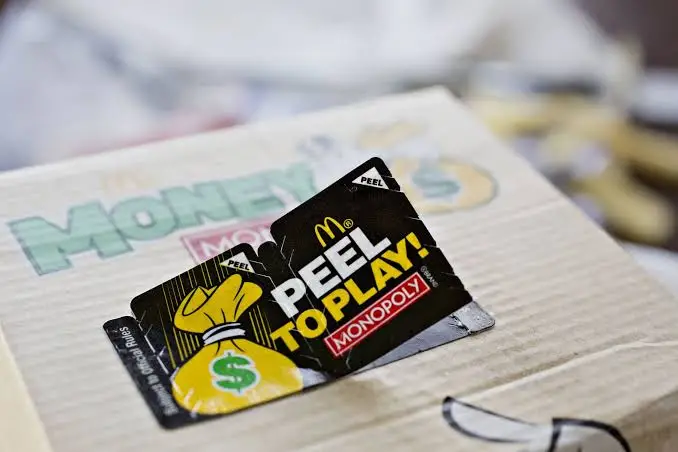
McDonald’s Monopoly is a promotional game inspired by the familiar Monopoly board game. It first launched in 1987, giving customers the opportunity to collect property-themed game pieces and enter for prizes. Depending on the promotion, rewards have included free menu items, cash, cars, and other valuable prizes. The appeal was easy to understand. You were already buying a meal, and there was a chance that the sticker on your packaging might be worth considerably more than the food itself.
The fraud that later became known as the McDonald’s Monopoly scam did not begin with someone printing fake stickers at home or customers inventing winning combinations. It came from inside the operation responsible for managing the game. Jerome P. Jacobson, a former police officer who worked as head of security for Simon Marketing, the company involved in administering the promotion, exploited his position to steal valuable winning game pieces before they reached the public.
Rather than claim the prizes in his own name, Jacobson arranged for other people to pose as winners. They collected the money and other rewards, then shared the proceeds with him. The people involved included relatives, friends, acquaintances, and other recruits, creating a network that helped the scheme survive for more than a decade. Customers continued buying meals and collecting stickers believing they had a fair shot at the advertised prizes, while some of the most valuable rewards were being diverted before ordinary players could find them.
How the Insider Managed to Rig the Game
Jacobson’s position gave him access to the security arrangements surrounding the production and distribution of winning game pieces. He took advantage of that access to obtain high-value stickers, including pieces associated with the million-dollar grand prize, before they entered the normal distribution process. Those stolen pieces were then passed to people who could claim the prizes without immediately drawing attention to him.
The arrangement depended on keeping Jacobson’s name away from the claims. If he had repeatedly appeared as the winner of major prizes, questions would have been difficult to avoid. Using other people made the claims look more convincing, particularly when the supposed winners came from different backgrounds and locations. The operation grew into a surprisingly extensive network, with participants agreeing to take part in exchange for a share of the winnings.
The scheme also demonstrates why a promotion can appear legitimate to the public while being compromised behind the scenes. Customers could follow the rules, buy the required products, and collect game pieces without knowing that someone with access to the prize distribution process was stealing the most valuable rewards. The problem was not that players failed to understand the game; it was that they had no reason to suspect the people administering it were undermining it.
One particularly unusual episode occurred in 1995, when Jacobson reportedly sent an anonymous million-dollar winning piece to St. Jude Children’s Research Hospital. Even a charitable institution became part of the story, illustrating just how far the stolen prizes travelled beyond the original operation.
Why the McDonald’s Monopoly Game Was Not as Simple as It Looked
Even without the insider fraud, collecting Monopoly properties has never meant that every player has an equal chance of completing a valuable set. The game relies on the distribution of different pieces, and the rarest property in a set can determine whether someone wins a major prize or ends up with several stickers that are worth little on their own.
For example, a promotion might distribute large numbers of two properties from a colour group while making the third property exceptionally scarce. A customer could collect several copies of the common pieces without ever finding the one needed to complete the set. That is how these games can encourage repeat purchases: players feel they are close to a valuable reward, even though the missing piece may be far less common than the others.
The geographic distribution of winning pieces has also been a subject of discussion around past versions of McDonald’s Monopoly. Depending on the rules and distribution arrangements for a particular promotion, the location where a prize piece is released can affect who has an opportunity to find it. This is not the same as proving that every version of the game was rigged, but it helps explain why a promotion can feel much less straightforward than the colourful stickers and simple rules suggest.
The important point is that collecting pieces is not a reliable way to make money. A player might buy extra meals hoping to find a missing property, only to spend far more than the value of any prize they eventually receive. The possibility of winning a large amount is what makes the promotion exciting, but the odds and the distribution rules determine how realistic that possibility actually is.
The FBI Investigation That Brought the Scheme Down
The fraud finally began to unravel in 2001 after investigators received information suggesting that the supposedly lucky winners were connected. The FBI launched an investigation known as Operation Final Answer, examining the claims and following the relationships between people who had received major prizes. What looked like a series of unrelated success stories gradually began to resemble a coordinated operation.
Investigators eventually staged a fake commercial production involving a gathering of supposed Monopoly winners, giving them an opportunity to record conversations and gather evidence. The investigation exposed the network surrounding Jacobson, and arrests followed. More than 50 people were eventually convicted or pleaded guilty in connection with the wider fraud scheme, although the number of people involved at different stages varied. Jacobson pleaded guilty and received a prison sentence of 37 months.
The case was embarrassing for McDonald’s because the promotion depended on customers believing that the advertised prizes were genuinely available to be won. People had been buying food and participating in good faith, unaware that an insider had been diverting valuable prizes to his associates. McDonald’s was not identified as the mastermind of the fraud; rather, the scheme exploited weaknesses in the security arrangements handled by the company responsible for administering the game.
McDonald’s Monopoly Is Back, but the Game Has Changed
The return of McDonald’s Monopoly brings the old promotion back into the spotlight, but the current version is not exactly the same experience that longtime customers remember. In the United States, the 2026 game runs from October 6 through November 1, with players collecting physical game pieces and scanning them through the McDonald’s app. The promotion offers a range of rewards, including food, loyalty points, trips, vehicles, and a $1 million cash prize. The official rules also provide a way to request a game piece without making a purchase.
The shift towards app-based participation means that customers now have to contend with registration requirements and digital gameplay in addition to the familiar stickers. For anyone who remembers peeling pieces from a food container and checking them against a paper board, that is a noticeable change. The million-dollar headline prize remains part of the attraction, but the way people enter and interact with the promotion has evolved.
There is also the question of inflation. A million dollars sounds like an enormous amount of money today, and it certainly is, but it does not buy what it did when the promotion first appeared in the 1980s. The original game launched in 1987, when a million dollars had substantially greater purchasing power. That does not make the current prize insignificant, but it does put the headline figure into perspective.
The app requirement is another reason some customers may feel the modern game is as much about digital engagement as collecting Monopoly properties. Apps allow companies to keep customers connected to their brands, encourage repeat visits, and deliver promotions directly to users. That is a legitimate business strategy, but it is different from the straightforward sticker-collecting game many people remember. It is reasonable to question whether the experience is designed primarily around the enjoyment of playing or around encouraging customers to return to the app and make further purchases.
That concern should not be confused with evidence that the current promotion is rigged. The historical fraud is well documented, but it does not establish that the 2026 game is repeating Jacobson’s scheme. The present promotion has its own published rules, eligibility requirements, prize information, and entry procedures, which are the appropriate starting point for evaluating how it operates.
Is McDonald’s Monopoly a Scam Today?
The original McDonald’s Monopoly fraud was real, and it was not a minor incident. An insider with access to valuable prize pieces stole them and used a network of people to claim millions of dollars in rewards that should have been available through the legitimate promotion. The FBI investigation and subsequent convictions established that customers had been denied a fair chance to win during the period affected by the scheme.
However, calling every version of McDonald’s Monopoly a scam would go beyond what that history proves. The past fraud involved specific people exploiting their positions, not evidence that every promotion since then has been fraudulent. Likewise, the fact that a prize is extremely difficult to win does not, by itself, mean the game is rigged. Promotions can legitimately offer a mixture of common rewards and rare, high-value prizes, provided they operate according to their published rules.
The more practical concern for today’s players is how much they spend chasing a reward. If you buy an extra meal because you are convinced the next game piece will complete your property set, it is easy to spend more than you intended. A rare piece can remain elusive no matter how many common stickers you collect, and the possibility of winning a million dollars should not be treated as a realistic financial plan.
The historical McDonald’s Monopoly scam was a genuine insider fraud that cost the company and its customers dearly. The modern game should not automatically be labelled a scam because of that history, but its prize structure and rules deserve a closer look than the advertising alone might encourage. Play if you enjoy the promotion, check the official terms, and avoid spending money you would not otherwise have spent simply because you hope to land the big prize. The most important lesson from the original scandal is that even a familiar promotion backed by a major brand can be vulnerable when the people responsible for protecting it fail to do their jobs.
Check out this Costco Scam I reviewed earlier.