
Thermo Ignite Weight Loss Support is being promoted online with a story that sounds almost too good to pass up: a simple baking soda drink that supposedly helps people lose stubborn body fat without the usual struggle of dieting. The advertisements reportedly feature familiar faces, including Oprah Winfrey, Kelly Clarkson, Dr. Oz, Reba McEntire, Dolly Parton, Jelly Roll and Dr. Sanjay Gupta, giving the impression that celebrities and trusted medical personalities have discovered a weight loss secret they want everyone to know about.
But there is a serious problem with that story. The promotional material described in these advertisements uses manipulated footage and AI-generated celebrity likenesses to make it appear that well-known people are endorsing Thermo Ignite. I found no reliable basis in the information provided to support those endorsements, and the celebrity appearances should not be treated as genuine recommendations. The supposed baking soda breakthrough is another claim that deserves scrutiny, particularly when it is used to sell a supplement promising dramatic weight loss.
If you have been searching for Thermo Ignite Weight Loss Support reviews because you saw one of these videos, it is worth understanding how the promotion works before entering your payment details. The concern is not simply whether a supplement lives up to its advertising. It is whether the people selling it are being honest about the product, the evidence behind the claims, and what customers agree to pay.
What Is Thermo Ignite Weight Loss Support?
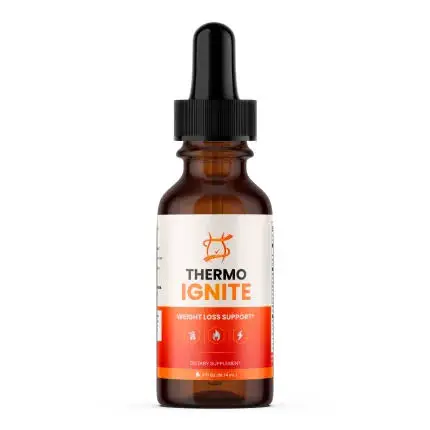
Thermo Ignite is presented as a weight loss supplement in drops, marketed to people who want to reduce body fat and manage their weight. Its promotional approach centres on the idea that a simple daily routine can produce impressive results without the demanding exercise programmes or restrictive diets often associated with weight loss products.
The advertisements reportedly connect the drops to a baking soda recipe and suggest that this mixture can trigger effects comparable to those associated with GLP-1 weight loss medications. That is a significant claim. GLP-1 medicines act on specific biological pathways involved in appetite and blood sugar regulation, and their effects cannot simply be assumed to follow from drinking baking soda or taking an unverified supplement.
Baking soda has legitimate household and medical uses in specific circumstances, but that does not establish it as a proven fat-burning treatment. Nor does the fact that a product is sold as drops make it more effective than other supplements. To judge Thermo Ignite properly, consumers would need credible evidence about its ingredients, doses, safety, and effectiveness rather than a persuasive video telling them that a secret has finally been uncovered.
The celebrity story appears to do much of the selling. Instead of relying on transparent product information and verifiable clinical evidence, the promotion reportedly uses familiar television personalities and doctors to make the claims feel trustworthy. That is particularly concerning when the people shown in the advertisements have not been established as genuine endorsers of the product.
Oprah, Kelly Clarkson and Dr. Oz: Did They Really Endorse Thermo Ignite?
The advertisements reportedly feature Oprah Winfrey, Kelly Clarkson and Dr. Oz, alongside Reba McEntire, Dolly Parton, Jelly Roll and Dr. Sanjay Gupta. Their names and faces are powerful marketing tools because audiences already have an opinion of them. Someone who enjoys Kelly Clarkson’s television programme or trusts a familiar medical presenter may be more willing to listen when an advertisement appears to show that person recommending a weight loss solution.
However, a familiar face in a video is not proof of an endorsement. AI-generated footage, altered audio and edited clips can make it look as though a celebrity appeared on a programme they never attended or made statements they never said. Even footage that resembles a real interview can be manipulated by inserting fabricated dialogue or combining unrelated recordings.
In the Thermo Ignite promotion described here, the supposed appearances on The Dr. Oz Show and The Oprah Podcast are presented as part of the sales pitch. Unless those appearances can be verified through the personalities’ official channels or reliable reporting, they should not be accepted as authentic. There is no sound reason to assume that Oprah, Kelly Clarkson or any of the other named personalities supports the product simply because an advertisement uses their likeness.
This matters because the endorsement is doing more than attracting attention. It creates the impression that respected public figures have tested the product, approved its ingredients or personally achieved the advertised results. Consumers may then mistake an invented testimonial for evidence that the supplement works.
A genuine endorsement should be independently verifiable, and a legitimate seller should be able to provide accurate information about who stands behind its product. When a sales video relies on celebrity footage that cannot be authenticated, I would not trust the endorsement as a reason to buy.
The Baking Soda Weight Loss Trick: Does It Actually Work?
The idea behind the advertised baking soda trick is simple: drink a special mixture, supposedly activate the body’s fat-burning processes, and lose weight without making major lifestyle changes. It is an appealing promise, especially for people who have tried different diets and supplements without seeing the results they wanted. Unfortunately, an appealing explanation is not the same thing as a medically established treatment.
Baking soda, also known as sodium bicarbonate, does not have convincing clinical evidence supporting its use as a standalone weight loss treatment. It is not a substitute for GLP-1 medication, and there is no established basis for claiming that an ordinary baking soda drink reproduces the appetite-regulating effects of those medicines. A video describing a secret recipe cannot fill that evidence gap.
There are also reasons not to experiment with concentrated baking soda mixtures in pursuit of weight loss. Consuming excessive sodium bicarbonate can cause serious electrolyte and acid-base disturbances, and its sodium content may be a concern for people who need to limit sodium intake. A homemade drink should not be treated as harmless simply because its ingredients are familiar.
This is why the supposed recipe deserves particular scrutiny. If the sales video spends most of its time explaining how celebrities supposedly discovered a hidden method but provides little verifiable information about the supplement itself, the story may be serving a marketing purpose rather than offering useful health advice. The important question is not whether the recipe sounds simple, but whether there is credible evidence that it delivers the advertised results safely.
The Problem With the Sales Funnel
Another concern is what happens when viewers move from the promotional video to the ordering page. According to the information supplied about Thermo Ignite, the sales process may involve affiliate marketing pages, extended video pitches, high-pressure telephone upsells and offers that encourage customers to purchase additional products or larger quantities.
These practices deserve attention because the price displayed in an advertisement may not tell the whole story. A customer may begin by expecting to pay for one bottle, only to encounter additional offers during checkout or a sales call. If the final terms are unclear, it can become difficult to determine how much the order will cost or whether further payments are being authorised.
The reported concern about recurring monthly charges is especially important. Before buying any supplement online, customers should establish whether the payment covers a one-time purchase or an ongoing subscription, when future charges would occur, and how cancellation works. If those terms are hidden in lengthy sales material or are not clearly explained before payment, the customer is not being given the information needed to make a properly informed decision.
I would not assume that every customer has been charged hundreds of dollars or that every order automatically becomes a subscription without independently verified evidence. However, if Thermo Ignite’s checkout process presents unclear recurring charges or aggressive upsells, those are legitimate reasons to walk away rather than make a rushed purchase.
Is the 60-Day Money-Back Guarantee Reliable?
A money-back guarantee can make an unfamiliar supplement seem like a relatively safe purchase. The seller appears to be offering customers a way to try the product without worrying about losing their money if it does not work. But the wording of a guarantee is only part of the picture; the actual refund terms and the seller’s willingness to follow them matter just as much.
The information provided about Thermo Ignite raises concerns about whether the advertised 60-day guarantee is honoured in practice. I cannot independently establish from the material here that every refund request has been refused, so it would be unfair to present that as a verified outcome for all buyers. Nevertheless, customers should be cautious about relying on a guarantee until they can identify the legal seller, read the complete refund policy and understand any return or cancellation requirements.
Before placing an order, save a copy of the offer page, the refund policy and the final checkout screen. Keep your receipt and any emails confirming the purchase. If you are charged unexpectedly or the company refuses a refund that you believe is owed, contact the seller in writing and consider disputing the charge with your payment provider, subject to its rules and deadlines.
A guarantee should not be the main reason to buy a product whose claims are already questionable. It is far better to understand the terms before paying than to discover later that obtaining a refund involves repeated calls, confusing instructions or additional expenses.
The SodaTide Connection: Why the Bottle Label Matters
One particularly concerning detail in the information supplied is that the bottle label reportedly changes between SodaTide and Thermo Ignite in the promotional footage. If the same sales video switches between different product names, viewers have a reasonable basis to question whether the advertisement was assembled from unrelated marketing material or reused for different offers.
That observation alone does not prove that the two products have the same manufacturer or that they contain identical ingredients. Establishing such a connection would require evidence such as matching product labels, ingredient lists, seller details, company records or checkout terms. Still, an unexplained change in branding is not something I would overlook when assessing a supplement advertised with extraordinary health claims.
A legitimate product listing should clearly identify what is being sold, who is responsible for it, what it contains and how customers can contact the seller. If the branding changes throughout a video or the ordering page does not clearly match the product being advertised, buyers may have difficulty knowing exactly what they are purchasing.
The alleged connection to SodaTide therefore warrants further investigation, particularly if the same baking soda story and celebrity footage appear in both promotions. Until the relationship is independently established, it is more accurate to describe the matching names as a reported inconsistency than to claim that the two products have definitively been proven to be the same operation.
Is Thermo Ignite Weight Loss Support a Scam?
Based on the marketing practices described, I would treat Thermo Ignite with serious caution. The reported use of fabricated celebrity endorsements, the unsupported baking soda weight loss story, the unclear sales process and the concerns about refunds give consumers good reasons not to trust the offer without independent verification.
The strongest concern is the apparent use of celebrities and doctors to lend credibility to claims they have not been shown to endorse. A supplement seller should be able to explain its ingredients and provide credible evidence for its health claims without relying on fabricated television appearances or an alleged secret that established medical treatments supposedly cannot match.
The Thermo Ignite promotion described here has the hallmarks of a deceptive weight loss supplement scam, and I would not recommend buying it on the strength of these advertisements. I cannot independently verify every allegation about its billing practices or refund history, but the reported celebrity manipulation and lack of credible evidence for the baking soda claims are enough to make the offer untrustworthy.
If you have already ordered Thermo Ignite, check your receipt and payment statement to see whether you agreed to recurring charges. Contact the seller through independently verified details if you need to cancel, retain records of your request, and contact your bank or payment provider if you identify an unauthorised charge. Do not rely on a celebrity video as proof that the product is safe or effective.
People looking for help with weight management deserve honest information, not an elaborate story built around famous faces and promises of effortless fat loss. Until Thermo Ignite’s claims, ingredients, seller identity and payment terms can be properly verified, keeping your money is the more sensible choice.
Check out Necklow Sleep Pillow that I reviewed, earlier.