
The Mibro AeroPace is a running smartwatch aimed at people who want to take their training more seriously without spending a fortune on a premium sports watch. Launched in October 2026, it combines dual-band GPS, offline maps, detailed running statistics and an AI-powered coaching system in a slim design that weighs very little on the wrist. At its launch price of €149.99, it is trying to make features that have traditionally been associated with more expensive running watches accessible to beginners and regular runners alike.
What makes the AeroPace interesting is that Mibro has not focused solely on step counting and heart-rate monitoring. The watch is designed to help runners plan their training, follow routes without constantly checking their phones and understand what their workout data might say about their progress. That is an appealing package, especially for someone preparing for their first 5K or hoping to improve their pace over longer distances. However, the watch is still new, and there are questions about how accurately it measures performance and how useful its coaching features will prove to be over time.
What Is the Mibro AeroPace?
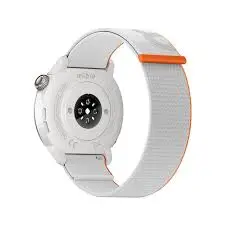
The Mibro AeroPace is a sports smartwatch built primarily around running, although it also supports more than 150 sports modes. It is designed for runners who want more information than a basic fitness tracker provides, without necessarily needing the extensive features or higher price of a premium multisport watch.
Its main attraction is the combination of GPS tracking and training guidance. The watch can record running distance, pace and route, while also measuring metrics such as cadence, stride length, ground contact time and vertical oscillation. It estimates VO₂ max, training load and other indicators that can help runners understand how their fitness is developing. These numbers can look intimidating if you are new to running, so the inclusion of Mibro Coach is intended to make the information easier to use when planning workouts.
The AeroPace also works with the Mibro Fit smartphone app, which is used to connect the watch and sync activity data. Although some of its features are designed to work without a phone nearby, setting up the watch and managing its training functions still involves the companion app. It is therefore not entirely a phone-free experience, even though you do not need to carry your phone with you for every run.
Design and Display: Light Enough for Long Runs
One of the strongest points of the Mibro AeroPace is its lightweight design. Mibro lists the watch at approximately 32 grams with the woven strap and 41 grams with the silicone strap. The case is around 9.2mm thick and combines an aluminium alloy bezel with a fiberglass-reinforced polymer body. The result is a watch designed to feel less bulky during exercise than some larger sports watches.
That matters more than it might seem at first. A watch can have impressive specifications, but if it feels heavy or uncomfortable during a long run, you may find yourself leaving it at home. The AeroPace’s slim profile should appeal to people who prefer a lighter accessory, particularly runners who wear their watch throughout the day and overnight to track sleep and recovery.
The display is a 1.32-inch round AMOLED screen with a resolution of 466 × 466 pixels. It can reach a claimed peak brightness of 2,000 nits, which should make workout statistics and navigation information easier to read outdoors, including in bright sunlight. The screen also supports an always-on display, although using that feature can affect battery life.
On paper, this is a promising combination of comfort and readability. The screen is sharp for a watch of this size, and the choice of a lightweight case makes sense for a product aimed at runners. Of course, the quality of the display is only part of the experience; how easy it is to navigate menus and read workout information while moving will also matter.
GPS and Offline Maps: A Useful Feature for Outdoor Runners
The AeroPace uses dual-band L1 and L5 satellite positioning and supports five satellite systems: GPS, BeiDou, GLONASS, Galileo and QZSS. Using two GPS frequency bands can help a watch deal with some of the signal problems encountered around tall buildings, trees and other obstacles. This is particularly useful for people who run through cities or regularly follow routes where satellite signals can be less reliable.
However, dual-band GPS should not automatically be taken as proof of perfect accuracy. Antenna design, software and the way the watch processes satellite data all affect the final result. Mibro promotes the AeroPace as offering precise tracking, but independent testing over different routes and conditions is needed to establish how closely its distance, pace and recorded routes match reality.
Offline maps are another important feature. The watch supports route imports, map navigation, off-course alerts and return-to-start guidance, allowing runners to follow a planned route without needing to keep their phone in their hand. If you enjoy exploring unfamiliar areas, this could be one of the most useful features on the watch. You can plan a route beforehand and check your direction from your wrist instead of repeatedly stopping to look at your phone.
For beginners, this could make running in new places less intimidating. It is also useful for experienced runners who prefer to leave their phone behind. Still, the convenience depends on how straightforward it is to transfer routes and use the maps, so that part of the experience deserves a closer look in hands-on testing.
Mibro Coach: Can AI Help You Become a Better Runner?
Mibro Coach is one of the main features separating the AeroPace from a basic activity tracker. The system is designed to create personalised training plans based on a runner’s goals, training history, recovery and other information collected by the watch. Mibro says its plans cover periods of four to 20 weeks, with options intended for different goals and levels of experience.
The idea is to take some of the guesswork out of training. Someone preparing for a 5K, for example, may not know how to balance easier runs, harder sessions and rest days. A training plan can provide a structure to follow, while adjustments based on recent activity and recovery may help prevent every workout from becoming an exhausting effort. Mibro also describes different AI coaching styles and a conversational feature that allows users to ask questions about their training.
This sounds useful, especially for runners who cannot afford a personal coach or do not want to spend hours researching training schedules. Having suggested workouts and explanations available through a watch and its companion app could make the process easier to manage.
There is a limit to what should be assumed, though. AI-generated guidance is only as helpful as the information behind it and the way the system interprets that information. The fact that a plan is personalised does not automatically mean it will be appropriate for every runner or more effective than a well-designed conventional training plan. Mibro has presented the feature as a way to make training smarter, but independent evidence of its effectiveness is still limited at this early stage.
Running Metrics and More Than 150 Sports Modes
The AeroPace records a range of information beyond distance and pace. Its running metrics include cadence, stride length, ground contact time and vertical oscillation, while it also estimates VO₂ max and training load. These measurements can be helpful for runners who want to understand how their technique and workload change as they train.
For someone who is just starting out, however, a long list of statistics can become confusing. It is not always obvious what a number means or whether changing it should be a priority. The real value of these features will depend on how clearly Mibro explains the results and whether its coaching system turns them into practical advice rather than simply presenting more data on a screen.
Outside running, the watch supports more than 150 sports modes covering activities such as walking, cycling, strength training, yoga and other forms of exercise. This gives it broader appeal than a device designed exclusively for runners, although people who participate in several sports should check whether the watch records the particular measurements they need for their main activities.
The AeroPace also tracks heart rate, blood oxygen, sleep, stress and daily activity. These features can help users keep an eye on general fitness patterns, but the measurements should be treated as wellness information rather than medical assessments. Anyone looking for a smartwatch primarily for running will probably find the GPS, workout recording and training tools more relevant than the wider collection of health features.
Battery Life and Water Resistance
Battery life is an important consideration for any running watch, particularly if you intend to use GPS frequently or track your activity throughout the day. Mibro advertises up to around eight days of use in typical daily scenarios, while GPS mode is rated for approximately 12 hours. These figures give a useful starting point, but actual results will depend on settings, display use, notification activity and how often you record workouts.
The GPS rating should be sufficient for many everyday runs and a number of longer training sessions. Runners who take part in extended events or regularly spend many hours tracking activities should pay attention to real-world battery tests rather than assuming the advertised figure will be achieved in every situation.
The watch is also rated for 5ATM water resistance, which generally makes it suitable for swimming and exposure to water under the conditions specified by the manufacturer. It is still worth following Mibro’s care instructions, particularly around hot showers, steam and high temperatures, which can affect seals and other components. Water resistance should not be treated as a guarantee that the watch can withstand every water-related situation indefinitely.
Everyday Smart Features
Although running is the main focus, the AeroPace includes several features for daily use. It can provide notifications from a connected phone, control music playback, operate a phone’s camera remotely and display information such as weather and alarms. The watch also records sleep and daily activity, making it possible to use it outside scheduled workouts.
It is worth checking the notification features carefully if you are accustomed to a more advanced smartwatch. The AeroPace is designed primarily as a fitness device, so it should not be assumed to offer the same messaging and app functions as a full-featured Apple Watch or other premium smartwatch. Some features also depend on the connected phone and the permissions granted through the Mibro Fit app.
For people who mainly want to record runs and receive basic notifications, that may be perfectly acceptable. If you want to reply to messages directly from your wrist or use a wide selection of third-party apps, you may find the experience more limited than you would like.
Mibro AeroPace Price: Is €149.99 Good Value?
The Mibro AeroPace launched at €149.99, with Mibro listing a regular price of €199.99 on its official European store. At the launch price, it offers a notable collection of features for the money, particularly the combination of dual-band GPS, offline maps, running metrics and personalised training plans.
The important question is whether you will actually use those features. Someone who runs several times a week and wants to follow structured training could get more out of the AeroPace than someone who mainly wants to count steps and check notifications. For the latter, a simpler and less expensive fitness tracker might be enough.
It is also worth comparing the final price available in your region, including shipping and any applicable taxes, rather than assuming the European launch price applies everywhere. The advertised discount may make the watch more attractive, but the regular price is not necessarily the amount every buyer will pay.
At €149.99, the specification sheet is competitive. What remains to be established is how well the GPS, heart-rate monitoring, navigation and coaching perform during regular use. A long list of features is appealing, but accuracy, reliability and ease of use are what determine whether a sports watch earns a place on your wrist.
Is the Mibro AeroPace Worth Buying?
At €149.99, the Mibro AeroPace offers a compelling set of features for runners who want detailed workout tracking without paying premium smartwatch prices. Its 32-gram design makes it comfortable for everyday wear, while dual-band GPS, offline maps and running statistics give it practical appeal for people who train outdoors. Mibro Coach is another welcome addition for beginners who want help building a consistent running routine rather than simply collecting numbers after each workout.
The main consideration is whether you will make use of its more advanced features. If you mainly want step counting and basic activity tracking, you probably do not need to spend this much. But if you run regularly and want route navigation, training guidance and a lightweight watch that can handle everyday fitness tracking, the AeroPace has plenty to offer at its launch price. For runners looking for an affordable watch with serious training features, the Mibro AeroPace is worth considering.
Check out Necklow Sleep Pillow that I reviewed, earlier.