
Blue Lume Glasses are being promoted online as a handy gadget for people who want to see things more clearly, with advertisements making the product look like an especially good buy during the holiday season. Depending on the advert, you may come across claims about blue light protection or magnifying features, making the glasses sound like a useful gift for yourself or someone else. With all the attention these products get on social media, it is easy to see why someone might be tempted to place an order without looking too closely at the seller.
I decided to look beyond the advertisements and find out what Blue Lume Glasses actually are. Using reverse image search, I found what appeared to be the same generic glasses being sold on marketplaces such as Temu and AliExpress for around a dollar to a few dollars. That is a considerable difference from what a dedicated sales website may charge for a product presented as something special. I also found concerns with the way Blue Lume Glasses are marketed, including questionable trust badges, supposed media mentions, images that appear AI-generated, and review counts that do not seem consistent.
These findings do not automatically mean that every pair of glasses is useless, but they raise serious questions about whether the product deserves the price and the claims being made about it. Here is what I found while investigating Blue Lume Glasses, including the price concerns, the website’s credibility and the possibility of unexpected charges.
What Are Blue Lume Glasses?
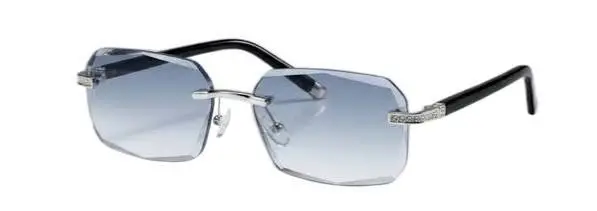
Blue Lume Glasses are sold through BlueLumeGlasses.com and promoted as a convenient eyewear product. Their advertising appears to draw on the popularity of blue light glasses and magnifying eyewear, both of which appeal to people looking for a simple solution to everyday vision-related problems.
Blue light glasses are generally marketed to people who spend a lot of time looking at computer screens, phones and other digital devices. Magnifying glasses, on the other hand, are designed to make nearby objects or small print easier to see. These are different purposes, so it is worth checking exactly what the seller claims the Blue Lume product can do rather than assuming that it offers every benefit mentioned in an advert.
The problem is that an attractive product page can make ordinary glasses sound far more advanced than they really are. If Blue Lume is simply a generic pair of glasses with a new brand name, customers deserve to know what they are paying for, what the lenses actually do and whether the product has any features that justify the price.
I would not take the promotional claims as proof of performance without clear product specifications and reliable evidence. When buying glasses, the quality of the lenses, their intended use and the accuracy of the seller’s descriptions matter much more than the name printed on the packaging.
I Found Similar Glasses on Temu and AliExpress for Just a Few Dollars
One of the most interesting findings from my investigation was that glasses appearing to match the Blue Lume product were available through Temu and AliExpress for around a dollar to a few dollars. Reverse image searches can be useful for finding identical or similar products across different websites, and in this case, the results raised questions about how exclusive the Blue Lume offer really is.
The business model behind products like this is fairly straightforward. A seller sources inexpensive glasses from a wholesale supplier, creates a branded website, adds polished product images and runs advertisements designed to attract customers. The glasses are then sold at a much higher price than the cost of buying a similar item directly from a marketplace.
There is nothing inherently dishonest about reselling a product at a profit. Retailers have expenses, including advertising, shipping, packaging and customer support. The issue is whether the seller is presenting an ordinary product as something special while giving customers the impression that they are getting technology or quality that has not actually been demonstrated.
In the case of Blue Lume Glasses, I could not establish that the branded version offers a meaningful advantage over the cheaper alternatives I found. If the glasses are essentially the same product, paying considerably more may simply mean spending extra on the branding and advertising.
I would compare the product images, lens descriptions and specifications carefully before placing an order. If an inexpensive pair looks identical to the Blue Lume glasses, the seller should be able to explain what makes its version worth the additional cost.
Are the USA Today and Men’s Health Mentions Genuine?
Blue Lume Glasses also raises questions because its promotional material reportedly uses the names of publications such as USA Today and Men’s Health. These are familiar names, and seeing them associated with a product can make it appear as though established media organisations have reviewed or recommended it.
However, displaying a publication’s name or logo on a sales page is not the same as receiving a genuine endorsement. A logo does not prove that a journalist tested the glasses, that the publication recommends them or that the product has been independently evaluated.
I could not verify the supposed media mentions sufficiently to treat them as genuine endorsements of Blue Lume Glasses. Without authentic articles that can be traced back to the publications themselves, I would not use these claims as a reason to trust the seller.
This is particularly concerning when the media names appear alongside strong sales claims. A shopper may reasonably assume that a familiar publication has checked the product before allowing its name to be associated with it. If the seller cannot substantiate that impression, the marketing risks misleading customers.
My advice is to treat these supposed endorsements with caution unless the website provides direct links to genuine coverage. The glasses should be judged on their actual quality and performance, not on logos that make the sales page look more established.
Fake Trust Badges and AI-Generated Images
Another issue with the Blue Lume website is the reported use of trust badges and images that appear AI-generated. Trust badges are commonly used by online shops to reassure customers that their purchases are secure or that the business has been verified by a recognised organisation. However, a badge displayed on a website is not proof of anything unless it can be checked against the organisation that supposedly issued it.
Some badges simply refer to ordinary payment methods, while others imply that a business has passed a security check or received an independent certification. Those claims should not be treated as interchangeable. If a badge cannot be verified, it offers little reason to trust the seller.
The product imagery deserves similar scrutiny. AI-generated images can make an online offer look polished, but they may also show unrealistic product details or people who have never used the item. An AI-generated image alone does not prove that a product is fraudulent, and it is possible for a legitimate business to use digitally created promotional material. The concern is whether the images are being used to give customers a misleading impression of the product or the people supposedly recommending it.
For Blue Lume Glasses, I would put much more weight on genuine product photographs, clear specifications and independent customer experiences than on promotional images or decorative trust symbols. If a seller wants customers to believe that its glasses are special, it should be able to provide more than attractive graphics.
Why Do the Blue Lume Glasses Reviews Seem Inconsistent?
Customer reviews can be helpful when shopping online, especially when you cannot examine a product before buying it. However, the review information displayed on a sales page needs to make sense. Blue Lume Glasses has been associated with concerns about inconsistent review counts, which makes it harder to judge how much confidence to place in the testimonials shown.
For example, if a website displays one number of customer reviews in a headline and a noticeably different number elsewhere on the same page, there should be a reasonable explanation. Counts can change as new reviews are added, but unexplained inconsistencies can leave shoppers wondering whether the figures are genuine, outdated or simply being used to make the offer appear more popular.
The same goes for glowing testimonials that provide little detail about the buyer’s experience. A useful review might explain how the glasses fit, whether the lenses matched the description, how comfortable they were to wear and whether the customer received the product shown in the advertisement. General praise without those details is much less helpful when deciding what to buy.
I could not establish from the reported inconsistencies alone that every review is fake. Nevertheless, I would not rely on the website’s testimonials as independent proof that Blue Lume Glasses are worth buying. Reviews hosted by the seller should be considered alongside feedback from other sources, particularly when the website itself raises questions about its marketing.
Blue Lume Glasses Price and the Hidden Subscription Concern
The price difference between Blue Lume Glasses and similar products on Temu or AliExpress is worth considering before you buy. If a pair of glasses available for a few dollars elsewhere is being sold for significantly more through BlueLumeGlasses.com, customers should have a clear understanding of what the extra money covers.
The checkout process is just as important as the advertised price. Some online offers include optional add-ons, membership plans or recurring payments that are easy to overlook if you focus only on the main product offer. The possibility of hidden subscription charges has been raised in connection with offers like Blue Lume, so I would read the payment terms carefully before completing an order.
I could not confirm that every Blue Lume customer is enrolled in a recurring subscription, and it would be unfair to present that as an established fact without evidence. Still, it is worth checking whether the checkout page mentions a trial period, automatic renewal, monthly membership or any separate service that could lead to future charges.
Make sure the final total is clear before entering your payment details. If the seller does not explain what you are paying for, or if the terms appear to authorise payments beyond the glasses themselves, I would not proceed until those details have been clarified.
Are Blue Lume Glasses Worth Buying?
For me, the main issue is not simply that similar glasses can be found more cheaply elsewhere. It is that the marketing surrounding Blue Lume Glasses appears to offer little reliable evidence that the branded product is better than the generic alternatives.
The supposed media mentions have not been sufficiently verified, the reported trust badges need to be checked, and the inconsistent review counts make the customer feedback harder to assess. When those concerns are combined with the apparent availability of similar glasses on low-cost marketplaces, I see little reason to pay a substantial markup without a clear explanation of what makes the product different.
There is also the question of what the glasses can actually do. If they are being sold as blue light glasses, the seller should provide clear information about the lenses rather than relying on broad promises. If they are intended to magnify objects, buyers should be able to find the magnification strength and other relevant specifications. A product name and a persuasive advertisement are not enough to establish that the glasses will meet your needs.
If you simply want inexpensive glasses for a particular purpose, compare the specifications and total prices of similar products before spending more on a heavily advertised brand. I would also look for a seller with clear contact details, a straightforward returns policy and transparent payment terms.
Is Blue Lume Glasses a Scam?
After looking into Blue Lume Glasses, I would be very cautious about ordering from BlueLumeGlasses.com. The apparent availability of similar glasses on Temu and AliExpress for just a few dollars raises questions about the retail price, while the reported media mentions, trust badges, AI-generated imagery and inconsistent review counts make the website’s marketing harder to trust.
I cannot establish from these findings alone that every part of the business is fraudulent, but I have not seen enough convincing evidence to recommend the product at an inflated price. The website needs to provide verifiable information about its claims and demonstrate why customers should choose its glasses over the cheaper alternatives.
I would say avoid Blue Lume Glasses unless the seller can provide clear evidence that the product offers genuine value for the price. I would not let supposed media endorsements, impressive-looking images or glowing reviews make the decision for me. When a similar product costs only a few dollars elsewhere, there needs to be a good reason to pay considerably more, and the information available here does not give me enough confidence that Blue Lume delivers that extra value.
Check out Necklow Sleep Pillow that I reviewed, earlier.