
Sherum Glasses are being advertised as a new type of eyewear that can supposedly adjust themselves to your eyesight without a prescription. The adverts make them sound like a clever alternative to buying different pairs of glasses or visiting an optician every time your vision changes. They even claim the lenses can adjust from -10 to +10 dioptres automatically. That is a big promise, especially for people who struggle with their eyesight and would love to find one pair of glasses that does everything.
I wanted to see what was actually being sold, so I followed one of the adverts I found on Bing on November 16, 2026. The advert showed a pair of unusual-looking glasses in an open case, with labels suggesting they could handle distance, reading, anti-glare and blue-light detection. The picture itself looked AI-generated to me, which was the first thing that made me want to look more closely at the offer.
What I found was much less impressive than the advertising. The sales presentation makes Sherum Glasses sound like revolutionary eyewear, but the product appears to be an ordinary, inexpensive pair of glasses being sold at a much higher price. I also found a Trustpilot page for sherum.com, where the five-star reviews about the ordering process can give a very different impression from the complaints in the one-star reviews about the actual product.
What Are Sherum Glasses Supposed to Do?
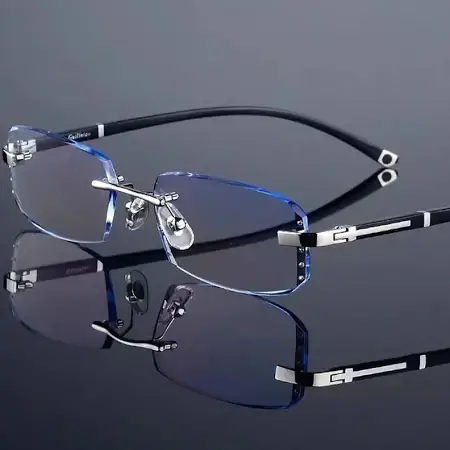
Sherum Glasses are also advertised under the name Sherum OptiReaders Pro. The main selling point is supposedly their self-adjusting lens technology, which the seller claims can automatically adapt to different eyesight needs.
The advertorial I reached described the glasses as prescription-free and claimed they could adjust from -10 to +10 dioptres. It also suggested that users would no longer need eye examinations, prescription updates or multiple pairs of glasses because one pair could automatically adapt to changes in their vision.
That sounds wonderful on paper. Imagine being able to use the same glasses for reading, looking at things in the distance and dealing with different eyesight problems without having to visit an optician. Unfortunately, the claims in the advertisement are not the same as proof that the product can actually do these things.
The website also describes something called an Auto-Adjust System, claiming that it uses a new type of lens technology to optimise vision automatically. However, the sales page does not give convincing technical evidence to support these claims. Calling something self-adjusting does not make it so, and I would not accept claims about replacing prescription eyewear without proper evidence.
How I Found the Sherum Glasses Advertisement
On November 16, 2026, I came across an advert for Sherum Glasses hosted on Bing.com. It used the headline, “New Self-Adjusting Glasses Are Changing Eyewear in 2026.” The image showed glasses sitting inside an open case, with labels for distance, anti-glare, blue-light detection and reading. It was clearly designed to make the product look like a new piece of technology rather than an ordinary pair of inexpensive glasses.
When I clicked the advert, I was taken to luamoss.com, a website presenting itself as a technology publication called Future Gear. The page carried the headline, “I Recently Discovered These Revolutionary New Glasses.” Instead of looking like a straightforward product listing, it was written like an article from a tech blog, with the glasses presented as an exciting discovery.
The article then made the claims about the glasses automatically adjusting from -10 to +10 dioptres and eliminating the need for eye examinations or prescription updates. It also explained the supposed Auto-Adjust System, making it sound as though Sherum had developed some special lens technology.
But this was not an independent technology review. The page was part of the sales journey, and following its links took me to another page on luamoss.com before eventually directing me to the checkout on sherum.com. In other words, the advert led to an article that looked like editorial content but was actually being used to sell the product.
I think this is important because someone reading the page could easily believe they were looking at a genuine technology article from an independent publication. The presentation gives the impression that someone has discovered and tested a revolutionary product, when the page is really guiding visitors towards a purchase.
What Do Sherum Glasses Reviews on Trustpilot Say?
There is a Trustpilot profile for sherum.com, but I would not look at the overall star rating without reading what people are actually saying. Some of the five-star reviews focus on the ordering process, which can make the store appear reliable. However, placing an order successfully and receiving a product are not the same as getting the eyewear advertised.
The one-star complaints are where the bigger concerns appear. Buyers have raised issues about the glasses not matching the claims made in the advertisements. This is particularly relevant because the main selling point is not simply that Sherum sells reading glasses. It is that the glasses supposedly adjust themselves to your eyesight and can replace the need for different prescriptions.
That is a very different promise from selling an ordinary pair of inexpensive glasses. If someone orders because they believe the lenses will automatically correct their vision, only to receive a basic pair that does not perform as advertised, I can understand why they would feel misled.
This is why I would not be impressed by positive comments that only talk about ordering or delivery. The important question is whether the glasses actually do what the adverts promise, and the one-star reviews raise serious doubts about that.
Are Sherum Glasses Really Special?
From what I found, I have little reason to believe Sherum Glasses offer the special technology being advertised. The glasses appear to be ordinary, inexpensive eyewear rather than some revolutionary self-adjusting product. Similar-looking glasses can be found on AliExpress and Temu for around $1 to $5 per pair.
That does not mean every pair of cheap glasses is automatically bad. There are inexpensive reading glasses that serve a basic purpose. The problem is charging a much higher price while making claims about advanced technology that the product does not appear to deliver.
I also find the claim that one pair can automatically adapt to all your vision changes particularly questionable. People have different eyesight needs, and the idea that a cheap pair of glasses can replace proper prescription eyewear deserves far more evidence than a sales article provides. I would not rely on these glasses to correct a vision problem simply because an advert says they can adjust themselves.
Who Is Behind Sherum Glasses?
Another part of my investigation concerns the way the product is marketed. The advert I followed did not take shoppers directly to a clear product explanation. Instead, it sent them through a website posing as a technology publication before eventually leading to the Sherum checkout.
I also found that the marketing appears to be connected to sellers operating out of Hong Kong, with fabricated-looking product reviews and claims being used to make the glasses seem more impressive than they are. The concern is not just the price, but the way the product is presented to people who may genuinely believe they are buying a new kind of medical or prescription-free eyewear.
When a product is advertised as something that can replace eye examinations and prescription updates, I expect much more than sales language and impressive-sounding claims. I want to know what the lenses are made of, how the adjustment works and whether the technology has been properly tested. The material I found did not provide convincing answers.
Are Sherum Glasses Legit or a Scam?
I would not recommend buying Sherum Glasses. The advertising makes claims that go far beyond what the product appears to offer, and the route from the Bing advert to the fake-looking Future Gear article and then to the checkout makes the whole sales process questionable.
The Trustpilot reviews also deserve a closer look. A store can receive positive feedback for processing orders, but that does not prove its products live up to their advertising. The one-star complaints about the glasses themselves are much more relevant when deciding whether the product is worth buying.
My biggest issue is that Sherum is selling ordinary-looking, inexpensive glasses under the impression that they have advanced self-adjusting technology. Similar glasses are available on AliExpress and Temu for just a few dollars, and I see no convincing reason to pay a heavily inflated price for a product that has not demonstrated the special features being advertised.
Sherum Glasses are a misleading offer and I would stay away from them. Do not buy them expecting one pair of glasses to automatically correct your eyesight, replace prescription lenses or eliminate the need for an eye examination. The advertising makes a lot of promises, but what appears to be behind it is a cheap pair of glasses being sold as something far more advanced than it really is.
Check out Necklow Sleep Pillow that I reviewed, earlier.