
I started looking into Hyper Charge Pro because the advertising around this charger is far more ambitious than what you would normally expect from a wall adapter. The ads do not simply say that it can charge your phone quickly. They tell a story about smartphones being deliberately slowed down, older batteries being pushed toward failure, and a supposedly secret piece of technology that can reverse all of that. According to the promotions, Hyper Charge Pro can bypass software throttling, make an older phone feel new again, improve battery life and even help you avoid buying another smartphone. That is a pretty big promise for something that, from the product images and listings I found, looks like a basic multi-port USB charger.
That is also why people are searching for honest Hyper Charge Pro reviews. The advertisements make the product sound like a breakthrough in smartphone technology, while the actual hardware being sold under the Hyper Charge Pro name appears to be an ordinary Quick Charge-style adapter. There are also listings for what appears to be the same type of four-port charger on other marketplaces for a fraction of the prices pushed through the viral sales funnel.
What Is Hyper Charge Pro Supposed to Do?
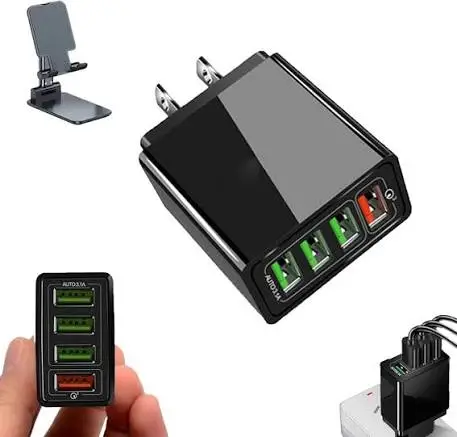
Hyper Charge Pro is presented as more than a fast charger. The marketing claims that its technology can somehow work around the software limitations manufacturers put on older phones. The story usually involves a former engineer or technology insider supposedly discovering what smartphone companies do not want consumers to know, followed by the introduction of Hyper Charge Pro as the answer.
The sales pitch throws around phrases such as AI technology, smart power management and advanced charging technology to make an inexpensive accessory sound like a sophisticated computer component. Some versions of the advertising have claimed that the device can make phones operate faster, stay cooler, extend battery life and charge several times faster than a conventional charger. Current marketplace listings using the Hyper Charge Pro name still advertise features such as Quick Charge 3.0, four charging ports and claims of up to four-times-faster charging.
There is nothing unusual about a legitimate fast charger being able to deliver power more efficiently than an old low-wattage adapter. The problem is the much bigger promise being attached to this particular product. A wall charger can supply power to a phone, but plugging a different charger into an aging smartphone does not magically repair degraded battery cells or rewrite the phone’s operating system.
The Hyper Charge Pro Advertisement Is the Part That Really Got My Attention
The advertising is not presented like an ordinary product demonstration. Instead, the viewer gets a dramatic story designed to make the purchase feel like they have discovered information that smartphone manufacturers supposedly want to keep secret.
Reports examining the campaign found promotional videos using AI-generated or manipulated people and voices, including a supposed former Apple engineer discussing smartphone slowdowns and planned obsolescence. The advertising then directs viewers toward a sales page that presents the charger as a secret technological breakthrough.
There are also versions of the promotion built around fake-looking technology demonstrations and stories about presenters being removed from events after supposedly revealing the charging secret. That kind of story is clever advertising because it gives the viewer a reason to believe the information is being suppressed. It also makes the product seem like something ordinary consumers were never supposed to find.
The problem is that the story is doing most of the selling. I could not find credible technical evidence showing that Hyper Charge Pro contains some special AI system capable of overriding smartphone software throttling or restoring an old battery to its original condition. The independent investigations I found instead describe the hardware as a generic Quick Charge 3.0-type charger.
What You Actually Get With Hyper Charge Pro
Hyper Charge Pro does not appear to be some unique piece of smartphone-repair technology. Investigations into the product have identified the physical charger as a generic multi-port USB adapter that is available through ordinary online marketplaces and wholesale suppliers. One investigation specifically describes the device as a generic Quick Charge 3.0 charger that can be purchased cheaply and then resold under the Hyper Charge Pro branding.
I also found Hyper Charge Pro-branded four-port chargers being sold through Walmart marketplace listings for around $8.99, with ordinary descriptions mentioning Quick Charge 3.0 and smart power distribution. That does not prove that every charger carrying the Hyper Charge Pro name comes from exactly the same seller, but it does show that the name is being used for a very ordinary type of charger rather than a unique piece of technology that exists only through the viral advertisements.
There are similar listings on other marketplaces as well. For example, one current listing describes a Hyper Charge Pro four-port charger as a conventional Quick Charge 3.0 device with smart power detection.
So when an advertisement makes it sound as though you are buying a revolutionary device containing some secret AI chip, it is reasonable to ask why the physical product looks so much like inexpensive generic charging hardware already being sold elsewhere.
Can Hyper Charge Pro Really Stop Phone Throttling?
This is one of the claims I would be most careful with.
A charger does not have control over the operating system settings that determine how a phone’s processor, apps or other components operate. If a phone is slowing down because of software, storage problems, thermal management, background processes or battery-health-related performance management, simply changing the wall adapter does not give the charger control over those systems.
Likewise, a charger cannot physically restore worn-out battery cells. Once a lithium-ion battery has lost capacity through normal chemical aging, supplying power through a different adapter does not return that lost capacity. A fast charger can affect how quickly the battery receives power, but that is very different from repairing the battery.
That makes the claims about bypassing software throttling and making an old phone perform like new especially hard to take seriously. I found no credible evidence supporting the idea that Hyper Charge Pro can perform those functions.
Hyper Charge Pro, Quick Charge Pro and Fast Charge Pro
Another thing worth knowing before buying is that the same style of product can appear under different names. Hyper Charge Pro is not the only name connected with this type of advertising. Searches also turn up variations such as Quick Charge Pro and Fast Charge Pro, while generic versions of the same four-port charger appear on marketplace sites without the elaborate story attached to them.
That does not mean every product carrying one of those names is necessarily operated by one single company. It does mean you should not assume that changing the product name changes what is actually inside the box. The hardware matters much more than whatever name has been printed on the advertisement.
This is one reason I would not judge the product by the polished video alone. If the charger is genuinely revolutionary, there should be clear technical specifications, a real manufacturer, meaningful certification information, independent testing and a company that can be identified and contacted. A dramatic advertisement is not a substitute for any of those things.
What About the Hyper Charge Pro Reviews?
This is another area where I would take the sales-page testimonials with a lot of caution. Investigations into the campaign found sales pages displaying highly positive reviews and trust-style ratings designed to make the product look widely established. One investigation reported that the sales page claimed thousands of ratings and a high trust score, despite the lack of corresponding evidence from the supposed independent source.
That matters because a person who has just watched the advertisement may arrive at the checkout page thinking thousands of other people have already tested this charger successfully. If those numbers or testimonials cannot be independently verified, they should not be treated as proof that Hyper Charge Pro works.
There are genuine marketplace listings for chargers using the Hyper Charge Pro name, but those listings are not evidence that the viral marketing claims are true either. A charger can exist and charge a phone while still being completely incapable of doing the things promised in the advertisement.
The Other Problem: The Sales Funnel
The product itself is only part of the concern. Reports about the Hyper Charge Pro promotion have also raised questions about the way some of the sales pages handle checkout and recurring charges.
One investigation into the Clariohome-linked sales funnel reported a recurring charge of $49.99 per month being disclosed during checkout in a way that could easily be missed.
If you purchased Hyper Charge Pro and later noticed a charge you did not expect, check your bank or card statement carefully rather than assuming it was part of the original purchase. Save the confirmation email, screenshots of the advertisement, the sales page, your receipt and any communication with the seller. Those records can be useful if you need to challenge a transaction.
The FTC also recommends keeping records of online purchases and contacting your card issuer promptly if you are charged for something you did not authorize, receive the wrong item or encounter another billing problem.
So, Is Hyper Charge Pro a Scam?
After looking at the marketing, the hardware being sold under the name and the information available about the sales funnel, I would not buy Hyper Charge Pro based on the claims made in the viral advertisements.
The reason is not simply that it is a cheap charger. There is nothing inherently wrong with an inexpensive charger if it is properly made and honestly described. The problem is selling ordinary charging hardware while surrounding it with claims about bypassing smartphone throttling, restoring old batteries, secret AI technology and making aging phones perform like new without providing credible evidence for those claims.
That is why I consider the Hyper Charge Pro marketing deceptive, and why I would not treat the product as a legitimate smartphone performance booster. The evidence I found points toward a generic charger being packaged with a much more elaborate story than the hardware can support.
If you only need a charger, there are plenty of established manufacturers and ordinary retailers selling chargers with clear power ratings and technical specifications. You do not need a mysterious “secret” device to charge a phone properly.
Conclusion
The biggest problem with Hyper Charge Pro is that the advertisement tries to convince you that you are buying something completely different from what appears to be in the box. The viral videos make it sound like an underground piece of technology capable of defeating smartphone software limitations and rescuing an aging phone from planned obsolescence. Once you look past the story, the product looks much more like a generic multi-port fast charger being sold with an inflated technological narrative attached to it.
So, does Hyper Charge Pro work? It may work in the very ordinary sense that a compatible USB charger can provide power to a device. What I found does not support the much bigger claims that it can bypass software throttling, repair an old battery, restore lost battery capacity or transform an aging smartphone into a new one.
And is Hyper Charge Pro a scam? The product’s promotional campaign has enough deceptive elements and unsupported claims that I would stay away from it rather than spend money expecting the results shown in the advertisements. The AI-generated promotional material, exaggerated technical story, generic hardware and reports concerning the checkout process make this a very different proposition from buying a normal fast charger from a known manufacturer.
If you already paid and believe you were misled or charged more than you agreed to, contact your bank or card issuer and ask about disputing the transaction. The FTC advises consumers to dispute problematic credit-card purchases and report suspected online shopping fraud, while the FBI’s Internet Crime Complaint Center (IC3) accepts complaints involving cyber-enabled fraud and scams.
The important thing is not to let the advertisement’s story convince you that you missed out on some secret phone technology. A cheap charger can be a cheap charger. Calling it AI-powered does not change what the hardware is capable of.
Check out Mansculpt wave therapy plus that I talked about earlier.