
If you’ve recently searched for NeuroQ reviews and complaints, you’re probably trying to figure out one thing: is this brain health supplement actually worth trying?
NeuroQ has been gaining attention online, especially among people concerned about memory, focus, brain fog, and cognitive decline. The supplement is connected to LifeSeasons, Inc., and its marketing often references neurologist Dr. Dale Bredesen, known for his books “The End of Alzheimer’s” and “The Ageless Brain.”
The official NeuroQ website features a promotional video discussing brain health and cognitive support, along with references to ingredients that are commonly associated with memory support. But like with any supplement in the brain health space, it’s important to slow down and look at the details before making a decision. This review looks at the ingredients, marketing claims, customer feedback, and potential concerns so you can decide for yourself.
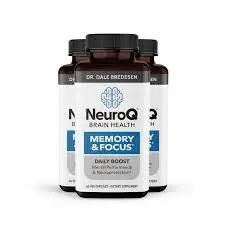
What Is NeuroQ?
NeuroQ is marketed as a brain health supplement designed to support memory, focus, and cognitive function.
The product is sold through the official website neuroq.com and includes a combination of ingredients often used in cognitive support formulas.
The supplement is associated with LifeSeasons, Inc., a supplement company based in Utah, with a mailing address listed as:
565 N Kays Dr
Kaysville, Utah 84037
Like many dietary supplements, NeuroQ includes a standard disclaimer stating that its statements have not been evaluated by the FDA and that the product is not intended to diagnose, treat, cure, or prevent disease.
NeuroQ Ingredients
One of the main reasons people search for NeuroQ reviews is to understand what’s actually inside the capsules.
The formula contains several well-known ingredients commonly used in brain health supplements:
Phosphatidylserine
This compound is naturally found in brain cell membranes and has been studied for potential roles in memory and cognitive function. Some research suggests it may help support brain performance, particularly as people age.
Ginkgo Biloba
A popular herbal ingredient often associated with circulation and cognitive support. Ginkgo has been widely studied, though research results are mixed regarding its effectiveness for memory.
Coffee Fruit Extract
This ingredient has been included in several newer brain supplements. Some early studies suggest it may support levels of brain-derived neurotrophic factor (BDNF), which is involved in brain health.
Turmeric
Known for its anti-inflammatory properties, turmeric contains curcumin, which has been studied for possible neuroprotective effects.
Gotu Kola
An herb traditionally used in herbal medicine and sometimes included in memory-support supplements.
Propolis
A compound produced by bees, often studied for its antioxidant properties.
Overall, the ingredient list combines several substances that appear frequently in cognitive health formulas.
The Marketing Around NeuroQ
The NeuroQ website includes a video presentation that discusses cognitive health and references Dr. Dale Bredesen’s work related to Alzheimer’s research.
Dr. Bredesen became widely known after publishing The End of Alzheimer’s, which outlines a multi-factor approach to addressing cognitive decline.
However, the broader scientific community has also taken a cautious approach toward some of the claims associated with that work.
For example, an article published through PubMed Central titled “Can we trust ‘The End of Alzheimer’s’?” by neurologist Joanna Hellmuth explores the evidence behind some of the claims made in the book. That doesn’t mean the ideas are automatically wrong, but it does show that the topic remains debated within the medical community.
As always, it’s important to separate scientific discussion from supplement marketing, which sometimes blends the two.
NeuroQ Reviews: What Customers Say
When looking through NeuroQ reviews and complaints, feedback appears somewhat mixed.
Some users report positive experiences, including:
- Improved focus during the day
- Slight improvements in memory recall
- Feeling more mentally alert
These types of results are common in many cognitive supplements that contain ingredients like phosphatidylserine and ginkgo.
However, not all feedback is positive.
Some users mention concerns such as:
- Mild digestive discomfort
- Headaches
- No noticeable change in memory or focus
Another issue that occasionally comes up in supplement reviews generally, not specifically limited to NeuroQ, is cost. Brain supplements often require consistent use for weeks or months, which can add up financially over time.
The 90-Day Clinical Study Mention
The NeuroQ website includes fine print referencing a 90-day clinical study.
However, details about the full study design, sample size, and peer-reviewed publication are not always easy to find publicly. This doesn’t necessarily invalidate the study, but it does mean consumers should be cautious about assuming strong clinical proof based on marketing summaries alone.
In the supplement industry, it’s fairly common for companies to reference internal or limited studies.
Money-Back Guarantees and Refund Concerns
Many supplement companies offer a money-back guarantee to encourage customers to try their products.
In theory, this reduces risk for the buyer. However, across the supplement industry in general, I’ve seen plenty of consumers report difficulties obtaining refunds when trying to return products.
To be clear, this isn’t a direct accusation against NeuroQ, but it’s always wise to read refund policies carefully before ordering any supplement online.
Understanding the return process ahead of time can save frustration later.
Is NeuroQ a Scam?
Based on available information, NeuroQ itself does not appear to be a scam product.
It is connected to a real supplement company, lists identifiable ingredients, and provides company contact details.
However, like many supplements in the cognitive health space, the marketing may give the impression of stronger scientific backing than what is fully established.
That’s not unusual in the industry, but it’s something consumers should keep in mind.
Thoughts on NeuroQ
When people search for NeuroQ reviews and complaints, they’re usually trying to balance hope with caution, especially when dealing with memory concerns or brain fog.
NeuroQ contains several ingredients that have been studied for cognitive health, and some users report positive experiences with focus and mental clarity. At the same time, the scientific evidence behind supplements like this is still evolving, and results can vary widely from person to person.
Conclusion
The most important takeaway is this: supplements should never replace professional medical advice, particularly when dealing with serious concerns like dementia or Alzheimer’s disease.
If you’re considering NeuroQ or any brain health supplement, it’s always wise to speak with a qualified healthcare professional first.
At the end of the day, informed decisions usually come from looking beyond the marketing and taking the time to understand both the potential benefits and the limitations.
Check out the Frownies Patch I reviewed earlier.