
The VapoCept advertisement is the kind of thing that can easily pull someone in before they have a chance to stop and question what they’re watching. It looks like a long health documentary, uses familiar television branding, brings in famous names, talks about Alzheimer’s and dementia, and eventually turns the whole presentation into a sales pitch for a bottle of capsules. If you watch it without checking anything outside the video, it can look remarkably convincing.
That is exactly why I decided to look into the VapoCept scam claims more closely. I wanted to know what VapoCept actually is, whether the Elon Musk and Steve Martin videos are real, whether the supposed 60 Minutes presentation has anything to do with CBS, what the VapoCept capsules actually contain, and what happens when somebody tries to get a refund. I also looked at the customer complaints because the experience people describe after ordering is often very different from the story presented in the advertisement.
What I found is troubling. The VapoCept sales operation currently has several different versions of the product and formula circulating online, while the most sensational advertising relies on celebrity-style presentations and claims about reversing memory problems that aren’t supported by evidence showing that VapoCept can treat Alzheimer’s disease or dementia. The FDA has separately warned consumers about precisely this type of online marketing, noting that products sold as supplements are sometimes promoted with false promises about preventing, treating or curing Alzheimer’s disease.
What Is VapoCept?
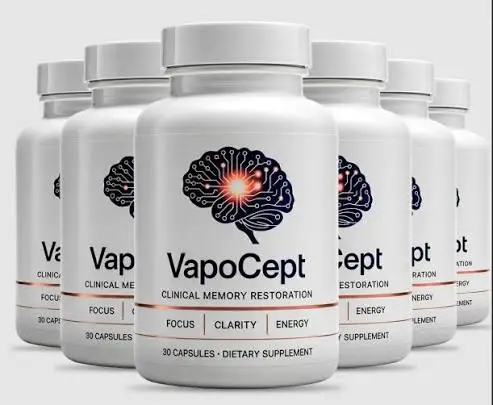
VapoCept is being sold as a dietary supplement for memory, focus, mental clarity and general cognitive support. One current VapoCept sales page describes it as a “cognitive support system” and claims that its ingredients can support cerebral blood flow, protect neurons and improve neurotransmitter function. The same page advertises a 60-day guarantee and says the product is made in the USA.
The strange part is that the VapoCept name is currently attached to more than one version of the product online. One site lists Bacopa Monnieri, Ginkgo Biloba, Phosphatidylserine, L-Theanine, Rhodiola Rosea and Vitamin B12. Another current VapoCept site lists L-Arginine, L-Arginine AKG, two forms of L-Citrulline, Beta-Alanine, Niacin and Calcium. Those are not minor differences in wording; they are completely different formulations.
That alone makes me very uncomfortable with the idea of ordering based on whatever VapoCept advertisement happens to appear in front of you. A buyer should know exactly which formula they are purchasing before entering payment details, particularly when the product is being promoted for something as serious as memory loss.
The Elon Musk VapoCept Video
This is where the VapoCept advertising really goes off the rails.
The promotional video circulating online has been presented as though Elon Musk is discussing the supposed breakthrough behind VapoCept. The presentation uses his image and voice to make it appear that he is personally connected with the product and its development. Customer complaints on Trustpilot specifically describe the video as AI-generated and say that people believed Musk was genuinely endorsing VapoCept.
One recent customer said they purchased the product after seeing what appeared to be Elon Musk promoting it, only to discover afterward that the presentation was fake. Another complaint says the video used an AI-generated version of Musk’s image and voice while describing ingredients that the customer could not find on the bottle.
That is not a small marketing mistake. If an advertisement makes a viewer believe that Elon Musk personally appeared in a presentation when he did not, the viewer is being given a completely different impression of the product than they would get from an ordinary supplement advertisement.
And Musk isn’t the only celebrity name connected with these promotions. The versions of the VapoCept presentation I researched also circulate with supposed appearances or references involving Steve Martin, Bill Gates, Dr. Sanjay Gupta, Clint Eastwood, Lesley Stahl, Gayle King and Robert De Niro. The celebrity-heavy presentation is designed to make the story feel like a major medical discovery that mainstream television and famous public figures have uncovered.
I would not trust any of those celebrity appearances simply because the video looks professional. AI-generated faces and voices have become good enough that a convincing video is no longer proof that the person actually made the statement.
Did 60 Minutes Really Recommend VapoCept?
No legitimate 60 Minutes endorsement should be assumed from these advertisements.
The scam presentation uses the look and language of a television investigation, including CBS and 60 Minutes branding, in order to create the impression that the product has been investigated by a major news organization. That is very different from an actual segment broadcast by CBS.
This type of fake-news presentation is particularly effective because people are accustomed to seeing health stories introduced through television journalism. The viewer doesn’t feel as though they’re watching an advertisement at first. They feel as though they’re watching a documentary about a medical discovery, and the product only appears later in the story.
That’s the trick.
Once the presentation has established the supposed discovery, the celebrity endorsements and the emotional stories about memory loss, the capsules can be presented as though they are the obvious solution. Someone watching the entire thing may not realize how much of the story has been constructed specifically to sell the product.
If you see a VapoCept advertisement claiming that 60 Minutes exposed a secret memory-restoration breakthrough, don’t assume the CBS logo makes it legitimate. Search the CBS/60 Minutes website independently and look for an actual program segment rather than clicking whatever link appears in the advertisement.
The Fake NASA and Vicks VapoRub Story
Another part of the VapoCept presentation that deserves a closer look is the claim about a 1978 NASA archive and the supposed Vicks VapoRub trick for reversing Alzheimer’s and dementia.
The story is presented as though researchers uncovered an overlooked scientific discovery involving ingredients associated with Vicks VapoRub and that this forgotten information somehow explains a new way to restore memory.
It sounds scientific because the presentation surrounds the claim with dates, researchers, laboratories, historical references and technical language. But sounding scientific and actually having clinical evidence are two very different things.
The FDA specifically warns consumers about Alzheimer’s products promoted with claims that they can reverse mental decline, treat dementia or cure Alzheimer’s. The agency says these products are often sold online and can give people false hope while potentially delaying appropriate medical care.
That warning is particularly relevant here because VapoCept’s advertising is not simply saying, “This supplement may support general wellness.” The promotional material described in these ads takes the discussion into much more serious territory by suggesting that a simple supplement can restore memory or reverse cognitive decline.
There is no good reason to gamble with someone’s health based on a dramatic story about a secret NASA discovery or a household-product trick.
Does VapoCept Really Work?
This is where I would separate the actual supplement from the advertising around it.
Some of the ingredients appearing on VapoCept’s various product pages are real nutritional compounds or botanical ingredients that have been studied for particular purposes. That does not prove that VapoCept itself can restore memory, reverse dementia or treat Alzheimer’s disease.
The current VapoCept site makes broad claims about cerebral blood flow, oxidative stress, neurotransmitters, gut health and cognitive function, describing the product as a combination of several mechanisms working together.
But a supplement company can take research about individual ingredients and build a much bigger marketing story around it. The fact that an ingredient has been studied does not automatically mean that the finished product has been shown in a clinical trial to produce the advertised outcome.
That is especially important with Alzheimer’s and dementia. These aren’t conditions where I would experiment with an internet supplement based on testimonials or a celebrity video. The FDA says there are no supplements proven to cure or reverse Alzheimer’s disease, and it has taken action against companies selling unapproved products with those kinds of claims.
So, does VapoCept really work for Alzheimer’s or dementia? There is no evidence I found that establishes that it can.
VapoCept Reviews and Customer Complaints
The independent customer feedback I found does not look anything like the polished testimonials on the sales pages.
At the time I checked, VapoCept’s Trustpilot profile had a 1.9 out of 5 rating from 12 reviews, with all 12 rated one star. Trustpilot also notes that the company had not been replying to negative reviews and cautions that the review sample may not be representative.
Several of the recent complaints specifically mention the Elon Musk video. One customer said they spent nearly $700 after believing the AI-generated Musk presentation was genuine. They later said they were contacted and offered additional products, and described being offered progressively larger partial refunds before being told a full refund would be provided. That is the customer’s account, not independently established evidence of every transaction, but it is exactly the kind of complaint I would want to know about before ordering.
Another customer reported seeing a long VapoCept infomercial and deciding to research it before purchasing. Others complained that the ingredients described in the video did not match what they found on the product bottle.
There is also a complaint from a customer who said the advertisement promoted a Vicks-related trick as costing less than $5 while the VapoCept offer was asking for hundreds of dollars. Again, that’s a customer’s description of the advertisement, but it shows how the sales presentation can blur the line between the supposed cheap “discovery” and the much more expensive product being sold at the end.
I wouldn’t use a dozen Trustpilot reviews to claim that every VapoCept buyer has had the same experience. I would, however, take the complaints seriously because several of them independently describe the same basic problem: the advertisement made the product appear to have celebrity or television backing that the customers later believed was not genuine.
VapoCept Price and The Expensive Upsell
The current VapoCept sales pages advertise different package prices. One page lists two bottles at $79 each, three bottles at $69 each and six bottles at $49 each. That puts the advertised six-bottle package at $294, while the two-bottle package is shown as $158 plus shipping.
Other VapoCept pages currently show different pricing, which makes it even more important to check the exact checkout page before paying. I would take a screenshot of the price, quantity, shipping charge and refund terms before submitting an order.
The customer complaints also raise another issue: upselling. At least one recent Trustpilot reviewer says they were contacted after ordering and encouraged to purchase another product because the original product supposedly would not work without it.
That isn’t something I can independently establish as a universal VapoCept practice, but it is a useful warning for anyone who has already placed an order. If somebody calls after you purchase and tells you that you need another supplement, a larger package or an additional treatment before the original product will work, don’t feel pressured to agree on the phone.
VapoCept Customer Service Phone Number
If you’re searching for the VapoCept customer service phone number, the number currently appearing in some VapoCept-related materials is:
(855) 889-3137
The accompanying support email is:
A VapoCept-related product-information release lists the 855 number as SMS support and gives the same email address.
However, I found another VapoCept source listing a different SMS number, (507) 448-8190. That means I would not blindly assume that every phone number appearing in a VapoCept advertisement belongs to the same support operation.
If you already ordered and need a refund, keep your order number, confirmation email, screenshots of the offer and any messages you received. If the seller tries to handle the matter by phone, keep a written record of what was promised.
VapoCept Refund Policy
The official-looking VapoCept pages currently advertise a 60-day money-back guarantee. One page says customers can request a refund after at least 30 days of consistent use by contacting [email protected].
There are also conflicting versions of the refund terms online. One VapoCept-related source reports that the checkout material measures the guarantee from the purchase date and mentions a 30-day minimum-use requirement, while a separate returns policy reportedly uses the delivery date and does not contain the same minimum-use wording.
That is something I would resolve in writing before purchasing rather than assuming the phrase “60-day money-back guarantee” tells you everything you need to know.
If you are already trying to get your money back, I would not rely solely on a phone conversation. Send the refund request by email, keep copies of everything and check your card statement carefully. If the company doesn’t resolve a legitimate dispute, contact the card issuer or payment provider and ask what dispute options are available.
Why These VapoCept Ads Are So Convincing
The reason this type of advertising works is actually quite simple. It doesn’t begin by saying, “Buy these capsules.”
It begins with a story.
There is supposedly a forgotten scientific discovery. Then there is a respected celebrity. Then a television network. Then a doctor. Then a NASA reference. Then emotional stories about people who were losing their memory. By the time the bottle appears, the viewer has already been given a narrative explaining why the product must be important.
That’s much more powerful than an ordinary supplement advertisement.
It is also why I wouldn’t judge VapoCept based on the quality of the video. A professional-looking presentation doesn’t make the underlying claims true. AI can now produce remarkably convincing faces, voices and edited interviews, and scammers can combine those tools with stolen logos and fake news pages to make a completely fabricated story look like legitimate journalism.
The FTC has separately warned consumers that scammers can use manipulated or fabricated celebrity endorsements to promote products and investment opportunities. The safest approach is to verify the endorsement somewhere completely independent of the advertisement rather than trusting the video itself.
Is VapoCept a Scam?
After researching the product, the advertising and the customer complaints, I would not trust the VapoCept “memory restoration” story being pushed through these celebrity and fake-news advertisements.
The strongest problem isn’t whether every capsule contains something legitimate. Some versions of VapoCept do list recognizable ingredients, and the current product pages disclose nutritional compounds. The problem is the much bigger story being attached to the product: the supposed Alzheimer’s breakthrough, the fake-looking celebrity presentations, the 60 Minutes/CBS-style branding, the NASA/Vicks story and the suggestion that taking the capsules can restore lost memory.
Those claims are not supported by evidence showing that VapoCept can reverse Alzheimer’s or dementia. The FDA specifically warns about internet products making those kinds of claims and says consumers should be wary of supposed miracle cures for Alzheimer’s disease.
The independent customer feedback is another reason I would stay away from the advertising itself. Trustpilot currently shows a cluster of one-star complaints describing AI celebrity videos, misleading claims, expensive purchases and refund disputes.
There is also enough inconsistency between VapoCept websites that I would want to know exactly which product a buyer is receiving before putting down any money. Different pages currently describe different formulas, different package prices and different support numbers.
So if the question is “Is VapoCept legit?”, I would not treat the product’s online advertising as trustworthy simply because it looks like a medical documentary. And if the question is “Is VapoCept a scam?”, the advertising campaign itself contains enough deceptive-looking elements and customer complaints that I would avoid purchasing through those celebrity-driven presentations.
Conclusion
The thing that bothers me most about the VapoCept promotion is not the price of a bottle. It is the subject being used to sell it.
Memory loss is frightening. Alzheimer’s disease and dementia affect entire families, and someone watching a long video promising that an inexpensive trick can restore a loved one’s memory may desperately want to believe it. That makes fake celebrity endorsements and fake medical-news presentations particularly irresponsible.
I would not give money to a VapoCept offer because an AI version of Elon Musk, Steve Martin or another celebrity appears to recommend it. I would not assume that a CBS or 60 Minutes logo means CBS investigated the product. I would not believe that a reference to a 1978 NASA archive makes the underlying medical claim legitimate, and I would certainly not use VapoCept as a replacement for an evaluation by a qualified doctor.
The FDA’s advice is much more sensible than anything in a dramatic online infomercial: be skeptical of products claiming to prevent, treat or cure Alzheimer’s, and speak with a healthcare professional rather than relying on an unproven supplement.
For anyone who has already ordered VapoCept capsules, save the advertisement, order confirmation, product information and refund terms. If you were charged more than expected or believe you were misled, contact the seller in writing and your payment provider as soon as possible. The VapoCept support details currently appearing online include [email protected] and 855-889-3137, although another VapoCept source lists a different SMS number, so I would verify the contact details against your own order confirmation rather than trusting a random number from an advertisement.
And if you are searching for VapoCept because you or somebody you love is experiencing genuine memory problems, please don’t let an online “miracle” story delay proper medical care. There are real causes of memory problems that need to be identified, and Alzheimer’s disease deserves evidence-based treatment rather than a capsule sold through a fake celebrity interview.
Check out Mansculpt wave therapy plus that I talked about earlier.