
VelvaFlow Lung Cleansing Spray is marketed as a respiratory support product for people who want to clear mucus, breathe more comfortably and supposedly remove unwanted buildup from their lungs. The idea will naturally appeal to anyone dealing with persistent congestion, a smoker’s cough or the feeling that their lungs need a fresh start. When a product promises to reach trapped mucus, break it down and help the lungs function better, it can sound like a simple solution to a frustrating problem. However, the claims surrounding VelvaFlow deserve serious scrutiny because there is no convincing clinical evidence provided to show that this spray can deliver the results being advertised.
The product is associated with herbal ingredients such as eucalyptus, peppermint, licorice root and calendula, which may sound reassuring to shoppers who prefer plant-based remedies. But familiar ingredients and natural-sounding descriptions do not prove that a finished product can cleanse the lungs or treat respiratory problems. The more important question is whether VelvaFlow has been properly tested and whether there is credible evidence that using it produces the effects its marketing promises. Based on the information available, those claims remain unsubstantiated, making this a product I would approach with considerable caution.
What Is VelvaFlow Lung Cleansing Spray?
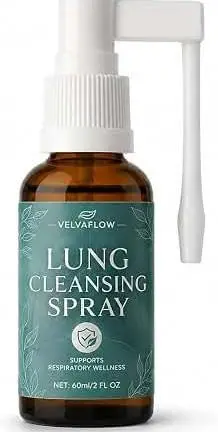
VelvaFlow Lung Cleansing Spray is promoted as an alternative respiratory product intended to support lung health and help remove mucus and other unwanted substances from the respiratory system. Its marketing centres on the idea that mucus can become trapped deep inside the lungs and that a specially formulated spray can reach this buildup, loosen it and help restore normal breathing.
That pitch can be persuasive, especially for people who have spent years smoking, struggle with recurring chest congestion or worry about the effects of pollution and other airborne irritants. Many people understandably want to protect their lungs, and the promise of a convenient spray can seem more attractive than dealing with ongoing symptoms or seeking medical advice. The difficulty is that a product cannot establish its effectiveness simply by describing a problem that people genuinely experience. It needs reliable evidence showing that the formulation can address that problem safely and effectively.
VelvaFlow’s marketing appears to go beyond ordinary respiratory support by suggesting that it can break down hardened mucus, calm inflammation, open the airways and revive the tiny hair-like structures responsible for moving mucus out of the respiratory tract. These are significant biological claims, not minor promises about soothing the throat. Without credible clinical studies on the actual product, there is no sound basis for assuming that VelvaFlow can perform these functions.
VelvaFlow Ingredients: Do Eucalyptus, Peppermint and Licorice Clean the Lungs?
The ingredients associated with VelvaFlow include eucalyptus, peppermint, licorice root and calendula. These plants have various traditional uses, and some preparations containing them are used in products intended to soothe irritation or provide a cooling sensation. However, evidence relating to an individual ingredient does not automatically establish that a particular spray works, especially when the manufacturer makes claims about deep lung cleansing and repairing respiratory function.
Eucalyptus and peppermint, for example, are familiar ingredients in products designed to create a feeling of clearer breathing. That sensation should not be confused with physically removing accumulated material from the lungs or treating the underlying cause of a persistent cough. Likewise, the presence of licorice root or calendula does not demonstrate that the finished formula can reduce lung inflammation or restore damaged respiratory tissue.
There is also an important practical question about how VelvaFlow is administered. A product sprayed into the mouth is not the same as a medically formulated inhaled treatment that delivers a measured dose to the airways. If a seller suggests that the product reaches deep into the lungs, buyers should expect clear information about its delivery method, formulation, testing and evidence of effectiveness. Without those details, the ingredient list alone is not a convincing reason to trust its claims.
Can VelvaFlow Really Remove Trapped Mucus and Repair Your Lungs?
This is the central issue with VelvaFlow. The lungs already have natural mechanisms for clearing mucus and inhaled particles. Tiny structures called cilia help move mucus toward the throat, where it can be swallowed or expelled through coughing. Adequate hydration can help prevent mucus from becoming excessively thick, while movement and appropriate treatment can support people dealing with certain respiratory conditions.
That does not mean every cough or mucus problem can be resolved with water and exercise. Persistent mucus may be associated with asthma, chronic bronchitis, respiratory infections, allergies or other medical conditions that require a more specific approach. What it does mean is that a seller claiming to cleanse the lungs needs evidence that its product offers a genuine benefit beyond the body’s normal clearing processes.
VelvaFlow’s claims about breaking down hardened mucus, opening the airways and reviving lung cilia are particularly ambitious. These effects cannot be established through marketing language, testimonials or a list of herbs. They would need to be demonstrated through appropriate testing of the finished product. Based on the information provided, there is no convincing clinical evidence showing that VelvaFlow achieves these results.
The promise of lung detoxification is also worth questioning. People may have legitimate concerns about smoke exposure or breathing polluted air, but a spray should not be assumed to reverse that exposure or remove accumulated damage simply because it is described as a cleansing formula. If you have a persistent cough, wheezing, breathlessness or recurring chest congestion, identifying the cause is much more useful than relying on an unproven detox product.
Is VelvaFlow Lung Cleansing Spray FDA Approved?
There is no evidence in the information provided that VelvaFlow has FDA approval for treating lung conditions or delivering the respiratory benefits described in its marketing. That matters because claims about clearing deep lung mucus, reducing inflammation and restoring cilia can give consumers the impression that the product has been medically validated.
In the United States, dietary supplements and other wellness products are not automatically FDA-approved for effectiveness before being sold. The regulatory requirements depend on the product’s classification, ingredients, intended use and claims. A seller’s reference to herbal ingredients, manufacturing standards or facility registration would not, by itself, prove that VelvaFlow has been shown to cleanse the lungs or treat a respiratory disease.
I would therefore be wary of any advertisement that presents VelvaFlow as a medically proven lung treatment without supplying credible clinical evidence. A convincing product page should explain what the product contains, how it is intended to be used, who manufactures it and what reliable evidence supports its specific claims. Broad promises about lung detoxification are not a substitute for that information.
VelvaFlow Reviews and Concerns About Buying It Online
Another difficulty is assessing the product’s reputation. The information available here includes references to social media and online marketplace listings, but those references do not establish a reliable record of customer outcomes or independent clinical testing. A product appearing on a marketplace is not proof that it works, just as a promotional post is not the same as an independent review.
When evaluating VelvaFlow, I would pay particular attention to whether reviews describe realistic experiences or simply repeat the same claims used in the advertisements. Statements about feeling refreshed or breathing more easily are subjective and cannot establish that a product has cleared lung mucus, repaired cilia or improved lung function. More importantly, even genuine positive experiences from individual customers would not prove that the spray works as a treatment.
The seller’s policies also deserve attention before any purchase. Check whether the company provides a verifiable business address, clear customer-service details, a transparent ingredient list and a refund policy that explains the actual conditions for returning the product. If the marketing makes dramatic health promises but provides little evidence about the product itself, I would not let a limited-time offer or a heavily discounted bundle rush the decision.
Is VelvaFlow Lung Cleansing Spray Safe?
Herbal ingredients are not automatically harmless, and the way a product is used matters. Some ingredients can cause irritation or allergic reactions, while licorice root may be unsuitable for certain people, particularly those with high blood pressure or who take medications that can interact with it. The actual risk depends on the formulation, dose, route of administration and the user’s health circumstances.
It is especially important not to assume that a spray is safe to inhale simply because it contains plant extracts. Ingredients suitable for use in one type of product may not be appropriate for delivery into the lower respiratory tract. Unless VelvaFlow clearly identifies its intended route of use and provides adequate safety information, consumers should not experiment with inhaling it or using it in a way that differs from the label.
Anyone experiencing persistent breathing problems should seek medical advice rather than using VelvaFlow as a substitute for assessment or prescribed treatment. Sudden or severe difficulty breathing requires urgent medical attention. A product marketed for lung cleansing should never encourage someone to delay care for symptoms that could have a more serious cause.
Is VelvaFlow Lung Cleansing Spray Legit or a Scam?
VelvaFlow Lung Cleansing Spray makes appealing promises, but the available information does not provide convincing evidence that it can remove trapped lung mucus, repair cilia, open the airways or detoxify the respiratory system. Its herbal ingredients may sound familiar, yet that does not establish that the finished product can deliver the dramatic results suggested by its marketing. The lack of convincing clinical support is a major reason not to trust those claims.
I think that VelvaFlow Lung Cleansing Spray is an unproven product with misleading-sounding health claims, and I would not recommend buying it as a lung-cleansing treatment. The marketing appears to offer more certainty than the evidence supports, which is particularly concerning when people may be looking for relief from genuine respiratory problems. Until the seller can provide credible evidence that the actual product works as advertised, consumers would be better off avoiding it and choosing respiratory care supported by reliable medical evidence.
Check out Necklow Sleep Pillow that I reviewed, earlier.