
A text message telling you that a new one-time passcode has been generated can be surprisingly effective at getting your attention. You may not recognize the account mentioned, you may not remember requesting a code, and for a moment the obvious thought is that somebody else is trying to get into one of your accounts. That is the reaction the 02080727510 scam text is designed to trigger.
What makes this particular message more interesting is that it does not rely on the usual suspicious link. Instead, the recipient is given a London-format telephone number, 02080727510, and encouraged to call for assistance. The message presents the phone call as the sensible next step, almost as though a support representative is waiting to help stop an unauthorized login.
That is where the trick comes in. The unexpected passcode is the bait, while the telephone number is the route the scammer wants the recipient to take.
What Is the 02080727510 Scam Text?
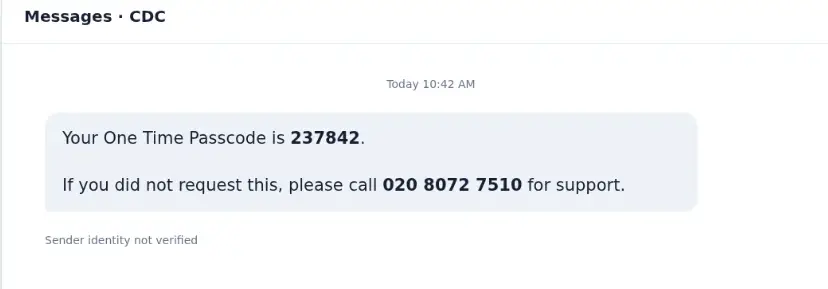
The 02080727510 scam text is a phishing and impersonation attempt built around a fake one-time passcode notification. The message suggests that a security code has been generated for an account or transaction even though the recipient never requested one. It then creates the impression that somebody may be attempting to access the account.
The wording is clever because the message does not initially ask you to hand over your password or click a strange website. Instead, it makes the recipient feel as though they need to protect themselves. A person who sees an unexpected security code may naturally want to find out what happened, particularly if the message refers to something involving an account, payment or login.
The scam then provides 02080727510 as the supposed support number.
That changes the psychology of the message. Rather than thinking, “Why did I receive this strange text?” the recipient can start thinking, “I need to call before somebody gets into my account.”
That is precisely the reaction the scammer is hoping to create.
Why the Fake Passcode Works So Well
One-time passcodes have become a familiar part of everyday online security. Banks, email providers, shopping websites and other services regularly send verification codes when somebody signs in or attempts to change account information. Because of that, an unexpected passcode notification can look completely believable even when it has nothing to do with a genuine account.
There is also a natural sense of urgency attached to security messages. If somebody really were trying to access your account, waiting around would seem like a bad idea. The scam takes advantage of that instinct and turns an ordinary security feature into the opening line of a social-engineering conversation.
The important thing to remember is that receiving a random passcode does not automatically mean that your account has been hacked. It can simply mean that somebody entered your phone number or email address while attempting to log into something. The text itself is not proof that an attacker has successfully accessed anything.
That is why calling the number contained in an unexpected message is such a bad idea. You are allowing the person who sent the message to decide where you go for help.
The 02080727510 Number Is the Part You Should Pay Attention To
The use of a London 020 number makes this scam more believable because it looks like an ordinary UK telephone number rather than an obviously strange international number.
That does not make it legitimate.
Phone numbers can be spoofed, redirected or simply used as part of an impersonation campaign. More importantly, there is nothing about the 020 format itself that proves the person answering the phone has any connection to the account mentioned in the message.
This is why I would not call 02080727510 to investigate an unexpected passcode. If you genuinely believe someone is attempting to access one of your accounts, go directly to the company’s official website or app and contact support through the contact information you find there. If the account has a genuine security alert, it should also be visible through the legitimate service.
The number in the text does not need to be trusted simply because it looks local.
The Fake CDC Connection
The use of “CDC” in this type of message can make the situation even more confusing because the abbreviation is associated with the U.S. Centers for Disease Control and Prevention, a well-known government health agency. A scam message can take advantage of familiar names or abbreviations to make an otherwise vague notification sound more official.
If a message claims that the CDC, a government agency, a bank, an online service or another recognizable organization has generated a security code, the safest approach is the same: don’t use the contact details supplied by the unexpected message to verify the claim.
Instead, find the organization’s legitimate website yourself and check whether the notification is real.
This is particularly important because scammers do not necessarily need to imitate an entire website or create a sophisticated login page. Sometimes all they need is a believable text message and a person who is worried enough to make the phone call.
What Happens When You Call a Scam Number Like 02080727510?
The dangerous part of a callback scam usually begins after the phone is answered.
The person on the other end can introduce themselves as a security agent, fraud department employee or account-support representative. Because the original text has already given you a reason to expect a security problem, almost anything the caller says can sound plausible.
The caller may ask whether you requested the code. When you say no, they now have confirmation that the story is working. From there, the conversation can move toward questions about your account, identity or security information.
A scammer may ask you to read the one-time passcode you received, confirm personal details or provide additional information supposedly needed to cancel an unauthorized transaction. The danger is that a genuine one-time passcode can sometimes be the final piece needed to complete a login or transaction that the scammer initiated.
This is why security codes should never be treated as harmless information to give to somebody simply because they claim to be helping you.
If you did not initiate the login, you have no reason to give the code to an unexpected caller.
Don’t Let the Caller Turn the Scam Into a Security Emergency
One thing I find particularly effective about this type of scam is how quickly it can reverse the normal roles.
Normally, a company sends you a security message because it wants to protect your account. Here, the scammer creates a fake security problem and then positions themselves as the person who can fix it.
That is a very different situation.
The caller may tell you that your account has been compromised, that a transaction is waiting to be approved or that the code must be confirmed to stop an unauthorized login. Once you are worried about losing access or money, it becomes much easier to follow instructions without stopping to ask whether the person on the phone is actually legitimate.
That is why I would treat the original text and the telephone call as one scam rather than two separate events. The text creates the problem; the phone number provides the solution that the scammer wants you to believe in.
What Should You Do If You Receive the 02080727510 Scam Text?
I would not call the number, reply to the message or provide any security code. If the message refers to an account you actually use, open that service independently through its official app or by typing the website address yourself.
Check the account for recent login attempts, security notifications or transactions. If there really is a problem, contact customer support using a telephone number or support page you obtained independently rather than using the number in the text.
You can also keep a screenshot of the message before deleting it. That is useful if you later need to report the number or explain what happened to your mobile provider, the company being impersonated or the appropriate fraud-reporting service.
Most importantly, don’t let the message’s urgency make the decision for you. A legitimate security issue can still be investigated after you have independently verified who you are dealing with.
What If You Already Called 02080727510?
If you called the number but did not provide any personal information, passwords or security codes, there may be nothing more you need to do beyond ending contact and remaining alert for additional messages.
If you gave the caller a one-time passcode, password, banking information or other sensitive information, the situation is more serious. Contact the genuine organization through its official website or app and explain exactly what information you disclosed. If financial information was involved, contact your bank or card provider using the number on your card or an official banking channel.
If you reused the password elsewhere, change it on those accounts as well. And if the caller attempted to obtain access to an account, check recent activity and security settings rather than assuming the problem disappeared when the phone call ended.
Is 02080727510 a Scam Number?
The 02080727510 text has all the hallmarks of a callback-based phishing scam: an unexpected one-time passcode, a suggestion that someone else may be accessing an account and a telephone number supplied in the message as the supposed way to resolve the problem.
What makes it different from the more obvious phishing texts is that there may be no link to click. The scammer is trying to get you to make the first move yourself by calling the number.
That is a clever tactic because people generally feel safer calling a telephone number than entering information into a strange website. But a phone call can be just as dangerous when the number came from an unsolicited message.
Conclusion
So if you receive a text connected to 02080727510, don’t let the unexpected passcode convince you that you need to call immediately. The code may be real in the sense that an authentication system generated it, but the person telling you why it was generated may not be real at all.
The safest response is to ignore the number in the message, access the supposed account independently and check what’s actually happening. Never give an unexpected caller a one-time passcode simply because they claim they need it to protect your account. That code is designed to prove that you are the person authorized to access the account, and handing it over can give a scammer exactly what they were trying to obtain.
Checkout The Back Taxes Scam Call, I talked about earlier.