
If you’ve recently received a text message claiming to be a Bank of America alert, warning you about a suspicious transaction, you’re not alone. On October 2, 2025, scammers began flooding phones with highly convincing BofA alert text scams designed to steal personal and financial information.
I’m breaking down exactly how these texts look, why they’re dangerous, and what you should do if you got one.
What Does the BofA Alert Text Scam Look Like?
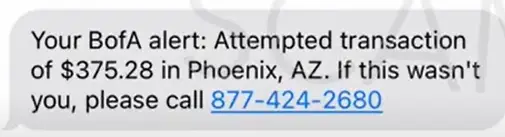
The fake message usually reads something like this:
“Your BofA alert: Attempted transaction of $375.28 in Phoenix, AZ. If this wasn’t you, call (844) 587-5633.”
Some variations use different numbers, including:
- (844) 587-5633
- (877) 424-2680
- (818) 479-8887
- Short codes like 82932
At first glance, it looks just like a legitimate Bank of America fraud alert. That’s exactly why people are falling for it
Why This Text Message Is a Scam
Here’s the truth: those phone numbers do not belong to Bank of America.
- If you call, you’re connected directly to the scammers, not BofA’s fraud department.
- The fake “representatives” will pressure you to verify account details, passwords, or card numbers. Once you hand that over, they can drain your account.
- The numbers are often routed through overseas call centers in India, Bangladesh, or Pakistan, making it harder for authorities to trace them. Scammers can change these fake numbers daily.
This isn’t just a random text, it’s a phishing scam crafted to create panic so you act without thinking.
How to Protect Yourself from the Bank of America Text Scam
If you’ve received a BofA alert scam text, here’s what you should do right now:
- Monitor your accounts closely for unusual activity.
- Do not call the number listed.
- Do not click any links.
- Forward the scam text to 7726 (SPAM) to report it.
- Log into your BofA account only through the official app or website.
- Call Bank of America directly using the number on the back of your debit or credit card if you’re concerned.
Signs of a Scam Text
Messages from short codes or unfamiliar numbers
- Urgent language like “Attempted transaction” or “Call immediately”
- Phone numbers that don’t match the official BofA contact page
- Requests for personal information, PINs, or passwords
BofA Alert Texts Are 100% Fake
The BofA alert text scam is a textbook phishing attempt. It looks convincing, uses real-sounding numbers, and tries to scare you into calling. But remember:
✅ Bank of America will never text you asking for personal details.
✅ Always go straight to the official BofA app or website for any account concerns.
✅ When in doubt, ignore and report the message.