
Lenm Ceylon Cinnamon with MCT Oil looked interesting when I ordered it. The product is marketed as a more effective way to take Ceylon cinnamon, with MCT oil supposedly helping with nutrient delivery and absorption. The idea is that instead of taking ordinary dry cinnamon powder, you get the cinnamon extract in an oil-based softgel.
That sounds good in the advertisement.
What I received was a different story. I use Ceylon cinnamon regularly for flavoring, so I already know what I’m looking for when it comes to the smell and taste of cinnamon. After my Lenm capsules arrived, I decided to open one rather than simply take the manufacturer’s claims at face value.
What I found was mostly oil, almost no cinnamon flavor, and an unpleasant smell that made me question the quality of the product. And then I noticed something else on the packaging: an additional sticker stating “Made in China.”
That was enough to make me take a much closer look at what I had actually purchased.
So, if you’re searching for Lenm Ceylon Cinnamon reviews,or whether Lenm Ceylon Cinnamon is worth buying, here’s what happened with the product I personally received.
What Is Lenm Ceylon Cinnamon With MCT Oil?
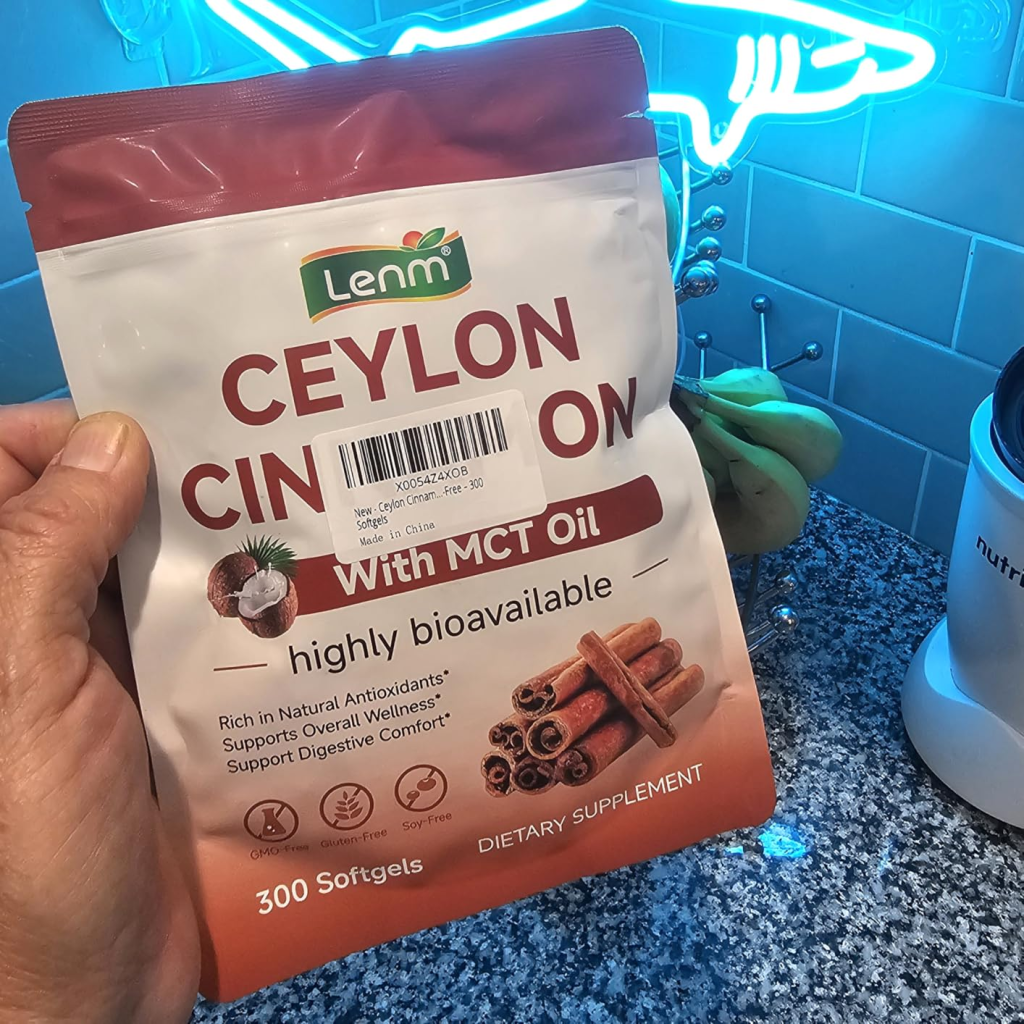
Lenm is marketed as a Ceylon cinnamon supplement with MCT oil in softgel form.
The selling point is that MCT oil is included to help with nutrient delivery compared with ordinary cinnamon powder or a dry Ceylon cinnamon extract. It’s a convenient concept. Instead of opening a container of cinnamon and measuring out the powder, you swallow a softgel. But convenience isn’t the only thing I care about.
If I’m buying a Ceylon cinnamon supplement, I want the product to actually give me confidence that I’m getting the ingredient advertised.
That’s where my experience with Lenm became disappointing.
My First Test Was Surprisingly Simple
I didn’t need laboratory equipment to notice something was off.
I opened one of the softgels.
There was some oil inside, but almost no cinnamon flavor, Considering the product is supposed to be a Ceylon cinnamon supplement, that immediately stood out to me.
I use Ceylon cinnamon for flavoring, so I’m familiar with the characteristic cinnamon taste and aroma. Even a relatively small amount of real cinnamon is noticeable.
With this softgel, I wasn’t getting that same experience. The suggested serving is three capsules. Maybe taking all three would have made the cinnamon presence slightly more noticeable, but based on what I found in the first capsule, I wasn’t expecting a dramatic difference.
My little test obviously wasn’t a scientific measurement of the cinnamon content. I’m not claiming that taste alone can tell you exactly how many milligrams of extract are inside a capsule.
But as a practical comparison, it was enough to make me question the value.
A light shake of actual Ceylon cinnamon gives me much more recognizable cinnamon than I got from the full serving of these softgels and it costs considerably less.
What Happened When I Cut One Open
This was the part that really changed my opinion.
I cut one of the softgels open to see what was inside, There was oil, but the smell was awful to me.
It didn’t smell like the warm, familiar cinnamon aroma I expected. In fact, there wasn’t really a cinnamon scent at all, the inside also looked dirty to me, which was not something I expected to see from a supplement I had just purchased.
I want to be fair about this: I didn’t send the contents to a laboratory, so I cannot tell you what caused the smell or appearance. I’m describing exactly what I saw and smelled when I opened the capsule.
And my reaction was simple:
I didn’t want to take it.
If a capsule smells bad and the contents look questionable when I open it, I’m not going to force myself to finish the bottle just because the advertisement says it’s a premium Ceylon cinnamon formula.
The Capsules Didn’t Look Like the Advertisement
There was another detail that bothered me.
After receiving my order, I happened to see another advertisement for the product.
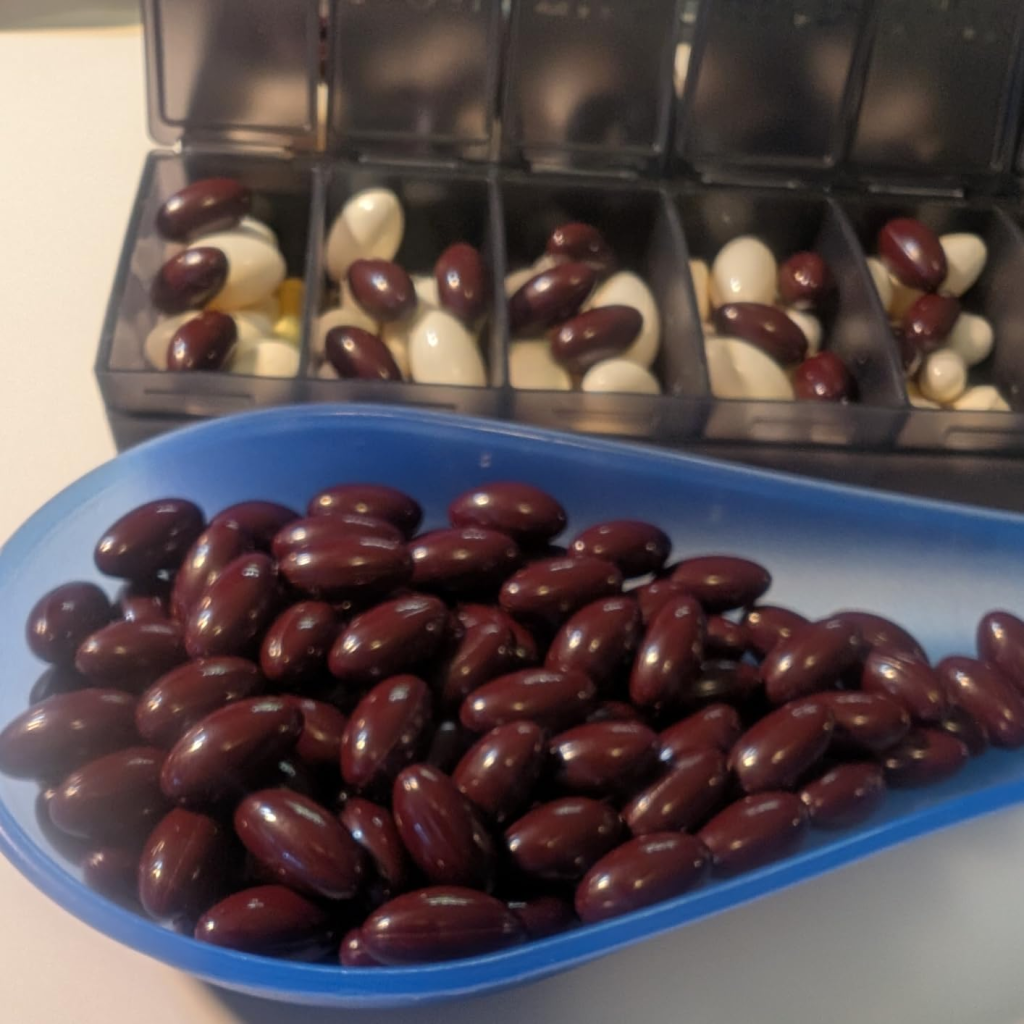
The capsules shown in that advertisement looked lighter and translucent enough that you could see through them, the capsules I received were not like that.
Mine were dark and very hard, that difference immediately caught my attention.
Maybe there is an explanation for the difference in appearance. Products can potentially change formulation, packaging or production batches. I can’t tell you exactly why the capsules looked different.
But when the product you’re receiving doesn’t resemble what you’re seeing in the advertising, it’s reasonable to question what you’re getting. For me, it added to the overall impression that the product wasn’t what I expected when I ordered it.
Then I Found the “Made in China” Sticker
The packaging gave me another reason to pause.
There was an additional sticker on the bag that said:
“Made in China.”
I’m not going to pretend that those two words automatically prove something is wrong with the product. A supplement being made in China does not, by itself, prove that it’s unsafe, fake or doesn’t contain Ceylon cinnamon.
But it was information I wanted to know.
Especially because this is being marketed specifically as a Ceylon cinnamon product.
When I buy something based on a specific ingredient and the quality story surrounding that ingredient, I want clear information about where the product is made and where the ingredient comes from.
The sticker raised questions for me rather than answering them.
Is “Made in China” the Same as Chinese Cinnamon?
No and that’s an important distinction.
A product can be manufactured in China while using an ingredient sourced from another country.
So I am not saying that seeing “Made in China” proves that the cinnamon itself came from China, What I’m saying is that the sticker was on the package I received, and it made me want much more clarity about the supply chain.
- Where was the Ceylon cinnamon sourced?
- Was the ingredient actually Cinnamomum verum?
- Where was the extract produced?
- Where were the softgels manufactured?
- Who was responsible for testing the finished product?
Those are the questions I would want answered before I felt comfortable recommending it.
What About the MCT Oil?
MCT oil is actually one of the more understandable parts of the formulation.
MCT oil is commonly used as a carrier in supplements, and the Lenm marketing presents it as a way to improve nutrient delivery compared with dry cinnamon powder.
That sounds reasonable.
But here’s where I think the marketing gets ahead of itself.
Better delivery doesn’t mean much if there isn’t enough of the ingredient you’re trying to deliver, That’s exactly what I couldn’t get past.
I opened the capsule and found oil. I smelled the contents and got no noticeable cinnamon aroma. I tasted the contents and detected very little cinnamon flavor. So while MCT oil may have a purpose in the formulation, I wasn’t convinced that the softgel contained enough noticeable cinnamon for the supposed delivery advantage to impress me. I bought a Ceylon cinnamon supplement, I didn’t buy an MCT oil supplement with a vague amount of cinnamon added to it.
Real Ceylon Cinnamon Was a Better Comparison for Me
This is probably the simplest way I can explain why I was disappointed.
I already use Ceylon cinnamon as a flavoring, so at least I know what it smells like, what it tastes like, So when I use real Ceylon cinnamon powder, I don’t have to wonder whether there’s cinnamon there. It’s obvious.
With Lenm, I opened the softgel and got oil with almost no cinnamon character, that doesn’t prove that there is no cinnamon extract inside. But it does make me question whether the product provides the value I expected from the marketing.
And when I can get a much stronger cinnamon experience from a small amount of actual Ceylon cinnamon powder for considerably less money, the softgels don’t make much sense to me.
What I Wouldn’t Assume
There are plenty of claims surrounding Ceylon cinnamon supplements, especially claims involving metabolism, blood sugar, insulin sensitivity and weight management.
I’d be careful with all of them, the fact that a product contains Ceylon cinnamon doesn’t mean it will automatically lower your blood sugar or A1C.
And I certainly wouldn’t use a supplement like this as a substitute for prescribed treatment. What matters here is whether Lenm’s specific formulation contains what it says it contains and whether the marketing claims are supported. My personal experience didn’t give me much confidence.
Is Lenm Ceylon Cinnamon a Scam?
I’m not going to call Lenm a proven scam based solely on what I experienced.
I don’t have laboratory testing showing that the capsules contain something fraudulent, and I don’t want to make a claim that my experience cannot establish. But I also wouldn’t recommend it based on my experience.
The capsules I received were dark and unusually hard compared with the translucent-looking capsules I saw in another advertisement. When I cut one open, the oil smelled awful to me and the contents looked dirty. There was virtually no cinnamon scent, and I detected very little cinnamon flavor, Then there was the Made in China sticker on the bag.
Taken together, those things made me question the quality of the product enough that I wouldn’t buy it again.
My Lenm Ceylon Cinnamon Review Verdict
For me, Lenm Ceylon Cinnamon with MCT Oil was a disappointment.
The product is marketed around the idea of delivering Ceylon cinnamon in a convenient, highly absorbable softgel. But when I actually opened the capsule, I wasn’t impressed by what I found.
There was oil, but almost no recognizable cinnamon smell or flavor, the oil smelled bad to me and the inside looked dirty.
The capsules I received were dark and hard, unlike the translucent capsules I saw in another advertisement, And the package had an additional “Made in China” sticker, could there be explanations for some of those things? Sure.
But I’m reviewing what I actually received, not what the advertisement promises.
And my experience was enough to make me say no, I would not purchase Lenm Ceylon Cinnamon again.
Conclusion
If you’re looking for a Ceylon cinnamon supplement, don’t be distracted by phrases like “MCT oil,” “highly effective,” “enhanced absorption,” or other impressive-sounding claims. Look at the actual ingredient information, manufacturer, sourcing and labeling.
For me, the simplest comparison was also the most telling: I can use a small amount of real Ceylon cinnamon for flavor and immediately get the smell and taste I expect.
With these softgels, I opened one and mostly got oil.
That’s not the Ceylon cinnamon experience I was paying for.
Check out the Frownies Patch I reviewed earlier.