
I bought Vivonu Ceylon Cinnamon because the Amazon listing made some very specific promises. It wasn’t presented to me as just another bottle of cinnamon capsules. The product was advertised as Ceylon Cinnamon with MCT Oil, 120 Day Supply, Authentic Sri Lankan Source, and Liposome Highly Bioavailable Extract.
That wording matters when you’re deciding what to put in your body.
I expected the actual product I received to clearly support those claims. Instead, what I found on the packaging left me questioning the accuracy of the advertising. My package did not state that it came from China, and it did not identify the product as organic, despite the way the product was presented to me online.
That was my experience, not something I read in another customer’s review.
What Is Vivonu Ceylon Cinnamon?
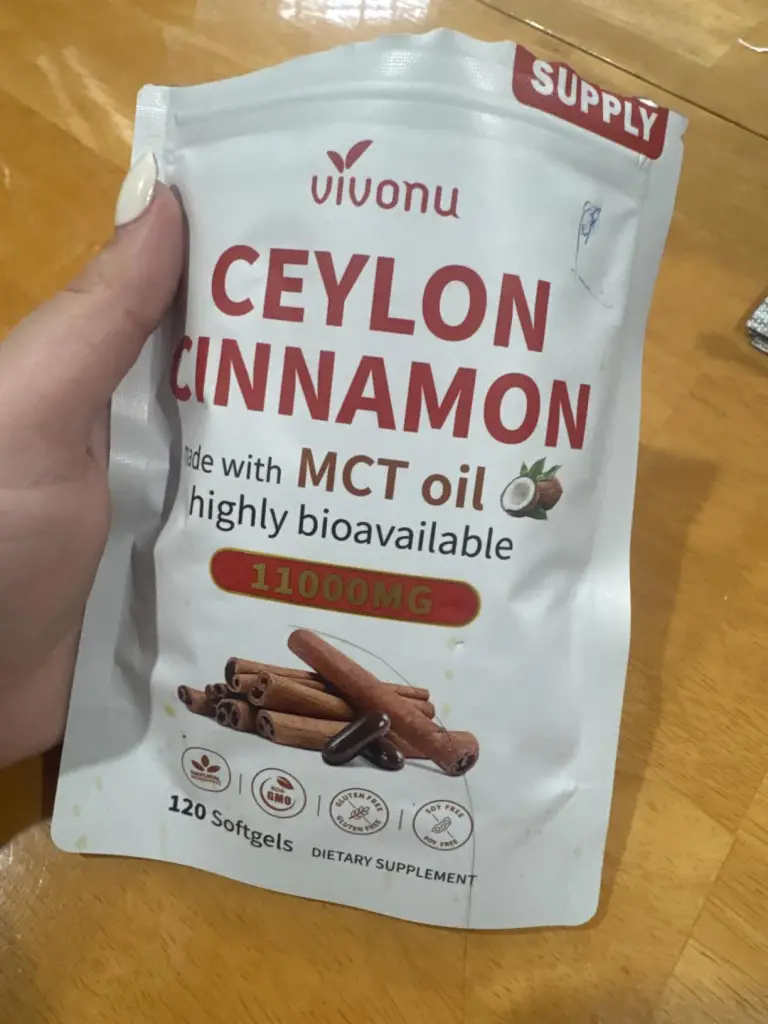
Vivonu Ceylon Cinnamon is marketed as a dietary supplement containing Ceylon cinnamon combined with MCT oil. The Amazon listing promotes it as a 120-day supply and highlights an “Authentic Sri Lankan Source” as well as a liposome/high-bioavailability extract.
Those are not insignificant marketing details.
Ceylon cinnamon, scientifically known as Cinnamomum verum, is commonly referred to as “true cinnamon” and is associated with Sri Lanka. It is different from cassia cinnamon, which is much more commonly used in commercial food products.
That distinction is one of the reasons I was interested in the product in the first place.
If I’m paying specifically for Ceylon cinnamon, I want to know that I’m actually getting what the product claims to contain and that the sourcing information is presented honestly.
Why I Bought It
The product description made it sound like a premium cinnamon supplement rather than an ordinary powdered cinnamon capsule.
The combination of:
- Ceylon cinnamon
- Authentic Sri Lankan sourcing
- MCT oil
- Liposomal delivery
- A 120-day supply
was designed to make the product stand out.
I also noticed that some Amazon customers were very positive about it. People praised the ingredients, said the capsules were easy to swallow, and mentioned benefits such as improved digestion and less bloating.
One customer even claimed that their A1C went from 11 to 6.7 while using the supplement.
That is an impressive claim, but I would not use one customer’s review as proof that Vivonu Ceylon Cinnamon can produce that kind of result. There are too many other factors involved in blood sugar and A1C for a supplement review to establish causation.
Other customers weren’t nearly as impressed and described the product as a waste of money.
So even before getting into my own concerns, the customer feedback was mixed.
My Experience With the Vivonu Ceylon Cinnamon Packaging
This is where my opinion changed.
When I received my Vivonu Ceylon Cinnamon, I looked closely at the package because the Amazon listing had made such specific claims about the product.
I expected the packaging to make the sourcing and quality claims clear.
It didn’t.
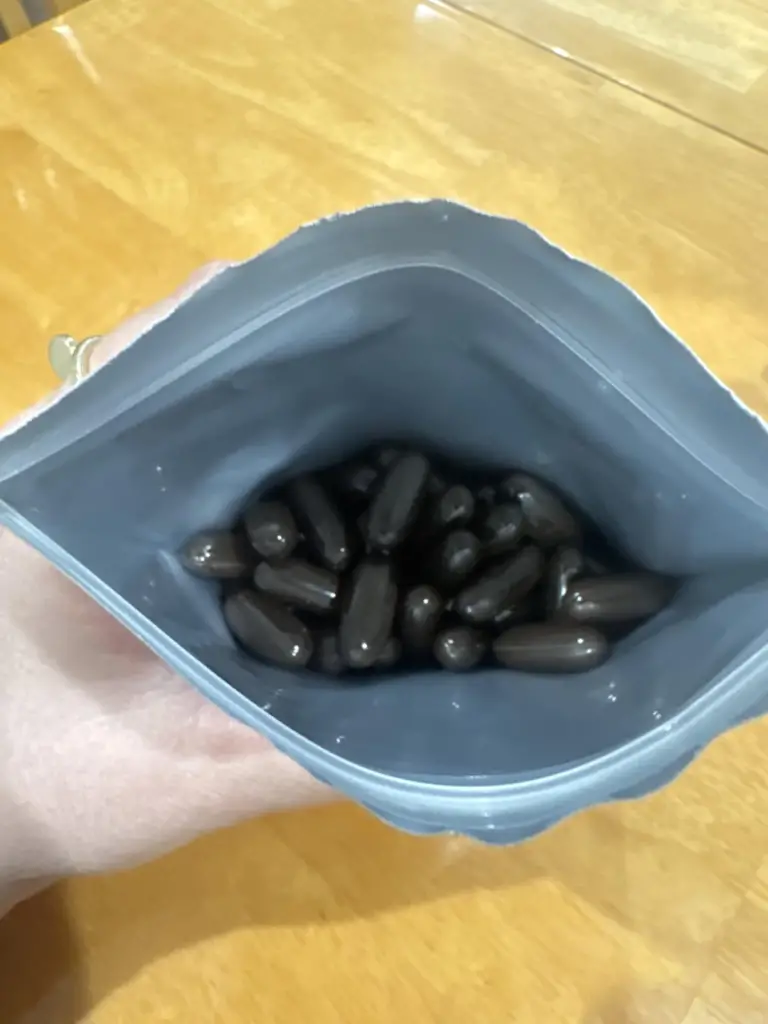
The package I received wasn’t marked that it came from China, and it also wasn’t marked as organic, despite the way the product was represented in the advertising I saw.
Again, this is my firsthand experience with the product I received.
I’m not saying another customer told me this. I’m not taking this information from a review section. I personally received the package, opened it and looked at the labeling myself.
That distinction is important because I don’t want to put words in somebody else’s mouth.
When you purchase a supplement marketed around its origin and quality, the physical packaging should give you confidence about what you’re buying.
Instead, I was left with questions.
- Where exactly was this product manufactured?
- Where was the cinnamon sourced?
- What does “Authentic Sri Lankan Source” specifically mean?
- What supports the organic claim?
- And why weren’t those details clear on the package I received?
Those are reasonable questions for any supplement buyer.
The “Authentic Sri Lankan Source” Claim
The phrase “Authentic Sri Lankan Source” immediately catches your attention when you’re shopping for Ceylon cinnamon.
Sri Lanka is strongly associated with Ceylon cinnamon, so the claim gives the impression that the cinnamon itself comes from Sri Lanka. But a marketing phrase isn’t the same thing as transparent documentation. that’s what bothered me.
If a company wants consumers to pay attention to the fact that its cinnamon is authentically sourced from Sri Lanka, I think the product should make that information straightforward to understand.
When my package arrived and I couldn’t find the kind of origin information I expected, it didn’t make me feel more confident in the product.
It did the opposite.
And What About the China Issue?
I want to be very precise here because this was my experience, and I don’t want to exaggerate it.
The packaging I received did not identify China as the country of origin., that doesn’t by itself prove that the product was manufactured in China. What it did was leave me without the transparency I expected after seeing the product advertised with such strong sourcing language.
I’m not claiming that I conducted laboratory testing or traced the supply chain. I’m telling you what I actually saw when I received the product, and as a buyer, that was enough to make me question the advertising.
If I’m buying a product specifically because it says authentic Sri Lankan source, I shouldn’t be left wondering where the finished product or its ingredients actually came from.
The Organic Claim Also Concerned Me
The same thing happened with the organic claim.
I expected the product packaging to clearly establish that the cinnamon was organic, instead, the package I received did not provide the organic labeling I expected.
To me, that’s a serious problem when “organic” is being used as part of the selling point.
Organic isn’t simply a decorative word. In the United States, organic claims can be subject to specific standards and certification requirements depending on how the claim is presented and the product’s circumstances. So I wouldn’t tell anyone that a supplement is organic simply because an Amazon listing says so.
I’d want to see the actual product labeling and, where appropriate, certification information.
Does Selling It on Amazon Mean It’s FDA Approved?
This is another point I want to clear up because there is a lot of confusion around supplements.
No, being sold on Amazon does not mean Vivonu Ceylon Cinnamon is FDA approved.
But that doesn’t mean the supplement is automatically illegal either.
Dietary supplements are regulated differently from prescription and over-the-counter drugs. The FDA does not generally approve dietary supplements for safety and effectiveness before they are marketed in the same way it approves drugs.
So I wouldn’t use the phrase “not FDA approved” as my only reason for criticizing this product.
My concern is more specific:
The advertising made claims about the product’s source and quality, while the package I personally received did not give me the clarity I expected to support those claims.
That’s a much stronger and more accurate criticism.
What About the Liposomal Formula?
Vivonu also emphasizes “Liposome Highly Bioavailable Extract.”
It certainly sounds impressive.
But phrases like “highly bioavailable” shouldn’t automatically convince you that a supplement is better.
If a company says its formulation has enhanced absorption, I want to know what evidence supports that claim for the actual formulation being sold, not simply see technical-sounding language on an Amazon listing.
The same goes for MCT oil.
MCT oil is a real ingredient and is used in many nutritional products, but adding MCT oil doesn’t automatically prove that this particular cinnamon supplement will deliver superior metabolic benefits.
Marketing terminology can make an ordinary supplement sound extremely sophisticated, that’s why I look at the actual formulation, labeling and evidence rather than just the words used in the product title.
What Customers Say About Vivonu Ceylon Cinnamon
To be fair, the Amazon reviews aren’t universally negative.
Some customers say they like the product.
Positive comments include claims that it:
- Is easy to swallow
- Doesn’t leave a strange aftertaste
- Helps with digestion
- Reduces bloating
- Contains quality ingredients
- Offers good value because of the 120-day supply
There are also more dramatic health claims in the reviews, including the customer who reported an A1C reduction from 11 to 6.7.
I would treat those testimonials as personal experiences, not medical evidence, on the other side, some buyers say the product didn’t do anything for them and wasn’t worth the money.
That mixed feedback is actually more believable to me than a page where every single customer claims miraculous results.
Can Vivonu Ceylon Cinnamon Lower Blood Sugar?
This is where I would be especially careful.
Cinnamon has been studied for possible effects on blood glucose and other metabolic markers, but that doesn’t mean every cinnamon supplement will lower blood sugar or A1C.
And a claim that someone’s A1C dropped from 11 to 6.7 shouldn’t be interpreted as proof that Vivonu caused it.
A1C reflects average blood glucose over a period of time, and changes can be influenced by medication, diet, exercise, weight changes, illness and many other factors.
Someone with an A1C of 11 should not replace medical treatment with a cinnamon supplement based on an Amazon testimonial, if you’re considering cinnamon because of blood sugar concerns, it’s much safer to discuss it with your healthcare provider.
Ceylon Cinnamon vs. Regular Cinnamon
There is a legitimate reason consumers search specifically for Ceylon cinnamon supplements.
Ceylon cinnamon is different from cassia cinnamon, particularly when it comes to coumarin content. Cassia generally contains much higher levels of coumarin, while Ceylon cinnamon contains substantially less.
That’s one reason people who take cinnamon regularly may specifically seek out Ceylon, but that makes accurate product identification even more important.
If you’re paying extra for Ceylon cinnamon, you should be able to trust that the product is accurately represented.
That’s where my concerns about the Vivonu labeling come back into the picture.
Is Vivonu Ceylon Cinnamon a Scam?
I wouldn’t go as far as saying Vivonu Ceylon Cinnamon is definitively a scam based only on my experience.
That’s not fair, and I don’t have laboratory results proving that the capsules contain something other than what is advertised.
But I also wouldn’t tell you everything is fine simply because the product is listed on Amazon.
My experience gave me legitimate reasons to question the marketing.
I purchased the product based on specific claims, including the Ceylon sourcing and organic positioning. When the package arrived, the labeling did not give me the clarity I expected.
For me, that is a problem.
You shouldn’t have to wonder whether the product in your hand matches the product you thought you were ordering.
My Vivonu Ceylon Cinnamon Verdict
After my experience, I would be very cautious about buying Vivonu Ceylon Cinnamon based solely on the Amazon listing.
The product has some positive customer feedback, and I understand why people are attracted to it. A 120-day supply, Ceylon cinnamon, MCT oil and a liposomal formulation sound appealing.
But the marketing claims need to match the actual product.
They did not give me the confidence I expected.
The biggest issue for me wasn’t whether another customer loved the capsules or whether someone said they experienced better digestion. It was opening my own package and seeing that the labeling didn’t clearly support the origin and organic claims that influenced my purchase.
I consider that misleading advertising, and it’s exactly the kind of thing I think Amazon shoppers should pay attention to.
I’m also not going to tell you that the product is “FDA approved” just because it’s sold on Amazon, because dietary supplements don’t work that way. The better question is whether the company is providing accurate, transparent labeling and substantiating the claims it makes.
What I Think
If you’re searching for Vivonu Ceylon Cinnamon reviews because you’re thinking about ordering it, my advice is to look beyond the Amazon star rating.
- Read the product description carefully.
- Look at the physical label.
- Check who is responsible for the product.
- Look for clear information about the ingredient source and manufacturing.
And if a product is advertised as authentic Sri Lankan Ceylon cinnamon and organic, make sure those claims are actually reflected in the labeling you receive.
For me, that was the sticking point.
Conclusion
Vivonu Ceylon Cinnamon may not be proven to be a scam, but my personal experience with the packaging left me uncomfortable with the way the product was advertised. I bought it expecting the transparency promised by the listing, and the package I received didn’t give me that confidence.
That’s why I would think twice before spending my money on it and I would certainly not rely on the product’s marketing claims to make decisions about blood sugar or any other medical condition.
Check out the Frownies Patch I reviewed earlier.