
NeuroMind Pro is one of those supplements that sounds extremely appealing when you’re having one of those days where your brain feels like it has too many tabs open. The advertising promises support for memory, focus, concentration, mental clarity and everyday cognitive performance, which covers just about everything people worry about when they feel mentally tired or distracted. I started looking into it because the ingredient list is more interesting than the average “brain supplement,” but the more I looked at the actual formula and the way the product is being marketed online, the more questions I had about what a buyer can really expect from it.
The formula contains Bacopa monnieri, Rhodiola rosea, L-tyrosine, Huperzia serrata, vitamins B1, B6 and B12, plus caffeine from green coffee, theacrine and theobromine. Those aren’t random ingredients thrown together; several have been studied individually for different aspects of cognition, stress, alertness or memory. The problem is that NeuroMind Pro doesn’t have clinical trials showing that this particular combination improves memory or concentration in the way the sales pages suggest. There is also a proprietary blend containing seven of the active ingredients, so you can’t see exactly how much of each one you’re getting. The product pages currently disclose the combined blend as 151 mg, but not the individual quantities.
That leaves me with a fairly simple view of NeuroMind Pro: the ingredients are worth discussing, but the marketing gets ahead of the evidence. I wouldn’t call the product fake simply because it hasn’t been tested as a finished formula, but I also wouldn’t buy it believing the website has proven that the capsules will sharpen your memory or dramatically improve your concentration.
What Is NeuroMind Pro?
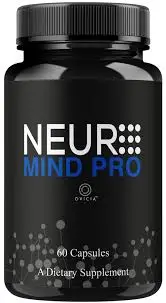
NeuroMind Pro is a dietary supplement marketed as a daily cognitive support formula. The current websites promote it for memory, recall, focus, concentration, mental clarity, alertness and general brain health, usually recommending one capsule per day. One current product page describes the formula as a combination of B vitamins, amino acids, botanical extracts and stimulant compounds intended for adults who want support during work, study or everyday activities.
There are several websites using the NeuroMind Pro name, which is something I noticed almost immediately while researching the product. Some of them make slightly different claims, use different domains and present different versions of the product information. One page describes the formula as a stimulant-forward cognitive supplement, while another describes it more generally as a natural brain-health product.
That doesn’t automatically mean there is something wrong with the product, but it makes it harder for a shopper to know which website represents the actual seller and which information should be treated as the authoritative product description.
What Is Actually in NeuroMind Pro?
The ingredient list is probably the most interesting part of this supplement.
The label reported for NeuroMind Pro lists vitamin B1, vitamin B6 and vitamin B12, followed by a 151 mg proprietary blend containing caffeine from green coffee bean, L-tyrosine, theacrine, theobromine, Bacopa monnieri, Rhodiola rosea and Huperzia serrata. The label also lists ordinary capsule and processing ingredients such as rice flour, hypromellose, magnesium stearate and silicon dioxide.
At first glance, that sounds like a fairly substantial nootropic formula. Once you look at the quantities, however, things become less clear.
The three B vitamins are individually listed, which is useful. The other seven ingredients are not. They’re all bundled into the same 151 mg proprietary blend.
That means I can’t tell from the label how much caffeine is in one capsule, how much Bacopa is included, how much Rhodiola is present or how much Huperzia serrata contributes to the formula. Seven ingredients sharing 151 mg doesn’t tell you how that 151 mg is divided.
For anyone comparing NeuroMind Pro with other memory supplements, that is a fairly important limitation because dosage is part of the evidence. An ingredient appearing on a label doesn’t necessarily mean the product contains the amount used in studies showing a particular effect.
Bacopa Monnieri Sounds Promising, But There Is a Catch
Bacopa monnieri is probably one of the better-known ingredients in the formula when it comes to memory supplements. It has been studied for areas such as memory and cognitive performance, and that gives NeuroMind Pro a more interesting ingredient profile than a product built entirely around caffeine and generic vitamins.
The problem is that research on Bacopa doesn’t automatically prove that NeuroMind Pro produces the same results.
Studies typically involve a particular extract, a particular dosage and a defined period of use. NeuroMind Pro doesn’t disclose how much Bacopa is included in its proprietary blend, so you can’t compare the amount in the capsule directly with the amounts used in individual studies.
The current product website itself says that the herbal ingredients are expected to build their effects over several weeks, particularly Bacopa, rather than producing an immediate memory boost.
That’s a much more reasonable way to think about an ingredient like Bacopa than expecting one capsule to suddenly make you remember everything you read.
Rhodiola and L-Tyrosine Are Not Magic Memory Ingredients
Rhodiola rosea and L-tyrosine are also interesting additions, although they are often presented in supplement advertising as though every ingredient has been proven to improve memory.
L-tyrosine is an amino acid involved in the production of certain neurotransmitters, and it has been investigated in relation to cognitive performance, particularly under stressful or demanding conditions. Rhodiola has also been studied in connection with fatigue, stress and mental performance.
That doesn’t mean taking both ingredients will automatically make someone smarter or give them perfect concentration.
I think this is where a lot of nootropic advertising becomes misleading. An ingredient can have legitimate research behind it while the finished supplement still lacks evidence showing that the specific product produces the promised results.
NeuroMind Pro falls into that category for me.
Huperzia Serrata Deserves More Attention
Huperzia serrata is another ingredient that makes NeuroMind Pro stand out because it contains huperzine A, a compound that has been studied in relation to acetylcholinesterase and cognitive function.
Again, though, the label doesn’t tell you exactly how much Huperzia serrata you’re getting because it sits inside the proprietary blend.
That makes it difficult to judge the formula properly from the label alone.
If a supplement wants me to believe that its ingredients have been carefully selected based on research, I’d much rather see the exact amount of every active ingredient. A transparent label lets a customer compare the formula with published research and decide whether the dosages make sense.
NeuroMind Pro doesn’t give you that level of detail.
This Is Not a Stimulant-Free Brain Supplement
This is probably the point I would pay the most attention to if I were considering buying NeuroMind Pro.
The formula contains caffeine from green coffee bean, along with theacrine and theobromine. The current product information openly acknowledges that NeuroMind Pro contains caffeine and describes the formula as stimulant-forward.
So if you’re sensitive to caffeine, already drink several cups of coffee a day or tend to take supplements in the afternoon or evening, this isn’t something I’d treat like a simple vitamin.
The stimulant ingredients may explain why someone feels more alert or focused after taking the capsule. Feeling more awake, however, isn’t necessarily the same thing as having better memory.
That’s an important difference when evaluating a product marketed for both focus and cognitive enhancement. A caffeine-containing supplement can make you feel more switched on without necessarily improving every aspect of cognition.
The Proprietary Blend Is My Biggest Complaint
This is the part of the NeuroMind Pro formula I would change if the manufacturer wanted to make the product easier to evaluate.
The seven ingredients are grouped together under a single 151 mg proprietary blend. The label gives you the total but doesn’t tell you how much of each ingredient is present.
Imagine buying a coffee blend that tells you the bag contains 500 grams of beans but refuses to tell you how much coffee is actually in it.
You know what’s inside, but you don’t really know what you’re getting.
That’s essentially the problem here. We know NeuroMind Pro contains caffeine, L-tyrosine, theacrine, theobromine, Bacopa, Rhodiola and Huperzia, but we can’t properly compare the individual doses with the scientific literature.
That doesn’t make the supplement automatically ineffective. It simply means the customer has less information than I would like before spending money on it.
What Does “Research-Informed” Actually Mean?
NeuroMind Pro uses language such as “research-backed,” “research-informed” and “studied ingredients” throughout its online marketing.
Those phrases sound impressive until you ask a very basic question: Has NeuroMind Pro itself been tested in a properly designed clinical trial?
I couldn’t find product-specific clinical evidence demonstrating that NeuroMind Pro, as a finished supplement with its particular seven-ingredient blend and vitamin content, improves memory, focus or concentration.
There is research on individual ingredients, but that isn’t the same thing.
If a supplement contains ten ingredients and each one has been studied somewhere, the manufacturer cannot simply combine those studies and claim that the finished product has been clinically proven. The formula needs to be tested as a formula if the company wants to establish that the combination produces the advertised results.
NeuroMind Pro doesn’t appear to have that level of evidence available to consumers.
What Does the FDA-Registered Facility Claim Mean?
This is another phrase I would not allow to influence my buying decision too much.
Several NeuroMind Pro websites advertise the product as being manufactured in an FDA-registered facility, and some pages go further by using phrases such as “FDA approved.”
Those are not the same thing.
Dietary supplements are not approved by the FDA in the same way that prescription drugs are approved. A facility being registered with the FDA does not mean the FDA has tested and approved NeuroMind Pro or confirmed that the product delivers its advertised cognitive benefits.
In fact, one of the current NeuroMind Pro websites includes the standard disclaimer stating that the product’s statements have not been evaluated by the Food and Drug Administration and that the product isn’t intended to diagnose, treat, cure or prevent disease.
So I wouldn’t interpret “FDA-registered facility” as “FDA-approved supplement.” Those are two completely different things.
Why Are There So Many NeuroMind Pro Websites?
This was another thing that made me hesitate.
A search for NeuroMind Pro brings up multiple domains using nearly identical product names and similar marketing language. I found sites including neuromindpro.com, neuromindspro.com, neuropromind.com, neuromindppro.com and other variations. Some were created or updated very recently.
The websites aren’t completely identical either. Some advertise different prices, some describe the formula differently, and some make stronger claims than others. One site says the product is stimulant-free, while another current NeuroMind Pro page clearly states that the formula contains caffeine, theacrine and theobromine.
That inconsistency is something I wouldn’t ignore when deciding where to order.
A shopper should be able to find one clear manufacturer, one consistent label and one reliable source for product information. When several newly registered domains are competing for the same search traffic, I’d want to know exactly who is selling the capsules and who is responsible for the claims being made.
What About the NeuroMind Pro Reviews?
This is another area where I would be careful about taking website testimonials at face value.
One NeuroMind Pro website claims tens of thousands of customers and displays a very high rating, while another page presents thousands of positive reviews. Those numbers are claims made on the sales websites themselves, so they aren’t the same as an independently verified review database.
I also found a Trustpilot page associated with a NeuroMind-related domain containing only two reviews, one positive and one negative. One reviewer described the product as part of what they believed was a scam involving a fake Bill Gates memory-loss story, while another gave the product four stars. With only two reviews and no way to establish whether either reflects a typical customer experience, I wouldn’t use that page as evidence that NeuroMind Pro either works or doesn’t work.
The lack of a large body of independent, verifiable customer feedback is another reason I’d be reluctant to rely on the glowing testimonials appearing on the sales pages.
Is NeuroMind Pro a Scam?
I wouldn’t go as far as calling NeuroMind Pro a proven scam based solely on the information available.
There is an identifiable product, an ingredient label and an established retail process through BuyGoods on at least one of the current sales sites. The product also comes with a stated 60-day money-back guarantee on several of the websites.
My concern is more about how confidently the product is marketed compared with how much evidence is actually available.
The formula contains ingredients that have been studied individually, but NeuroMind Pro itself doesn’t appear to have product-specific clinical trials demonstrating the advertised memory and focus benefits. The proprietary blend makes the individual doses impossible to assess from the label, the stimulant content may not suit everyone and the number of different NeuroMind Pro websites makes the company’s online presence harder to pin down.
Those are reasonable reasons to research the seller carefully before placing an order, even if they don’t prove that the product itself is fraudulent.
Is NeuroMind Pro Worth Buying?
For me, the answer would be not yet.
There are things I like about the formula. Bacopa, Rhodiola, L-tyrosine, Huperzia serrata and the B vitamins aren’t meaningless ingredients, and there is legitimate research surrounding several of them. The problem is that NeuroMind Pro asks the customer to take that ingredient research and make a much bigger leap to the conclusion that the finished supplement will improve memory, concentration and mental clarity.
I don’t think the evidence currently supports making that leap with much confidence.
The proprietary blend is also a deal-breaker for me. If I’m buying a supplement specifically because of Bacopa, Huperzia or the stimulant ingredients, I want to know exactly how much is in each capsule. A total blend weight doesn’t give me enough information to judge whether the doses are meaningful.
And if I were buying a cognitive supplement for daily use, I’d want to know exactly how much caffeine I’m taking. NeuroMind Pro doesn’t make that clear from the label.
My NeuroMind Pro Review Verdict
NeuroMind Pro is more interesting than many generic memory supplements because it contains a combination of ingredients that have actually been studied for areas related to cognition, stress, alertness and memory. That gives the formula something to talk about, but it doesn’t turn the product into a clinically proven memory enhancer.
The biggest issue is the gap between ingredient research and product evidence. Bacopa may have research behind it. Rhodiola has research behind it. L-tyrosine and Huperzia compounds have been investigated too. None of that proves that one NeuroMind Pro capsule contains the right doses, that the ingredients work better together or that taking this particular formula will produce the dramatic improvements suggested by the advertising.
The 151 mg proprietary blend makes that question even harder to answer because seven active ingredients are bundled together without individual amounts.
I also wouldn’t let the “FDA-registered facility” language persuade you that the supplement has been approved by the FDA. It hasn’t. The claim relates to the manufacturing facility, while the product itself carries the standard disclaimer that its statements have not been evaluated by the FDA.
Conclusion
So if you’re searching for NeuroMind Pro reviews, or whether NeuroMind Pro really works, my advice is to look past the impressive ingredient names and examine the actual formula.
There may be a reasonable cognitive-support supplement hiding inside this product, but the information currently available doesn’t give me enough confidence to call NeuroMind Pro a proven memory or focus solution. The stimulant ingredients, undisclosed individual doses and confusing collection of recently appearing websites would make me choose a more transparent supplement with clearly stated amounts and stronger product-specific evidence before spending my money.
Check out the Beplain Cleansing Oil that I reviewed earlier.