
Buying a tracker for your car sounds like a pretty sensible idea until you actually need it to do the one thing you bought it for. I purchased the Tracee 2.0 because the advertising made it sound like a small, discreet GPS tracker that could help locate a vehicle or other valuable item without the hassle of a monthly subscription. The idea was simple enough: put it somewhere in the car, and if the car ever disappeared, I could use my phone to find out where it had gone. After using it, however, I came away with a very different impression of what this device actually is.
The problem is the way Tracee 2.0 is presented. Tracee Tech describes it as a GPS tracker with “GPS-level tracking,” worldwide coverage, motion alerts and no ongoing fees, while the actual specifications identify the wireless technology as Bluetooth Low Energy 5.1 and say that the device works through Apple’s Find My or Google’s Find Hub depending on the model. That is a pretty important detail if you’re buying the device specifically because you believe you are getting an independent GPS tracker for a stolen vehicle. In my experience, the advertising gave me expectations that the hardware simply didn’t live up to.
What Is Tracee 2.0 Actually?
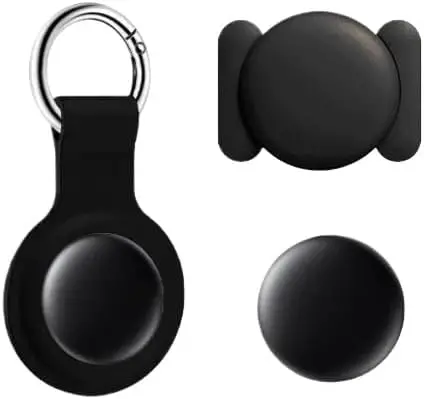
Tracee 2.0 is a small Bluetooth-based tracking device sold by Tracee Tech. It is compact, uses a replaceable CR2032 button battery and is advertised with up to 12 months of standby battery life. The company sells Apple and Android versions that work with Apple’s Find My network or Google’s Find Hub.
That isn’t necessarily a bad thing by itself. Bluetooth trackers have plenty of legitimate uses. You can attach one to luggage, keys, a backpack, a bicycle or another item you don’t want to lose, and a compatible tracking network can help you locate it when other participating devices come within range. The trouble starts when the product is understood to be something more powerful than that.
When I bought Tracee 2.0, I was looking at it as a vehicle security device. I wasn’t interested in having a Bluetooth tag that would only be useful when another compatible phone happened to be close enough to detect it. I wanted something that could tell me where my vehicle was if somebody drove away with it. Those are two very different expectations, and this is where I think the Tracee 2.0 advertising can be misleading.
Tracee 2.0 GPS Tracker or Bluetooth Tracker?
This is the question that should be at the top of every Tracee 2.0 review.
Tracee Tech repeatedly uses the words “GPS tracker” and promotes “GPS-level tracking,” but its own technical specifications list Bluetooth Low Energy 5.1 as the wireless standard. There is no cellular SIM connection listed in the specifications, and the company specifically says the device works with Apple’s Find My or Android’s Find Hub.
That matters because a conventional standalone vehicle GPS tracker normally has a way of communicating its location over a cellular network. A Bluetooth tracker is different. It broadcasts a Bluetooth signal, and its location can be updated when compatible devices in the relevant tracking network detect it.
That distinction is not something I would bury halfway down the product page. If someone is spending money on a tracker because they are worried about their car being stolen, it should be made extremely clear what technology they are actually buying.
Tracee Tech’s own product page says the tracker provides worldwide coverage and “GPS-level tracking,” but immediately underneath the marketing claims the specifications identify Bluetooth Low Energy 5.1. That combination is exactly why I think shoppers need to look beyond the headline.
What Would Happen If Someone Stole Your Car?
This was the question that changed my opinion of Tracee 2.0.
Imagine that you park your car outside your house, place the Tracee somewhere discreet and then go inside. Later, someone breaks into the vehicle and drives away. With a proper cellular GPS tracker, you would expect the tracker itself to communicate its location over a mobile network, subject to coverage and the tracker’s design.
A Bluetooth tracker works differently. If there isn’t a compatible device close enough to detect it and contribute its location to the network, you don’t suddenly get a live map showing where the vehicle is. The tracker is not independently transmitting its GPS coordinates to you from wherever the car happens to be.
That means my concern isn’t that Tracee 2.0 has absolutely no usefulness. It can be useful as a Bluetooth item tracker. The problem is that someone could buy it believing they are getting a dedicated anti-theft GPS device, hide it inside their car and then discover the limitations only when they actually need it.
For something as important as a stolen vehicle, that is a limitation I would want to understand before spending the money, not after.
The “Worldwide Coverage” Claim Needs Context
The phrase “worldwide coverage” sounds impressive when you’re looking at a tracker for your car. It gives the impression that the device itself can communicate from practically anywhere.
But a Bluetooth tracker doesn’t work like a miniature satellite phone. Tracee 2.0’s own specifications identify Bluetooth Low Energy 5.1, while the device relies on Apple’s Find My or Google’s Find Hub depending on the version.
So when Tracee Tech says the tracker offers worldwide coverage, I would interpret that as referring to the reach of the supported tracking network rather than the device independently having a worldwide GPS/cellular connection. That’s an important difference for a buyer to understand.
If the tracker is sitting somewhere populated where compatible phones are regularly passing by, the network may have opportunities to detect it. If the tracker is somewhere isolated, underground, inside a remote building or simply outside the range of participating devices, the experience can be very different.
For everyday lost-item tracking, that may be perfectly acceptable. For vehicle recovery, I wouldn’t make a purchase without understanding that limitation.
My Biggest Problem With Tracee 2.0
For me, the issue isn’t simply that Tracee 2.0 uses Bluetooth. The issue is that I bought it based on advertising that made me expect something closer to a real GPS tracking system.
Tracee Tech’s product page says the device can keep a car safe with precise “GPS-level tracking,” describes worldwide coverage, advertises motion alerts and says there are no ongoing fees. Those are attractive claims when you’re comparing trackers, particularly because traditional vehicle GPS systems can involve installation costs and monthly subscriptions.
But when you look at the technical specifications, the product is a tiny CR2032-powered Bluetooth device. That should immediately change how you think about what it can realistically do.
I don’t think consumers should have to work that hard to figure out whether “GPS tracker” means an actual standalone GPS/cellular tracker or a Bluetooth tag that connects to a phone-based tracking network.
Tracee 2.0 Reviews and Complaints Are Mixed
The customer feedback is interesting because Tracee Tech currently has a mixture of very positive and very negative reviews. On Trustpilot, the company has a 3.5/5 score from 166 reviews at the time I checked, with 33% of the reviews rated one star and 43% rated five stars.
Some customers say the tracker works well for their needs. Others complain about exactly the problem I experienced: they believed they were purchasing a GPS tracker and discovered that it behaves more like an AirTag-style Bluetooth tracker.
One recent Trustpilot reviewer wrote that there was “no real life gps tracking” and said the device worked like an Apple AirTag, while another complained that the tracker was not GPS and only worked through Bluetooth in nearby range.
There are also complaints about shipping delays and returns. A recent reviewer specifically said the tracker took a long time to arrive and advised other buyers not to rely on the advertised delivery timeframe.
That last complaint caught my attention because it matches my own experience. My order took longer to arrive than the timeframe I was expecting from the advertising, so if you’re ordering Tracee 2.0 for a particular trip or because you need the tracker immediately, I wouldn’t assume the estimated delivery window is guaranteed.
Tracee 2.0 Shipping Complaints
The shipping issue isn’t the biggest problem with this product, but it is worth mentioning because it can be frustrating when you’re already waiting for something you bought for security.
I expected my Tracee 2.0 to arrive within the timeframe shown when I placed the order. It took considerably longer than I expected, and that made the whole purchase more irritating because by the time the tracker arrived, I had already spent a lot of time wondering where the package was.
I’m not saying that every Tracee customer will experience a delayed delivery. Some current customer reviews say their orders arrived quickly. But there are also recent independent complaints specifically mentioning slow shipping, so I wouldn’t make a purchase based solely on the delivery estimate displayed on the sales page.
If you need a tracker urgently, that’s something I would take into consideration.
What About the Motion Alerts?
Tracee Tech also promotes motion notifications as one of the main features of Tracee 2.0. In theory, that sounds useful for a vehicle because you could imagine being alerted when somebody moves the car.
However, a motion alert doesn’t automatically turn a Bluetooth tracker into a real-time vehicle tracking system. The underlying communication limitations still matter. If the device depends on Bluetooth and a compatible tracking network, you shouldn’t assume that every movement will immediately appear on your phone with a precise live location.
There are also customer complaints about motion alerts not working as expected. One recent Trustpilot reviewer said they specifically tested the company’s motion-alert claims and found that they did not work for them.
That doesn’t prove the feature never works, but it does reinforce my view that Tracee 2.0 shouldn’t be treated as equivalent to a professional vehicle-tracking system.
The Thief Notification Claim Also Deserves a Closer Look
Another Tracee 2.0 marketing claim says that no notifications are sent to the thief or nearby devices. I would be very cautious about relying on that promise.
Apple and Google have both built protections into their ecosystems to help people detect unknown Bluetooth trackers that may be traveling with them. That means a person carrying a tracker that isn’t associated with their account may eventually receive an unwanted-tracker alert depending on the device, operating system and circumstances.
This is another reason I would not buy Tracee 2.0 because you expect it to behave like an invisible professional tracking device. A Bluetooth tracker operating through a consumer tracking network is subject to the rules and protections of that ecosystem.
The Price Makes the Comparison Interesting
Tracee 2.0 is currently advertised at around $34.90 for a single tracker, with multi-pack discounts available. At first glance, that seems inexpensive compared with many dedicated vehicle GPS systems, especially because Tracee advertises no monthly subscription.
And that is probably one of the product’s strongest selling points.
But you have to compare like with like. A $35 Bluetooth tracker isn’t necessarily a cheaper version of a $100-plus cellular GPS tracker because they aren’t performing the same job. The cellular tracker may cost more precisely because it has the hardware and network connectivity required to communicate independently.
So I wouldn’t describe Tracee 2.0 as “bad” simply because it doesn’t have cellular GPS. I would describe it as the wrong product if you specifically need independent real-time vehicle tracking.
Is Tracee 2.0 a Scam?
This is where my answer is a little more nuanced than simply calling the company a scam.
I don’t think it’s accurate to say Tracee Tech doesn’t sell anything or that the device is completely fake. The product exists, customers receive it, and there are people who say they are satisfied with it. Tracee Tech also clearly lists Bluetooth Low Energy 5.1 in its specifications and identifies compatibility with Apple’s Find My and Google’s Find Hub.
My problem is with the way the product is marketed as a GPS tracker.
If you understand that you’re buying a Bluetooth-based item tracker that can use Apple’s or Google’s tracking network, you may have a very different experience. If you believe you’re buying a standalone GPS tracker that can independently follow your stolen car wherever it goes, I think you’re setting yourself up for disappointment.
The recent complaints from other customers are consistent with that concern. Some reviewers explicitly say the product isn’t what they expected because it relies on Bluetooth, while others complain about inaccurate or delayed tracking and shipping problems.
For that reason, I would call the advertising misleading for the way I expected the product to work, rather than claiming that Tracee 2.0 is a completely nonexistent product.
Would I Buy Tracee 2.0 Again?
For my particular purpose, no.
I bought it because I wanted a reliable way to locate my car if somebody stole it. After seeing how the device actually works, I wouldn’t depend on Tracee 2.0 as my primary vehicle-security tracker.
If I wanted a small device to keep track of luggage, keys, a bag or another item that is likely to come into contact with phones participating in the relevant tracking network, I could understand the appeal. The compact design, replaceable battery and lack of a monthly subscription are genuinely useful features.
But that’s not what I thought I was buying.
For a car, I would rather pay more for a genuine cellular GPS tracker that clearly states how it communicates, what network it uses, how frequently it updates its location and what happens when the vehicle leaves Bluetooth range. Knowing exactly what you’re paying for is much more important to me than getting the cheapest tracker available.
Conclusion
My experience with Tracee 2.0 left me disappointed because the product didn’t match the mental picture created by the advertising. I expected a genuine GPS tracking solution for my car, but the specifications reveal a Bluetooth Low Energy device that works through Apple’s Find My or Google’s Find Hub.
That doesn’t make Tracee 2.0 completely useless. It can serve as a Bluetooth item tracker, and some customers appear perfectly happy with it for that purpose. But I think the distinction becomes extremely important when the product is being purchased specifically as an anti-theft device for a vehicle.
The question I would ask before buying isn’t simply, “Is Tracee 2.0 legit?” The better question is, “Is Tracee 2.0 the kind of tracker I actually need?” For me, the answer was no. I needed something capable of independently tracking a vehicle after it left Bluetooth range, and Tracee 2.0 wasn’t that.
I wouldn’t recommend Tracee 2.0 for someone who needs a standalone vehicle GPS tracker. If you understand that you’re buying a Bluetooth/Find My/Find Hub-style tracker and that’s enough for your needs, then it may make sense. But if you’re expecting to hide it in your car and reliably follow a stolen vehicle after it drives away, I would choose a proper cellular GPS tracker instead.
Check out Mansculpt wave therapy plus that I talked about earlier.