
The next-generation Tesla Roadster sounds like something pulled straight out of a science-fiction film. Tesla has been promising a new version of its electric sports car for years, but the latest claims take things well beyond the usual arguments about horsepower, battery range, and top speed. Alongside its low-slung body and supercar styling, the proposed Roadster features compressed-gas thrusters inspired by SpaceX, a fan-based system designed to increase grip, and acceleration figures that would put many established performance cars to shame.
Tesla has now unveiled what it describes as a production-intent version of the Roadster, with production targeted for 2028. That is a significant development for a car first introduced in 2017, although a new reveal does not automatically mean that every advertised feature is ready for customers. The big question is whether Tesla can turn these ambitious promises into a real car that performs as advertised, works reliably, and can actually be driven on public roads.
What Is the New Tesla Roadster?
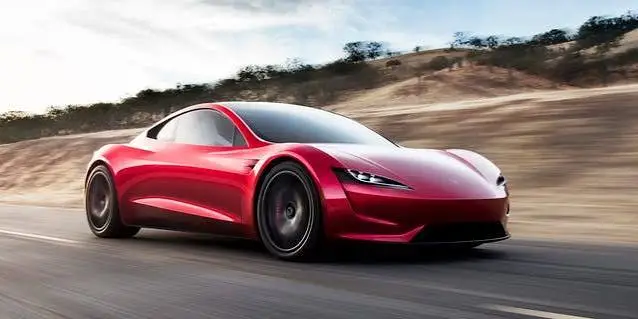
The second-generation Tesla Roadster is an all-electric sports car designed to compete with some of the world’s fastest performance vehicles. Its long development has attracted attention because Tesla has repeatedly described performance targets that sound extraordinary, even by the standards of modern electric cars. The latest version pushes that idea further by combining conventional electric propulsion with experimental aerodynamic and compressed-gas systems.
The exterior has a low, wedge-shaped profile, with styling that recalls classic exotic sports cars. Scissor-style doors, retractable or pop-down headlights, and a minimalist cabin give it a more dramatic appearance than Tesla’s everyday vehicles. Inside, the proposed design includes a clean dashboard, an Ultrawhite finish, and a yoke-style steering wheel. The overall look is unmistakably aimed at buyers who want something that feels special rather than simply another quick electric sedan.
However, the Roadster’s appearance is only part of the attraction. Tesla is making claims about acceleration, range, and grip that could change what buyers expect from an electric supercar. Whether those figures survive real-world testing is far more important than how impressive the car looks in promotional footage.
Tesla Roadster Performance: Can It Really Go From 0 to 60 mph in Under a Second?
One of the most attention-grabbing claims is acceleration from 0 to 60 mph in around 0.81 seconds, or under one second, depending on the reported configuration. That would be an extraordinary figure for a production road car. Electric motors already deliver power quickly, which is why high-performance EVs can accelerate so violently, but getting below one second introduces another major challenge: putting all that force onto the road without the tyres simply losing traction.
The reported output figures vary, with estimates ranging from more than 1,300 horsepower to around 1,500 horsepower. Those numbers would put the Roadster firmly in hypercar territory if confirmed in the final production model. Tesla has also been associated with a claimed top speed of around 230 mph, while even higher figures have been discussed publicly. The more extreme numbers should be treated as targets or speculation unless Tesla confirms the exact production specification and independent testing verifies the results.
The important point is that acceleration figures can depend heavily on how a car is configured and tested. Tyres, road surface, battery charge, temperature, and the measurement method can all affect the result. A vehicle might achieve a remarkable launch under carefully controlled conditions without being able to repeat it consistently on an ordinary road. For buyers, independently measured performance will mean much more than a number shown during a presentation.
SpaceX Thrusters: The Feature Everyone Is Talking About
The proposed SpaceX-inspired thruster package is arguably the most unusual part of the new Roadster. Rather than relying entirely on electric motors and tyres, certain configurations are said to use compressed gas, reportedly nitrogen, to provide additional thrust and help with stability or manoeuvring. Tesla has also teased the possibility of brief lifting or jumping manoeuvres, which explains why some of the coverage has compared the car to a flying vehicle.
It is an exciting idea, but there is a considerable difference between demonstrating an experimental system and delivering one that works safely in a customer car. The thrusters would need to operate predictably, fit within the vehicle without compromising its practicality, and meet the relevant safety requirements. Their effect on weight, maintenance, operating costs, and everyday usability also matters. A feature that looks spectacular in a demonstration could become much less appealing if it requires special servicing or can only be used under tightly controlled conditions.
There is also the question of where such a system could legally be used. A car designed for public roads cannot simply fire powerful jets or perform lifting manoeuvres wherever the driver chooses. If the most extreme configuration is intended for restricted environments rather than normal road use, buyers will need a clear explanation of what it can actually do and what limitations apply.
For now, the thrusters are one of the Roadster’s most intriguing proposed features, but they are not a substitute for independently verified performance and safety information. I would be cautious about treating the most dramatic demonstrations as proof that every customer will receive a road-legal car capable of those same stunts.
Could the Fan-Suction System Improve Grip?
Another proposed feature is an underbody fan system designed to generate suction and increase the force pressing the car towards the road. The idea is to improve grip by managing airflow beneath the vehicle, potentially allowing it to corner more aggressively than a conventional road car. Active aerodynamic components are also expected to help the Roadster balance downforce and drag according to driving conditions.
Tesla-related reports have mentioned grip figures of up to 2 g, which would be a remarkable target for a road-going vehicle. If the system works as described, it could help the Roadster maintain traction in demanding driving situations. However, a quoted figure needs context: the conditions under which it was achieved, how long the system can sustain that performance, and whether the car can reproduce it outside a controlled test environment all matter.
A fan-based system also raises practical questions. It needs power, adds mechanical complexity, and must function reliably in the presence of dirt, stones, water, and other debris encountered on real roads. There is a big difference between a system that works during a carefully prepared demonstration and one that continues working after years of ordinary driving.
The technology could be genuinely useful if Tesla gets it right, but it will need to prove itself through testing rather than relying on impressive claims alone.
Tesla Roadster Range: Is 620 Miles Realistic?
The new Roadster has been associated with a range claim of approximately 620 miles on a single charge. If achieved under a recognised testing standard, that would make it an unusually long-range electric performance car. It would also help address one of the practical concerns surrounding high-powered EVs: how far they can travel before needing to recharge.
However, the advertised range should not be confused with what every driver will achieve. High-speed driving, aggressive acceleration, cold weather, hills, and frequent use of performance features can all reduce an EV’s range. A car driven hard on a motorway or racetrack will use energy differently from one travelling at a steady speed in favourable conditions.
The battery’s final capacity, vehicle weight, tyre setup, and official efficiency figures will be important once production specifications are available. Until those details are confirmed and the car undergoes independent testing, the 620-mile figure is best viewed as a claim rather than a guaranteed everyday result.
Tesla Roadster Models: Performance, Thrust and Rocket
Reports describe three proposed Roadster configurations, each aimed at a different type of buyer.
Performance: This is presented as the standard two-seat version, with electric performance, active aerodynamics, and the proposed fan-based grip system. It would likely be the most relevant option for buyers who want a high-performance sports car without the most extreme experimental equipment.
Thrust: This version is described as adding the compressed-gas thruster package to improve acceleration or vehicle control. Its appeal will depend on what the system can do in practice, how much it costs, and whether its capabilities come with restrictions on where it can be used.
Rocket: The most extreme configuration is reportedly planned as a limited, invite-only, single-seat version with an expanded thruster system designed for short-duration lift and directional manoeuvres. Reports have also raised questions about its road legality, so buyers should not assume it will be a conventional road car that can be used like the standard version.
These configurations sound exciting, but their availability and final specifications need to be confirmed. Until Tesla publishes complete production details, it is difficult to know exactly which features will be standard, which will cost extra, and which may remain limited to demonstrations or special releases.
Tesla Roadster Price: How Much Will It Cost?
Pricing remains one of the biggest unanswered questions for anyone considering the next-generation Roadster. The vehicle’s original announcement came with a much lower starting-price target than many established hypercars, but years of development and the proposed advanced technology make it unwise to assume that early figures will remain unchanged.
The final price could vary considerably depending on the model, battery and performance specification, and whether the thruster system is offered as an optional package or as part of a separate limited configuration. Buyers should also account for taxes, delivery charges, insurance, and any costs associated with specialised components or servicing.
A confirmed price list will be essential before anyone can judge whether the Roadster offers reasonable value. Even if its acceleration and range meet the advertised targets, a very high purchase price could put it beyond the reach of most enthusiasts. And if the most exciting features are reserved for an expensive limited edition, the more affordable version may not offer the same experience shown in promotional material.
When Will the Tesla Roadster Be Released?
The Roadster has had an unusually long development period. Tesla first revealed the second-generation model in 2017, and the years since then have brought repeated delays and changing expectations. The latest unveiling is an important step, but Tesla is targeting production in 2028 rather than delivering customer vehicles immediately.
That means buyers still need to wait for confirmation of the final specifications, production schedule, pricing, and delivery arrangements. A production-intent vehicle is closer to the intended finished product than an early concept, but it does not guarantee that every feature shown will reach the production line unchanged.
The thruster and fan-suction systems may also require more validation than the basic electric drivetrain. If Tesla encounters engineering, manufacturing, or regulatory challenges, the timeline could change again. Given the Roadster’s history, I would treat 2028 as a target rather than a firm delivery promise until Tesla provides a detailed production schedule and customer deliveries begin.
Is the Tesla Roadster Worth the Hype?
The next-generation Tesla Roadster could become one of the most talked-about electric sports cars on the market. Its proposed combination of extreme acceleration, long range, advanced aerodynamics, and SpaceX-inspired thrusters is unlike anything most drivers can buy today. If Tesla delivers even a large part of what it has described, the car could be an impressive showcase of electric vehicle engineering.
But the claims are extraordinary, and that makes independent verification especially important. A sub-one-second sprint to 60 mph, a range approaching 620 miles, and a system capable of generating substantial grip are all major engineering targets. Adding compressed-gas thrusters introduces another layer of complexity, particularly if Tesla intends to offer the technology to customers rather than demonstrate it in controlled conditions.
The long wait is another reason to remain realistic. The Roadster was announced years ago, and its targeted 2028 production date still leaves time for specifications, prices, and equipment to change. Anyone thinking about reserving one should understand the terms of any deposit, whether it is refundable, and exactly what Tesla has committed to delivering.
My verdict: The Tesla Roadster is an exciting prospect, but it has more to prove before it can be judged as a finished product. Its design and proposed technology are compelling, yet performance figures and experimental features are only meaningful if they work reliably in the production car. I would keep an eye on the Roadster, but I would wait for confirmed pricing, final specifications, independent performance tests, and evidence of actual customer deliveries before deciding whether it deserves the hype.
Check out Necklow Sleep Pillow that I reviewed, earlier.