
The Fosi Audio DAP Neo is a portable music player aimed at people who miss having a device dedicated to listening to music. Instead of turning to your smartphone, opening Spotify, and getting distracted by messages or social media, you load your own music onto a microSD card and enjoy it without the usual interruptions. With its metal body, physical control wheel, headphone jack, and support for lossless audio, the DAP Neo looks like an appealing little gadget for anyone who still enjoys owning and managing their music collection.
However, a good music player needs more than an attractive retro design and a decent DAC chip. The controls should feel comfortable, the buttons should respond properly, and everyday use should not become irritating. While the Fosi Audio DAP Neo has some appealing features for its price, the physical controls and a few missing playback options may disappoint people who expect a more polished experience.
What Is the Fosi Audio DAP Neo?
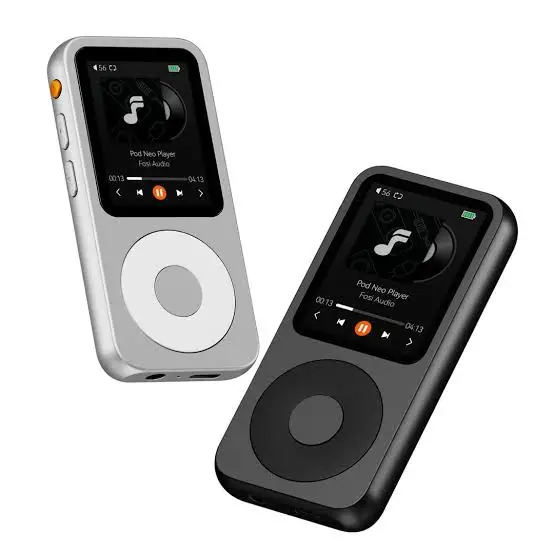
The Fosi Audio DAP Neo is a dedicated digital audio player designed to play music files stored locally rather than stream music over the internet. It has a full-metal chassis, a 2.4-inch colour display with a resolution of 320 × 240, a rotary control wheel, and physical buttons along the side. The overall design brings back memories of older iPods and compact MP3 players, although its appearance alone does not guarantee the same level of refinement.
Inside, the player uses a Cirrus Logic CS43198 DAC chip, which is designed to convert digital audio into an analogue signal for listening through wired headphones. It supports several common audio formats, including MP3, FLAC, WAV, APE, M4A, and DSD. That makes it suitable for people who have built up a personal music library and want to listen to their files without depending on a phone or a streaming subscription.
The DAP Neo is available with either a 16GB or 64GB microSD card, and storage can reportedly be expanded to 256GB. It also has a USB-C connection for charging and transferring files, a standard 3.5mm headphone jack, and Bluetooth connectivity. Fosi advertises up to 12 hours of playback, although actual battery life will depend on factors such as volume, headphone choice, and usage.
Fosi Audio DAP Neo Price and Storage Options
The advertised prices are approximately $79.99 for the 16GB version and $119.99 for the 64GB version. The difference may seem reasonable if you want more room for a music collection, particularly if you listen to lossless files, which can take up considerably more space than ordinary MP3s.
Still, the DAP Neo is not necessarily the cheapest way to listen to music on the go. A smartphone can already play downloaded audio, and some people may own an older phone that could serve as a dedicated music player. The Fosi becomes more attractive if you specifically want a separate device with physical controls and no streaming apps, but the price is harder to justify if you end up disliking the way those controls work.
What I Like About the Fosi Audio DAP Neo
The idea behind the DAP Neo makes sense. Smartphones have become so central to everyday life that even a quick attempt to listen to an album can turn into an hour of scrolling through notifications, messages, and social media. A music player that does one job can help you avoid that distraction, and there is something satisfying about keeping your music collection separate from everything else on your phone.
I also like the decision to include a standard headphone jack. You do not need to rely on wireless headphones or carry an adapter just to connect a familiar pair of wired earphones. The CS43198 DAC and support for high-resolution audio formats also look promising on paper, particularly for listeners who have FLAC or DSD files and want a player designed around local music playback.
File management is another practical advantage. You can transfer music over USB-C or load it onto the microSD card without relying on a proprietary desktop application. For people who prefer to organise their own albums and playlists instead of paying for access to a streaming catalogue, that straightforward approach is appealing.
Unfortunately, these benefits do not automatically make the DAP Neo enjoyable to use. The controls are a major part of the experience, and this is where my concerns begin.
The Control Wheel and Buttons May Become Annoying
The physical control wheel is one of the main features that gives the DAP Neo its retro appearance, but I am not convinced that a wheel and a central click button are necessarily the best way to operate a modern music player. Based on my experience with the controls, having to remember different actions such as pressing and holding, double-clicking quickly, double-clicking slowly, and triple-clicking sounds unnecessarily complicated. I would much rather have enough dedicated buttons to perform the common functions without having to remember a sequence of presses.
This might not bother everyone, especially someone who enjoys tactile controls and is happy to learn the device’s operating system. However, a music player is something you may use repeatedly throughout the day, often without looking directly at the screen. When ordinary actions depend on different click patterns, the controls can feel like extra work rather than a convenient alternative to a touchscreen.
The sound of the wheel and central button is another issue. I find noisy scrolling and a cheap-sounding click distracting, particularly on a device designed for listening to music. Imagine using the player on a quiet train, in a library, or beside someone who is trying to relax. You might be perfectly happy with the sound coming through your headphones, but the repeated clicking and scrolling can still be heard by people nearby.
That is a disappointing trade-off for a product whose appeal partly comes from bringing back the feel of older music players. Nostalgia only goes so far; the controls also need to feel well made. The original iPod Classic became memorable not just because of its click wheel but because the whole device felt carefully designed. If a modern player borrows that general idea, I would expect the physical interaction to feel equally considered rather than noisy and cheap.
Bluetooth Is Basic, and There Is No Music Streaming
The DAP Neo supports Bluetooth, but its advertised support for the basic SBC codec limits its appeal to people who want a more advanced wireless listening experience. SBC is widely compatible and perfectly usable for everyday playback, so its presence does not make Bluetooth worthless. However, buyers looking for support for higher-quality Bluetooth codecs may be disappointed, especially at a price where they might expect more flexibility.
For serious listening, the 3.5mm headphone output is likely to be the more appealing option. Fosi lists the single-ended output at 129mW, along with a 127dB signal-to-noise ratio. Those figures may look impressive, but they do not tell the entire story about sound quality. The result will also depend on the headphones being used, and the output power alone does not guarantee that every demanding pair will be driven well.
There is also no Wi-Fi or support for streaming services such as Spotify, Apple Music, Tidal, or Amazon Music. That is not necessarily a flaw because the DAP Neo is deliberately built around offline listening, but it does mean you need to supply your own music files. Anyone who mainly listens through streaming subscriptions will have to change their habits or use another device.
Does the Fosi Audio DAP Neo Support Gapless Playback?
Gapless playback matters to people who listen to live albums, classical music, DJ mixes, or records where one track flows straight into the next. Without it, small pauses between tracks can interrupt the listening experience and make an album feel less cohesive.
The reported lack of gapless playback is therefore a meaningful limitation for a player aimed at music enthusiasts. It may not matter much if you mainly listen to individual songs, but it could become frustrating if you regularly play albums that are meant to run continuously. A dedicated audio player should make it easy to enjoy a music collection, and this is one area where the DAP Neo may fall short for some listeners.
Is the Fosi Audio DAP Neo Worth Buying?
The Fosi Audio DAP Neo has a clear purpose, and I can see why it would appeal to people who want a small, distraction-free music player with a metal body, local file support, a headphone jack, and physical controls. Its CS43198 DAC, expandable storage, and simple USB-C file transfers give it a reasonable feature set, while the lack of streaming apps may be an advantage for buyers who deliberately want to disconnect from their phones.
My reservations are about the everyday experience rather than the basic idea. The combination of awkward multi-click controls, noisy buttons and wheel, limited Bluetooth codec support, and missing gapless playback makes the DAP Neo less appealing than its retro design initially suggests. These are not necessarily deal-breakers for every listener, but they are the sort of details that can determine whether a device becomes something you use every day or something that ends up sitting in a drawer.
At around $79.99 for the 16GB version and $119.99 for the 64GB model, I would want the controls to feel more refined before recommending it without hesitation. If you mainly want a dedicated player for wired headphones and your own collection of music files, the DAP Neo may still suit you. However, if you are particular about tactile quality, quiet operation, Bluetooth performance, and seamless album playback, I would wait to see whether a future revision addresses these shortcomings.
The Fosi Audio DAP Neo is an interesting concept, but it does not sound like a complete success for listeners who value polished controls as much as sound quality. A second version with quieter buttons, a better control layout, improved Bluetooth support, and gapless playback could be a much stronger product. For now, I would not buy it on retro looks alone.
Check out Necklow Sleep Pillow that I reviewed, earlier.