
Gelagen Korean Gummies caught my attention because the advertising does not look like a typical supplement commercial at first. The video begins with what appears to be a story about a natural Korean beauty secret and an “Anti-Aging Center,” followed by claims about Korean technology, skin health and a supposed pink gelatin recipe that can make a person look years younger. Then the familiar faces start appearing. Nicole Kidman, Martha Stewart and Elizabeth Hurley are shown in AI-generated footage that makes it seem as though these women have discovered or used the same Korean recipe to maintain youthful-looking skin. The further I looked into the promotion, the less convincing the story became.
For anyone searching for Gelagen reviews, the celebrity videos are an important place to start. The people appearing in the advertisements are not legitimate spokespeople for Gelagen, and I found no credible evidence that Nicole Kidman, Martha Stewart or Elizabeth Hurley endorsed these gummies or used them as part of a secret anti-aging routine. The videos appear to be using AI and deepfake technology to create an association that does not exist.
The “Korean Pink Gelatin” Story Is What Gets You Interested
The sales presentation is clever because it does not immediately feel like someone is trying to sell you a bottle of gummies. Instead, it tells a story. Viewers are introduced to the idea of a Korean beauty technique involving pink gelatin, with the presentation suggesting that this simple recipe is responsible for the youthful appearance of famous women. That setup gives the impression that you are about to learn something useful for free.
You keep watching because the promise is appealing. Who wouldn’t be curious about a natural Korean recipe that supposedly helps skin look younger? The problem comes later, when the free-looking health or beauty presentation turns into a sales pitch for Gelagen gummies. Rather than being handed a simple recipe that you can make at home, viewers are directed toward a packaged supplement that supposedly contains the answer.
That bait-and-switch approach is worth understanding because it changes the way I would interpret everything that follows. The story about Korean pink gelatin is being used to create interest in the product, but that does not establish that Gelagen itself has been clinically proven to deliver the results being suggested in the video.
Nicole Kidman and Martha Stewart Do Not Endorse Gelagen
The celebrity element is what makes this promotion particularly misleading. Nicole Kidman, Martha Stewart and Elizabeth Hurley are recognizable people with established careers and public profiles, so putting their faces into a beauty advertisement immediately gives the product an appearance of credibility. A viewer who does not realize the footage has been manipulated could easily assume they are watching an actual interview or a genuine testimonial.
That is not how I would interpret the videos. The footage appears to have been generated or manipulated using artificial intelligence, and there is no reliable evidence that these celebrities are promoting Gelagen Korean Gummies. Their apparent comments should therefore not be treated as genuine statements from the people shown on screen.
This is becoming a much bigger problem with online supplement advertising. AI can now reproduce a celebrity’s appearance and voice well enough to make a fake interview seem believable, particularly when the video is surrounded by graphics that imitate a television program or health-news website. By the time someone realizes that something is wrong, they may already have watched twenty or thirty minutes of the presentation and become emotionally invested in the promise being made.
The Fake “Anti-Aging Center” Adds Another Layer to the Story
Another part of the Gelagen promotion that deserves attention is the website presented as an “Anti-Aging Center.” The branding makes the page look like an educational resource rather than a straightforward sales funnel. That can make the claims feel more trustworthy because visitors may think they are reading information from a health or beauty organization.
But a professional-looking website does not tell you who is actually operating it. Anyone can create a page with medical-sounding language, photographs, testimonials and references to scientific concepts. What matters is whether the organization is real, whether its experts can be independently identified and whether the claims being made can be supported outside the sales funnel.
In the case of Gelagen, I would not assume that the “Anti-Aging Center” presentation represents an independent medical or scientific institution. The important question is who owns the website and who is ultimately receiving the money when someone orders the gummies. That information is much more useful to a potential customer than another testimonial about how young somebody supposedly looks.
What Are Gelagen Korean Gummies Supposed to Do?
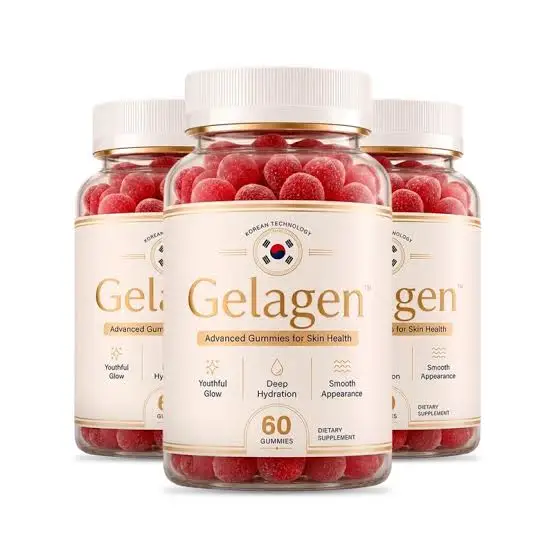
Gelagen is marketed as an anti-aging supplement using what the advertisements describe as Korean technology and advanced gummies for skin health. The presentation connects the product with collagen, youthful-looking skin and the supposed Korean pink gelatin secret. Those ideas sound attractive, particularly to anyone already spending money on creams, collagen powders or other beauty supplements.
What I would not do is assume that the marketing story proves the gummies can make someone look decades younger. There is a huge difference between taking a supplement that contains ingredients associated with normal skin health and proving that a particular product can dramatically reverse visible aging.
The same applies to the phrase “Korean technology.” It sounds impressive, but it does not tell a customer much about the actual product. A buyer should still be able to find a complete ingredient list, quantities, manufacturer information and credible evidence supporting the specific claims being made. If those details are difficult to locate while the celebrity story is front and center, I would treat the advertisement cautiously.
The Checkout Price May Be Very Different From What You Expect
One of the biggest concerns with this type of offer is not necessarily the price shown at the beginning. It is what happens when the customer reaches the checkout page.
According to the promotion I reviewed, customers can be drawn into recurring subscription arrangements that may result in charges of hundreds of dollars per month. The terms and conditions can be presented through small boxes or less noticeable sections of the checkout process, which makes it particularly important to read the entire page before entering payment information.
This is the part I would slow down for. If you think you are buying one bottle of gummies for a particular price, make sure the final payment page actually says that you are making a one-time purchase. Look for words such as “monthly,” “recurring,” “subscription,” or anything indicating that additional shipments will automatically be billed to your card.
The same caution applies to the advertised 100% money-back guarantee. A guarantee sounds reassuring, but what matters is how it works in practice. If the company requires specific conditions, a particular return process or proof of purchase, customers need to know those requirements before buying rather than discovering them after a refund becomes necessary.
Who Is Actually Selling Gelagen?
This is one of the questions I would want answered before placing an order. The video presentation I reviewed did not provide a customer service phone number, support email address or fulfillment-center mailing address that would give viewers a straightforward way to contact the people behind the product.
That makes the offer considerably harder to evaluate. A supplement company asking customers to provide payment information should have a clear identity and a reliable way for customers to get help with an order. If a package arrives damaged, a customer wants to cancel a subscription or a refund becomes necessary, there needs to be somewhere legitimate to turn.
I would not say that the lack of contact information alone proves that Gelagen is fraudulent, because websites and offers can change over time. But when that lack of transparency is combined with AI celebrity endorsements, a fake-looking health presentation and complicated recurring billing, I would personally have enough unanswered questions to walk away from the offer.
Is Gelagen a Scam?
Based on the promotion I reviewed, I would avoid purchasing Gelagen Korean Gummies through this particular sales funnel. The issue is not simply that the product makes ambitious anti-aging claims. It is the entire way the product is presented, from the supposed Korean beauty discovery and “Anti-Aging Center” to the AI-generated celebrity videos and the recurring subscription terms.
I would also be careful about searching for Gelagen reviews and assuming that every positive review online is independent. When a product is sold through an aggressive advertising funnel, testimonials can become part of the sales process. A review posted on a sales page is not the same thing as an independently verified customer experience.
If you have seen Nicole Kidman, Martha Stewart or Elizabeth Hurley apparently talking about Gelagen, I would not take the video as proof that they actually use or recommend the product. The safest approach is to look for the original statement through the celebrity’s legitimate public channels or reputable media coverage. If the only place you can find the endorsement is inside the Gelagen advertisement, that should tell you something about how the promotion is being constructed.
Conclusion
The Gelagen story is a good example of how modern supplement advertising can blur the line between entertainment, health information and sales. You start with a supposedly fascinating Korean beauty secret, watch familiar celebrities apparently reveal their anti-aging routine, and eventually arrive at a checkout page for a bottle of gummies. By that point, the original story can feel so convincing that it becomes easy to forget that the entire presentation was created to sell a product.
For me, the biggest problem is the apparent use of AI-generated celebrity footage. Nicole Kidman, Martha Stewart and Elizabeth Hurley are not evidence that Gelagen works, and their faces should not be used to create the impression that they have personally tested or endorsed the gummies. The claims about Korean pink gelatin and dramatically younger-looking skin also need evidence that exists independently of the sales video.
Anyone considering Gelagen should take a close look at the final checkout terms before entering a card number, particularly if the offer involves recurring shipments or monthly charges. I would also save a copy of the order page, the advertised price and the refund terms. If you have already purchased the product, keep an eye on your bank or credit card statement for unexpected charges and keep all correspondence relating to cancellation or refunds.
There may be different product names, websites or versions of this same type of promotion circulating online. That is why I would focus less on the name printed on the bottle and more on the way the product is being sold. When a supposedly revolutionary anti-aging supplement needs fake celebrity videos and a complicated sales funnel to get customers through the checkout, I would rather keep my money in my wallet and look for skin-health information from sources I can actually verify.
Check out Mansculpt wave therapy plus that I talked about earlier.