
My mother recently decided to buy me a Mintac Molecular Anti-Frost device for my car, thinking it would be a useful gift, especially during the colder months when frost and ice can make driving in the morning a real headache. The idea behind it sounds quite attractive. Instead of standing outside scraping ice from your windscreen, you are supposedly able to place this little gadget on your dashboard and let it do the work for you.
Mintac claims that its Molecular Anti-Frost device uses electromagnetic technology to interfere with ice formation at a molecular level. The advertisements make it sound like some kind of advanced scientific invention, with claims about intelligent frequencies and technology supposedly inspired by space research. It is also advertised as solar-powered, which makes the whole thing sound even more convenient because you are not supposed to worry about plugging it into your car or charging it constantly.
But the more I looked at what this product was supposed to do, the less convincing it became. I have serious doubts about how a small plastic gadget sitting on a dashboard could possibly generate enough energy to remove frost and ice from an entire windscreen. The words “molecular” and “electromagnetic” sound impressive, but I could not find a believable explanation of how this device actually produces the heat or energy needed to melt ice.
I know some people may see an advertisement like this and think they have found a clever way to avoid scraping their car every morning. That is why I wanted to write about Mintac Molecular Anti-Frost. My mother bought it for me with good intentions, but I would hate for other people to spend their money believing this little gadget can do something it simply cannot do.
What Is Mintac Molecular Anti-Frost Supposed to Do?
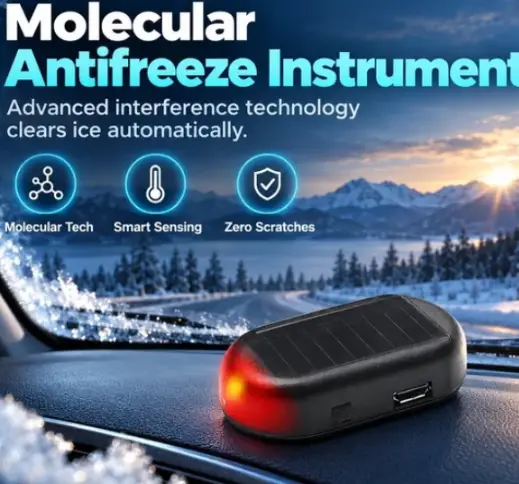
Mintac Molecular Anti-Frost is advertised as an electromagnetic device that supposedly prevents frost from forming on your car windscreen or helps remove existing ice without the need for scraping. The seller presents it as a modern alternative to traditional car defrosting methods, claiming that it uses special frequencies to affect water molecules and stop them from freezing.
The idea is that you place the device on your dashboard, where it supposedly works automatically. Some advertisements describe the technology using phrases such as “molecular interference,” “intelligent frequency” and electromagnetic energy. These terms are used to make the product sound like something developed in a laboratory rather than an ordinary dashboard accessory.
The solar-powered claim is another part of the sales pitch. The device is presented as something that can use sunlight to operate, meaning there should be no need for complicated wiring or an external power supply. For someone who parks outside during winter, this might sound like a very convenient solution.
However, the seller needs to explain exactly how such a small device can produce enough energy to prevent or melt ice across a large windscreen. Simply mentioning electromagnetic frequencies does not explain how the product works, and I have not seen convincing evidence that Mintac has the technology it claims to offer.
Why I Don’t Believe the Molecular Anti-Frost Claims
My biggest problem with Mintac is the science behind its advertising. Melting ice requires heat. This is not something that can be achieved simply by placing a small plastic object on your dashboard and claiming that it sends out special frequencies.
For perspective, melting just one kilogram of ice requires approximately 334 kilojoules of energy, not including the additional energy needed to warm the ice to its melting point. A windscreen covered in frost or ice can require a considerable amount of energy to clear, especially when the outside temperature is still below freezing.
So where is that energy supposed to come from?
Mintac is advertised as a small solar-powered gadget, but a tiny solar cell cannot realistically provide the amount of energy needed to heat an entire windscreen and melt a layer of ice. This becomes even less believable during cloudy, snowy or overcast weather, when sunlight is limited. Those are precisely the conditions in which someone would need a reliable defrosting device.
The electromagnetic explanation also leaves me with more questions than answers. Electromagnetic energy is real, and it can be used to heat materials in certain applications, but that does not mean any small gadget labelled “electromagnetic” can melt ice. The seller would need to explain what kind of energy the device produces, how much power it uses and how that energy is transferred to the windscreen.
If the product were actually using microwave-frequency energy to heat ice, that would raise serious safety questions. Microwave heating equipment requires careful control and shielding because the energy can also heat other materials, including human tissue. A small dashboard gadget cannot simply be assumed to work safely because an advertisement claims it uses advanced electromagnetic technology.
I have not seen convincing technical evidence showing that Mintac produces the energy required to do what it promises. To me, the scientific explanation sounds like impressive words put together to make an ordinary little gadget appear revolutionary.
Is Mintac Molecular Anti-Frost Just a Cheap LED Gadget?
This is another reason I am suspicious of the product. Similar viral anti-frost gadgets have been investigated, and some teardowns have revealed very ordinary components inside. Instead of sophisticated electromagnetic equipment, they contain simple electronics, small solar panels, blinking LEDs or even scented inserts.
Some products sold under different names, including Fivfivgo and Ray Hong, have been compared with cheap dashboard accessories available through wholesale marketplaces such as Alibaba and AliExpress. This raises the possibility that sellers are taking ordinary mass-produced products, giving them a new name and advertising them as advanced car technology.
I cannot claim that I have personally opened up my mother’s Mintac device and confirmed exactly what is inside it. However, the similarities between these viral products and the cheap dashboard gadgets found on wholesale sites are worth considering. If the device is simply a plastic casing containing a small light and basic electronics, there is no reason to believe it can magically prevent ice from forming on your windscreen.
A blinking LED might look impressive in a promotional video, but it does not mean the device is producing enough heat to defrost a car. The same applies to a small solar panel. Having a solar component does not automatically make a product powerful enough to perform the job advertised.
The Problem With the Solar-Powered Claim
Mintac’s solar-powered description makes the product sound like it can work without needing to be connected to anything. However, solar power has its limits, and the amount of electricity a small panel can generate depends on the available sunlight and the size and efficiency of the panel.
Think about when frost is most likely to cover a car. It is usually during cold nights and early mornings, when sunlight is either unavailable or very weak. Cloudy and snowy weather can make things even worse. Even if the gadget has a small solar panel, where is it getting enough power to perform a job that requires substantial heat?
A solar-powered dashboard accessory may be able to run a small LED or another low-power component. That is very different from heating a windscreen enough to melt ice. The seller needs to show actual measurements and explain how the device manages this, rather than simply putting the words “solar-powered” on the advertisement.
Why Are Products Like Mintac Being Sold as Advanced Technology?
I think the way these gadgets are advertised is a big part of the problem. A basic dashboard accessory would probably attract very little attention if it were sold for what it actually is. But describe it as a molecular electromagnetic anti-frost machine, mention intelligent frequencies and add claims about space technology, and suddenly it sounds like something special.
That is what makes these advertisements misleading. They take scientific terms that most people recognise but may not fully understand and use them to make a product appear more advanced than it really is.
The same approach can be seen in other viral gadgets. A seller takes an ordinary item, gives it a fancy name, creates impressive promotional videos and advertises it as a solution to a problem people genuinely have. Countdown timers, large discounts and glowing customer reviews can then encourage people to order before they have had time to question the claims.
I would be particularly careful with advertisements that mention NASA or space-rover technology without providing any proper evidence of a connection. Using the name of a respected organisation does not mean that organisation developed, tested or approved the product.
Is Mintac Molecular Anti-Frost a Scam?
Based on the claims being made, I believe Mintac Molecular Anti-Frost is a misleading product and should be avoided. The advertised technology does not have a convincing scientific explanation, and there is no reliable evidence presented to show that this small dashboard gadget can prevent frost or melt ice from a car windscreen.
My mother’s purchase is what brought this product to my attention, and I know she only wanted to get me something useful for my car. Unfortunately, I do not believe this is the kind of device people should rely on when dealing with frost. The solar-powered and electromagnetic claims sound impressive, but they do not explain where the energy needed to melt the ice is coming from.
The fact that similar viral gadgets have been found to contain little more than basic electronics, LEDs and ordinary dashboard accessories makes the whole thing even more questionable. It is quite possible that Mintac is another generic product being sold with a fancy name and exaggerated promises
t I would not recommend buying Mintac Molecular Anti-Frost. I do not believe the advertised technology has been shown to work, and I would not trust it to clear ice from my windscreen. If you need to defrost your car, use a proper vehicle defroster or a suitable ice scraper rather than depending on a small dashboard gadget that makes big scientific claims without showing how it delivers them.