
There is a particular kind of supplement advertisement I have learned to be very suspicious of: the one that starts with a serious health problem, introduces a supposedly hidden discovery from Japan, puts a famous doctor or celebrity in the middle of the story, and then ends with a button telling you that there are only a few bottles left. That is exactly the sort of presentation surrounding NervoLyn, and once you look past the dramatic sales pitch, the story becomes much less impressive.
NervoLyn is being promoted online as a nerve-health supplement for people dealing with symptoms such as tingling, numbness, burning sensations and discomfort in the hands and feet. The current NervoLyn sales page describes a formula containing magnesium glycinate, alpha-lipoic acid, butcher’s broom, L-carnitine, turmeric and CoQ10, and says the product is intended to support normal nerve function and circulation rather than diagnose or treat neuropathy.
That description on its own would not make me call NervoLyn a scam. There are legitimate ingredients in the supplement world that have been studied for various aspects of nerve health. The problem is the way NervoLyn is being sold in some of the promotional material. The advertisements I came across take things much further, using supposed celebrity and physician involvement to make the product appear medically endorsed and tying it to a mysterious “2-ingredient Japanese cocktail” that does not hold up as a credible explanation for the product.
And that is where I think people need to be careful, particularly anyone who is already worried about neuropathy and is desperate for something that might help.
What Is NervoLyn?
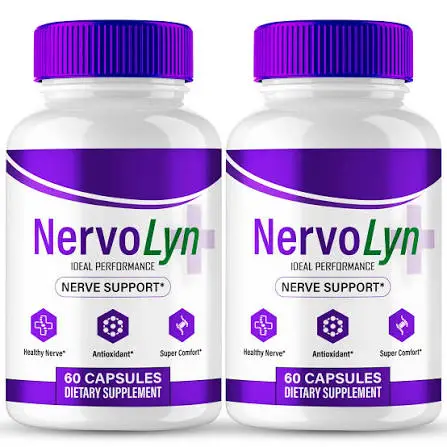
NervoLyn is a dietary supplement sold in capsule form and marketed toward people interested in nerve and circulation support. The product’s current website says users should take one capsule daily and describes the formula as containing magnesium glycinate along with a 575 mg proprietary blend of alpha-lipoic acid, butcher’s broom, L-carnitine, turmeric and CoQ10.
That is already worth paying attention to because the formula isn’t actually the mysterious Japanese remedy presented in some versions of the advertising. The product page itself gives a conventional supplement formula with recognizable ingredients.
The sales page also makes some fairly ambitious statements about what customers may experience, including steadier hands, improved sensation, better balance, improved circulation and more comfortable nights. It says early improvements may appear within three to four weeks, with fuller results developing over eight to twelve weeks.
Those are claims I would treat cautiously. A supplement website can describe what its product is intended to support, but that does not mean the supplement has been clinically proven to produce those outcomes in people with neuropathy.
The “2-Ingredient Japanese Cocktail” Story
This is one of the biggest red flags in the NervoLyn marketing.
The advertising presents the product as though there is some remarkable Japanese discovery involving a simple two-ingredient mixture that can address nerve problems. That kind of story is incredibly effective because it gives the impression that doctors and pharmaceutical companies have somehow overlooked an easy solution that has been used secretly elsewhere.
But the actual NervoLyn formula shown on the current product page is not a two-ingredient formula. It lists magnesium glycinate and a proprietary blend containing five additional ingredients.
So when I see an advertisement framing NervoLyn around a supposedly revolutionary “Japanese cocktail,” I would not take that story at face value. It appears to be marketing designed to make an ordinary supplement formula sound like a closely guarded medical breakthrough.
There is also something else that bothers me about this type of presentation. When a company has a perfectly straightforward ingredient list, why invent a mysterious origin story around it? If the formula is good, explain the formula and show the evidence. There is no need to make it sound like someone discovered a secret remedy that the medical establishment doesn’t want you to know about.
NervoLyn and Dr. Yoshinori Ohsumi
The use of Dr. Yoshinori Ohsumi’s name and likeness is particularly concerning.
Ohsumi is a real Japanese scientist and Nobel Prize winner whose research on autophagy earned him the 2016 Nobel Prize in Physiology or Medicine. That does not mean he endorsed NervoLyn, created a neuropathy supplement, or discovered a secret two-ingredient cocktail for nerve pain.
This distinction matters because using a famous scientist’s identity in an advertisement can make an otherwise ordinary supplement look as though it has been personally validated by someone with enormous scientific credibility.
A Nobel Prize is not a product endorsement. If an advertisement shows Dr. Ohsumi supposedly discussing NervoLyn or presenting a secret formula, I would treat that as a major warning sign rather than evidence that the supplement has been scientifically proven.
What About Tom Hanks?
Tom Hanks is another familiar name that has reportedly been pulled into this type of supplement advertising.
The reason celebrity involvement works so well in health scams is obvious. People recognize the face, trust the person for reasons completely unrelated to medicine, and then subconsciously transfer some of that trust to the product being advertised. But Tom Hanks is not a neuropathy specialist, and seeing his image or a digitally manipulated video associated with NervoLyn does not establish that he recommends the supplement.
This is exactly why AI-generated and manipulated celebrity videos are becoming such a serious problem in online health advertising. A convincing video can make it look as though a celebrity is saying something they never actually said. The video can look real enough to someone watching it casually, particularly when it is surrounded by a convincing-looking news-style page, fake interview or fabricated testimonial. That doesn’t make the endorsement real.
Dr. Mehmet Oz and the NervoLyn Scam
Dr. Mehmet Oz is another name that can make a health advertisement look instantly more credible.
Again, I would separate the real person from whatever an advertisement claims he said. A photograph, video clip or AI-generated voice is not proof of an endorsement.
This is particularly important with supplements for neuropathy because consumers are often looking for reassurance that a product has medical backing. A fake doctor endorsement is designed to provide exactly that reassurance without actually providing clinical evidence.
In my opinion, this is one of the clearest reasons to walk away from an NervoLyn advertisement that relies heavily on celebrity doctors or famous personalities rather than transparent scientific evidence. A legitimate supplement does not become medically proven because a famous face appears next to the bottle.
What Is Actually in NervoLyn?
This is where things get interesting because the actual formula is much less mysterious than the advertising makes it sound.
The current NervoLyn website lists magnesium glycinate, alpha-lipoic acid, butcher’s broom, L-carnitine, turmeric and CoQ10. It states that magnesium glycinate is provided at 80 mg per serving, while the other ingredients are included within a 575 mg proprietary blend.
Alpha-lipoic acid is perhaps the ingredient most familiar to people researching neuropathy supplements. It has been studied in relation to diabetic peripheral neuropathy and nerve-related symptoms, although that research should not be interpreted as proof that every supplement containing ALA will treat neuropathy.
The other ingredients are also not magical discoveries. Magnesium has an established role in normal nerve function. L-carnitine is involved in cellular energy metabolism. Turmeric contains curcuminoids, and CoQ10 is involved in cellular energy production. But recognizing an ingredient is not the same as establishing that this particular product, in these particular doses, will repair damaged nerves.
The Proprietary Blend Is Something I Would Question
The company does provide a total amount for its blend, but several of the individual ingredients do not have their own quantities clearly disclosed on the product page.
That would make me hesitate if I were buying the product specifically because I wanted alpha-lipoic acid or one of the other ingredients at a particular dose.
A transparent label should make it easy for consumers to understand exactly what they are taking. When several active ingredients are grouped together under one number, you cannot tell how much of each one is actually in the capsule. That doesn’t automatically make a supplement fraudulent, but it does make it harder to evaluate. And if a product is making strong claims about nerve comfort, circulation and neurological wellness, I think consumers deserve to know the exact quantities behind those claims.
Does NervoLyn Really Cure Neuropathy?
No supplement should be marketed as though it can simply cure neuropathy.
The NervoLyn website itself actually includes a disclaimer stating that the product is a dietary supplement and is not intended to diagnose, treat, cure or prevent neuropathy or nerve damage. It tells people with diagnosed nerve conditions to continue working with their physician.
That disclaimer is important. Neuropathy isn’t one single condition with one single cause. Nerve symptoms can be associated with diabetes, nutritional deficiencies, certain medications, alcohol use, nerve compression and a number of other medical problems. The appropriate response depends on the underlying cause.
That is why I would be particularly uncomfortable with any NervoLyn advertisement that makes it sound as though taking a few capsules is all someone needs to solve persistent numbness or burning feet. If you have genuine neuropathy symptoms, finding out why they are happening is much more important than falling for a dramatic supplement story.
NervoLyn Reviews and Testimonials
Another thing I would approach carefully is the glowing customer testimonial section.
The product website presents testimonials describing improvements in sensation, balance, sleep and nerve discomfort.
Testimonials can be useful for understanding how a product is experienced, but they are not clinical evidence. One person’s experience cannot tell you whether the same thing will happen to you, particularly when neuropathy has so many possible causes.
I would also be cautious about testimonials attached to advertisements using celebrity images or dramatic before-and-after stories. When the entire sales funnel is built around persuasion, the most positive experiences are naturally the ones that get placed front and center.
Is NervoLyn FDA Approved?
This is another claim that deserves some clarification.
Several NervoLyn websites use phrases such as “FDA approved” or display FDA-related badges, while describing the product as being manufactured in an FDA-registered facility.
Those are not the same thing.
Dietary supplements are not FDA-approved in the same way prescription medications are approved. A facility can be registered with the FDA without the individual supplement being FDA-approved to treat neuropathy.
So if you see an NervoLyn advertisement using an “FDA approved” badge to suggest that the supplement itself has been approved as a neuropathy treatment, don’t interpret that as evidence that the FDA has evaluated and approved NervoLyn for that purpose.
Is NervoLyn a Scam?
After looking at the actual product information, I would make an important distinction here.
NervoLyn is a real supplement product being sold online, but the deceptive marketing surrounding some NervoLyn advertisements is what concerns me.
The formula itself contains recognizable supplement ingredients, and the current website even acknowledges that NervoLyn is not intended to diagnose or treat neuropathy.
What I would call a scam is the use of fake or inauthentic celebrity and physician endorsements, fabricated “secret Japanese remedy” stories, misleading medical authority and exaggerated claims designed to convince vulnerable people that they have discovered a miracle cure.
Those tactics should not be confused with evidence that the actual capsules can cure nerve damage.
In other words, don’t let the fact that NervoLyn is a real bottle of supplements convince you that every advertisement selling it is legitimate.
The NervoLyn Website Situation Is Another Reason to Pay Attention
Something else I noticed while researching this product is that there are multiple websites using the NervoLyn name and very similar marketing language. Some describe different guarantees, pricing and even different versions of the formula. One site currently advertises a 60-day guarantee, while other versions of NervoLyn pages found online advertise 180 days.
That inconsistency would make me pause before entering payment information.
It doesn’t prove that every NervoLyn website is fraudulent, but when several domains are selling a similarly branded supplement with changing prices, guarantees and marketing claims, consumers should be especially careful about which site they are dealing with.
I would not click through a random social media advertisement simply because the page has the NervoLyn logo on it.
What I Would Do If I Saw the NervoLyn Advertisement
If an advertisement showed me Dr. Yoshinori Ohsumi, Tom Hanks or Dr. Oz supposedly endorsing NervoLyn, I would close the page rather than continuing to watch the sales presentation.
Not because every NervoLyn capsule must be fake, but because fake celebrity endorsements are enough of a red flag on their own.
A trustworthy health product should be able to explain what is inside the bottle, how much of each ingredient it contains, who manufactures it and what evidence supports its claims without needing to borrow the identity of a Nobel Prize winner or a famous television personality. That is the standard I would use with any neuropathy supplement.
Is NervoLyn Scam?
So, is NervoLyn a scam or legit? My answer is more nuanced than simply calling the capsules fake.
NervoLyn is marketed as a dietary supplement containing ingredients such as alpha-lipoic acid, magnesium glycinate, turmeric, CoQ10, L-carnitine and butcher’s broom. The product exists and the current sales page provides a recognizable ingredient formula.
But the NervoLyn neuropathy scam advertisements are a different story. The use of purported Dr. Yoshinori Ohsumi, Tom Hanks and Dr. Mehmet Oz endorsements, particularly when the material appears manipulated or AI-generated, is a serious warning sign. The mysterious “2-ingredient Japanese cocktail” story is another piece of marketing I would not trust.
I also don’t buy the idea that a capsule can simply “repair” damaged nerves or eliminate neuropathy regardless of what caused the problem. The underlying cause matters, and people experiencing persistent numbness, burning, weakness or balance problems should not delay appropriate medical care because an online video promises a secret natural solution.
Conclusion
I would not buy NervoLyn through one of those sensational celebrity or Japanese-cocktail advertisements. The product may be a genuine dietary supplement, but the deceptive sales tactics surrounding it are enough for me to give the marketing a firm thumbs-down.
If you are researching NervoLyn reviews, the most important thing to remember is that a convincing video is not medical evidence. Don’t hand over your money because an AI-generated celebrity tells you that you have found a secret cure.
Check out the Beplain Cleansing Oil that I reviewed earlier.