
There is something particularly unsettling about the Pure Lung advertisements I came across because they are not presented like an ordinary dietary supplement commercial. The marketing is designed to look like a health story, complete with familiar faces, dramatic claims about breathing and lung health, and what appears to be an easy trick involving ingredients such as Manuka honey or even Vicks VapoRub. At first glance, it can give the impression that a respected doctor, celebrity or medical institution has discovered something that the pharmaceutical industry supposedly does not want ordinary people to know. Once you look past that presentation, though, the story becomes much less convincing.
So, are the Pure Lung reviews real, and is Pure Lung a legitimate lung supplement? My conclusion after looking into the campaign is that I would not buy Pure Lung based on the claims being pushed through these advertisements. In particular, consumers should be extremely skeptical of promotional videos using AI-generated or manipulated appearances of Dr. Sanjay Gupta, Pat Sajak, Jack Nicholson and other recognizable personalities. I also found a recent BBB Scam Tracker report from a consumer who said an Instagram advertisement for Pure Lung used fake celebrity endorsements, including Dr. Gupta, and that the person lost $180. That complaint does not prove every Pure Lung transaction is fraudulent, but it is an important piece of evidence when evaluating this particular marketing campaign.
What Is Pure Lung Supposed to Be?
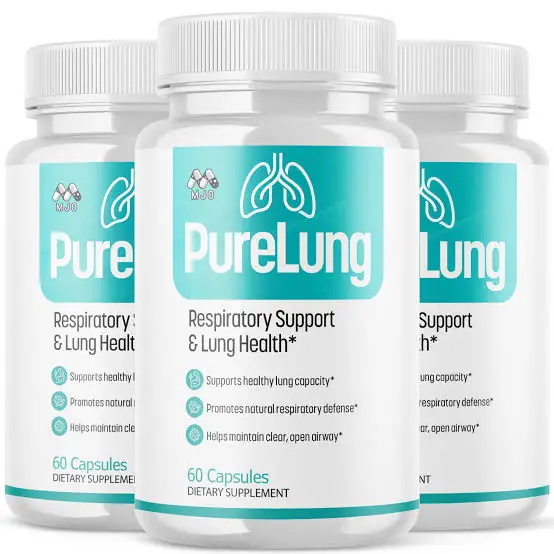
Pure Lung is promoted as a dietary supplement for respiratory and lung support, but the advertising I reviewed goes considerably further than the sort of ordinary “supports your health” language you might expect from a supplement. The sales presentation creates the impression that taking these capsules or pills can somehow clean, repair or restore the lungs, which is a very different proposition from simply providing nutritional support.
There are also different products online using the Pure Lung or PureLung name, which makes this particularly confusing for shoppers. For example, Walmart currently lists a product called PureLung Advanced Lung Health and Respiration Support Formula, while other similarly named products are sold by different third-party sellers. One such Walmart listing has only one customer review, showing how difficult it would be to treat random online ratings as reliable evidence of the effectiveness of the product being promoted in the viral advertisements.
That matters because someone searching for “Pure Lung reviews” could easily end up mixing together several products with similar names. A positive review attached to one PureLung listing does not establish that the product featured in a particular social-media advertisement has been clinically proven to do what the advertisement says.
The Fake Dr. Sanjay Gupta Pure Lung Video
The most troubling part of the campaign is the use of recognizable people to make the product appear medically validated. Dr. Sanjay Gupta is a particularly effective name for this type of deception because he is widely known as a physician and CNN medical correspondent. Putting his face and voice into an advertisement can make an ordinary supplement seem as though it has received professional medical backing.
The problem is that an AI-generated video is not evidence of an endorsement. A convincing-looking video can show a person saying almost anything, especially when artificial intelligence is used to manipulate their appearance or voice. The same basic tactic has been used in other health scams, where celebrities and doctors are inserted into advertisements without their permission to make questionable products look legitimate.
In the Pure Lung case, a BBB Scam Tracker complaint reported on August 14, 2026 specifically described an Instagram advertisement using fake celebrity endorsements and a fake endorsement involving “Dr. Gupta of CNN.” The complainant reported losing $180 and questioned how Pure Lung could use AI in the advertising. Again, one complaint is not proof that every person who encounters the Pure Lung name will experience the same outcome, but it is very relevant to the specific advertising campaign under discussion.
What About Pat Sajak and Jack Nicholson?
The advertisements also reportedly use other recognizable personalities, including Pat Sajak and Jack Nicholson, to give the presentation a familiar and trustworthy appearance. This is another reason I would not treat a Pure Lung video as a genuine testimonial simply because a famous person appears on screen.
Think about how you normally evaluate a medical recommendation. You would expect the doctor or celebrity to have an identifiable connection with the product, a verifiable statement, and some way of confirming that the person actually made the recommendation. A face appearing in a video does not establish any of those things. When the video is being used to sell capsules through an online checkout page, the important question is not whether the presentation looks professional; it is whether the endorsement can actually be verified.
I found no credible evidence establishing that Sanjay Gupta, Pat Sajak or Jack Nicholson endorsed the Pure Lung supplement featured in this campaign. That is a major reason consumers should not interpret these videos as proof that Pure Lung has been recommended by doctors, hospitals, universities or celebrities.
The Manuka Honey “Lung Trick” Sounds Better Than the Evidence
Another part of the Pure Lung advertising that deserves a closer look is the emphasis on Manuka honey, including references to Manuka honey with a high MGO rating. The presentation can make it sound as though this particular ingredient has some extraordinary ability to clean the lungs or restore damaged respiratory tissue.
There is a real difference between an ingredient having interesting properties and a finished supplement being proven to produce the dramatic result being advertised. A Mayo Clinic Connect discussion shows that people have encountered Pure Lung advertisements specifically promoting Manuka Honey MGO 400 and claims about “cleaning” the alveoli. The discussion also illustrates the confusion these advertisements create, because people are left asking whether the product has actually been studied for the results being promised.
Manuka honey itself is a real food product, but that does not automatically make every respiratory claim attached to it legitimate. The same principle applies to vitamins, amino acids, herbal extracts and other ingredients. An ingredient can have scientific literature behind it without proving that a particular commercial capsule will cleanse a person’s lungs, reverse a chronic respiratory condition or provide the kind of dramatic transformation shown in an advertisement.
And Then There Is the Vicks VapoRub Trick
The Vicks VapoRub angle is another part of the story that caught my attention because it gives the advertisement the feel of a secret household remedy rather than a conventional supplement promotion. These campaigns often present an ordinary product or ingredient as though doctors have been hiding a simple trick that can dramatically improve breathing.
Vicks VapoRub is a genuine product, but that does not mean it validates Pure Lung’s claims. VapoRub is a topical product used for temporary relief of cough associated with the common cold, and its active ingredients are different from the ingredients in a dietary supplement. Treating a familiar over-the-counter product as proof that an unrelated supplement can “clean” or repair the lungs is a leap that the advertising cannot simply make for consumers.
This is one of those situations where the story can sound persuasive because it connects things people already recognize. Manuka honey sounds natural. Vicks is familiar. A famous doctor makes the recommendation. A celebrity appears to confirm it. Put all of those pieces together in a professionally edited video and it can feel like you have stumbled across a medical breakthrough, even though the individual pieces do not establish the conclusion being sold.
Are the Pure Lung Reviews Real?
This is where I would be particularly careful. Search results for “Pure Lung reviews” can give the impression that there is a large body of customer feedback supporting the product, but the name is being used across different listings and sellers. That makes it difficult to know whether a review actually belongs to the same Pure Lung product advertised in the viral campaign.
For example, one current Walmart listing for PureLung Advanced Lung Health and Respiration Support Formula shows a 3-out-of-5 rating based on just one review. The review itself does not establish that the product provides meaningful respiratory benefits. Other similarly named products have entirely different formulations and customer ratings.
That is why I would not judge this product from a handful of glowing testimonials displayed inside an advertisement or sales page. A testimonial saying that someone’s breathing improved is not the same thing as a controlled clinical study demonstrating that Pure Lung caused the improvement. And a testimonial attached to a different product carrying a similar name tells you even less.
Does Pure Lung Have Miracle Lung-Cleaning Properties?
This is the central question, and I don’t see convincing evidence that it does.
The FDA explains that dietary supplements can make certain structure/function claims, but those claims cannot legally be presented as claims that a supplement diagnoses, treats, cures or prevents a disease. The agency also explains that these claims are not FDA-approved in the way many consumers assume.
That distinction becomes important when an advertisement starts talking about repairing lungs, clearing serious respiratory problems or providing a solution that doctors supposedly failed to tell patients about. Those are not ordinary wellness claims anymore. The FDA specifically describes health-fraud scams as products promoted to prevent, treat or cure health conditions without being proven safe and effective for those uses, and warns that deceptive health products can waste money or delay appropriate medical care.
So I would not rely on Pure Lung pills, capsules or supplements as a “miracle” treatment for a lung or breathing problem. There is a world of difference between taking a supplement as part of general nutrition and believing an online advertisement that promises to solve a medical problem.
Why the Celebrity Story Is So Important
The fake celebrity angle is not just an irritating marketing trick. It changes the way people evaluate the product.
Someone who sees an unknown supplement advertised by an unknown company may naturally have questions about it. But put a famous physician in the video and suddenly the viewer may stop questioning the basic premise. The same thing happens when the advertisement appears to show a television personality, celebrity or medical institution discussing the product.
That is why I would treat the celebrity videos as a major reason to step away from the offer rather than a reason to trust it. A real endorsement should be independently verifiable. A video created to sell a supplement is not proof of an endorsement simply because the person’s face is recognizable.
Pure Lung Complaints and the $180 BBB Report
There is now a publicly documented complaint worth mentioning when discussing Pure Lung complaints. BBB Scam Tracker records an August 14, 2026 online-purchase complaint identifying the business name as Pure Lung. The consumer said the advertisement appeared on Instagram, used fake celebrity endorsements and a fake celebrity-doctor endorsement involving Dr. Gupta, and reported a $180 loss.
I would not turn that single report into a claim that every Pure Lung buyer has been scammed or that every product carrying the Pure Lung name is identical. That would go further than the evidence supports. What it does show is that concerns about the advertising are not purely hypothetical; at least one consumer has publicly reported a financial loss connected with an advertisement making these endorsement claims.
For anyone researching Pure Lung reviews and complaints, that is much more useful than another anonymous five-star testimonial because it gives you something concrete to consider when deciding whether the offer deserves your money.
Should You Buy Pure Lung?
My answer is no, not on the basis of the claims used in this marketing campaign.
I would especially avoid buying it because a video featuring a doctor or celebrity is being used as though it proves the product works. There is no good reason to trust an AI-generated endorsement simply because the production quality is impressive. I would also ignore claims that Manuka honey, Vicks VapoRub or a secret respiratory trick can somehow turn an ordinary supplement into a miracle lung treatment.
There are legitimate respiratory products and legitimate dietary supplements on the market, but that does not mean every product using terms such as “lung support,” “lung cleanse,” “respiratory health” or “lung detox” has been proven to deliver those results. The FDA itself warns consumers about products marketed with unproven health claims and notes that fraudulent health products can be both financially wasteful and medically risky.
What to Do If You Already Ordered Pure Lung
If you already purchased Pure Lung and you are unhappy with the transaction, keep your order confirmation, receipts, emails, screenshots of the advertisement and any other records connected with the purchase. If you believe you were charged unfairly or did not receive what you paid for, contact your bank or credit-card company as soon as possible and explain what happened. The sooner you raise a disputed transaction, the better positioned you are to understand what options are available.
If the advertisement involved suspected internet fraud, you can also submit a complaint to the FBI’s Internet Crime Complaint Center, known as IC3. The official IC3 complaint form says submitted complaints are analyzed and may be referred to federal, state, local or international law-enforcement and partner agencies for possible investigation.
Most importantly, don’t use an internet supplement advertisement as a substitute for medical care. If you are experiencing persistent coughing, shortness of breath, chest pain, unusual mucus, wheezing or another respiratory problem, speak with a qualified healthcare professional. A lung problem deserves an actual medical evaluation rather than an AI celebrity video promising a secret solution.
Conclusion
After looking at the Pure Lung marketing, the celebrity endorsements, the Manuka honey and Vicks-related claims, and the available consumer complaint information, I would stay away from the offer being promoted through these viral advertisements. The biggest issue for me is not simply that Pure Lung is a supplement; it is the way the product is being sold through a story that makes extraordinary respiratory promises while using recognizable faces to create an appearance of medical authority.
The recent BBB complaint involving Pure Lung and an alleged fake Dr. Gupta endorsement adds another reason for consumers to be cautious. I found no credible evidence that Sanjay Gupta, Pat Sajak, Jack Nicholson, a hospital or a university has endorsed the Pure Lung product featured in this campaign, and I would not treat AI-generated celebrity appearances as genuine medical recommendations.
So if you came here looking for the truth about the Pure Lung, the safest conclusion is straightforward: don’t buy this product because an online advertisement tells you it has miracle lung-cleansing or respiratory properties. The marketing does not provide the kind of evidence that would justify those claims, and the use of apparently fabricated celebrity endorsements is a serious reason to walk away.
Check out Mansculpt wave therapy plus that I talked about earlier.