
Rogue Remedies by Ruth Vance is a $29 downloadable herbal remedies guide that has been getting attention online from people interested in using traditional herbs for everyday problems such as joint pain, poor sleep, anxiety and low energy. At $29, the offer is not especially expensive compared with many health programs sold online, and the idea behind the book is easy enough to understand: learn about herbs that have traditionally been used for different complaints instead of relying on conventional products for every minor issue.
What made me look more closely at Rogue Remedies, though, was not the $29 price itself. It was the way the book is presented online and some of the inconsistencies surrounding the reviews, author information and health claims. When you are buying a digital health guide, you are essentially paying for information, so the credibility of the person providing that information matters. I also think there is a big difference between saying that an herb has traditionally been used for a particular purpose and suggesting that it can replace a medication. Some of the marketing around Rogue Remedies appears to move closer to the second type of claim, which is where I think buyers should slow down and look at what they are actually getting.
What Is Rogue Remedies by Ruth Vance?
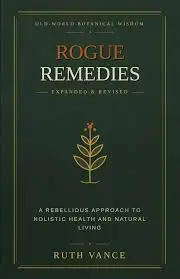
Rogue Remedies is presented as an herbal remedies guide focused on traditional approaches to common health complaints. The sales pitch appeals to people who are interested in natural remedies and would rather explore herbs before reaching for conventional painkillers, sleeping products or other medications.
That is an understandable reason to be interested in the book. There is plenty of legitimate information available about medicinal plants, traditional herbal practices and the compounds found in different herbs. The problem is that a guide covering natural remedies still needs to be judged by the quality of the information it provides. “Natural” does not automatically mean safe, effective or suitable for everyone, particularly when someone is taking prescription medication or has an underlying medical condition.
For me, the question is therefore less about whether herbs have any value at all and more about whether Rogue Remedies gives readers reliable information for the $29 being charged.
Who Is Ruth Vance?
The author information is one of the first things I would want to examine before buying Rogue Remedies.
The sales page presents the guide under the name Ruth Vance, but the author credentials shown to potential buyers do not appear to provide enough independently verifiable information to establish a clear professional background in herbal medicine or healthcare. The author photograph has also raised questions because it appears unusually artificial and may have been generated or heavily altered using AI.
That does not, by itself, prove that the book is fake or that nobody named Ruth Vance is involved with it. An AI-generated photograph is not evidence that a product cannot contain useful information. What it does mean is that I would be hesitant to rely on the photograph as evidence of expertise, particularly when the sales page does not clearly establish the author’s qualifications.
If I am paying for a health-related guide, I want to know who wrote it, what their relevant experience is and where their information comes from. That is even more important when the material discusses conditions such as anxiety, chronic pain or sleep problems.
The Rogue Remedies Review Numbers Don’t Appear Consistent
Another thing that caught my attention was the review count displayed on the website.
One part of the Rogue Remedies website reportedly shows 1,478 reviews, while another shows 1,378. That is a difference of 100 reviews, which is not something I would automatically call proof of fake reviews, but it is certainly worth questioning.
Review numbers can change as new reviews are added, websites can contain outdated sections and different widgets can sometimes display different figures. So there are perfectly ordinary explanations for a discrepancy like this. The problem is that when the product is relying heavily on testimonials to persuade people to spend money, consistency becomes more important.
The Amazon listing also reportedly has considerably fewer reviews than the number promoted on the Rogue Remedies website. Again, that does not prove the website’s reviews are fabricated. The book could be sold through different channels, and customers who bought directly from the author’s website would not necessarily leave an Amazon review.
Still, when I see a health product making a large review-count claim that does not line up neatly with the reviews I can find elsewhere, I would rather treat the number as a marketing claim than assume it represents thousands of independently verified buyers.
What About the Amazon Reviews?
The Amazon reviews are worth looking at because they provide another place to see what actual buyers are saying about the guide.
Not every review attached to the listing is marked as a Verified Purchase, which means the review section needs to be read with some care. Verified Purchase labels do not guarantee that a review is accurate, but they do provide useful information about whether Amazon has confirmed that the reviewer purchased the product through its system.
There are also verified reviews that contain negative feedback, which is perfectly normal for a book or digital product. A genuine product does not need every customer to love it. In fact, I usually find a mixture of positive and negative opinions more useful than a review section where every person appears to have had exactly the same experience.
That is one reason I would not judge Rogue Remedies simply by counting positive testimonials. Read what the buyers actually say, pay attention to criticism as well as praise and compare those comments with the claims made on the sales page.
Why Are Similar Comments Showing Up Under YouTube Videos?
Another issue worth mentioning is the appearance of similar comments under YouTube videos promoting Rogue Remedies.
This is difficult to interpret without access to the people behind each account. Similar comments do not automatically prove that the comments were manufactured or posted by the seller. People watching the same promotional video can easily repeat similar phrases, particularly when the video itself uses strong marketing language.
At the same time, repeated comments that sound almost identical can make a product’s social proof less convincing. When I am researching something before spending money, I would rather see detailed comments describing what someone actually liked or disliked about the product than dozens of short comments that simply repeat how amazing the book supposedly is.
That is especially true for a $29 digital health guide, where the main thing a buyer is paying for is the quality of the information.
Can Rogue Remedies Replace Painkillers or Anxiety Medication?
This is the part of the Rogue Remedies marketing that deserves the most caution.
There is nothing unusual about a book discussing herbs traditionally used for discomfort, relaxation or sleep. There is also research into individual herbs and their potential effects. The problem comes when a marketing page starts giving readers the impression that herbal remedies can simply take the place of medications.
Painkillers, sleeping medications and anxiety medications are not interchangeable with a downloadable herbal guide. Someone experiencing persistent pain, severe anxiety or ongoing sleep problems may have an underlying condition that needs proper evaluation, and some herbs can interact with prescription medicines or cause side effects of their own.
So I would not buy Rogue Remedies expecting it to replace medical treatment. A guide can introduce you to traditional herbal practices, but that is very different from proving that those remedies can safely substitute for a prescribed medicine.
This is also why the author’s qualifications matter. If someone is making health recommendations that could influence how readers manage an existing condition, I would want more than an attractive sales page and a collection of testimonials.
Is Rogue Remedies a Scam?
I would be careful about calling Rogue Remedies a scam solely because of the issues surrounding the website.
The $29 guide appears to be presented as a real digital product, and the concerns I found are mainly related to how the book is marketed, the unclear author credentials, the inconsistent review counts and the strength of some of the health-related claims. Those issues are enough to make me question the marketing, but they are not the same thing as proving that the downloadable guide contains no useful information.
The bigger question for me is whether the guide delivers enough reliable, well-sourced information to justify paying $29. That is something buyers should consider before being persuaded by the review numbers or the promise of natural solutions to several different health problems.
I would also be particularly cautious if the sales page makes it sound as though herbs can replace medication. That is a much stronger claim than simply saying that certain plants have a history of traditional use.
Is Rogue Remedies by Ruth Vance Legit or Worth $29?
Whether Rogue Remedies is worth $29 ultimately comes down to what you expect from it. If you are looking for a general introduction to traditional herbal remedies and understand that a digital guide is not a substitute for medical care, the concept may sound appealing. But if you are buying it because the marketing makes you believe that herbs can replace your pain medication, anxiety treatment or sleep medication, I would not make that purchase based on those promises.
The inconsistent review numbers also make me less interested in using the website’s testimonials as a reason to buy. Seeing 1,478 reviews in one location and 1,378 somewhere else is not enough to prove anything dishonest happened, but it is an unnecessary inconsistency when the product is trying to establish credibility through social proof. The smaller number of reviews visible on Amazon adds another reason to look at the actual customer feedback rather than simply accepting the large number displayed on the sales page.
The author photograph is another piece of the puzzle. If the image really was AI-generated, that does not tell me whether the book itself is useful, but it does make me want much more transparency about who Ruth Vance is and what qualifications or experience she has in the subject.
What I Think About The Rogue Remedies
After looking at the way Rogue Remedies is presented, I would not buy the guide simply because the website claims thousands of reviews or because the sales page makes herbal remedies sound like an easy alternative to conventional treatments.
The $29 price is low enough that some people may consider it a relatively small gamble, but the value of a health guide depends on the quality and accuracy of the information inside it. That makes the author’s background, the sources used in the book and the wording of the health claims much more important than the number of testimonials displayed beside the purchase button.
For me, the biggest concern is the marketing rather than the idea of learning about herbs. Traditional herbal remedies are a legitimate subject worth researching, but readers deserve clear information about what is actually known, what is based on traditional use and what remains uncertain. A guide that blurs those lines can leave readers with an exaggerated impression of what herbs can do.
Conclusion
So if you are searching for Rogue Remedies reviews, or wondering whether Rogue Remedies is worth buying, I would approach the purchase with some caution. I would not treat the large review count as proof of quality, I would not assume the author photograph proves expertise, and I would certainly not use the book as a reason to stop taking prescribed medication.
At $29, the decision may not seem like a major one, but health information is worth approaching a little more carefully than an ordinary digital download. Before buying, I would want to know exactly who wrote Rogue Remedies, what qualifications they have, what sources the guide relies on and whether the book presents herbs as traditional options or as proven replacements for medical treatment. Those answers matter far more than a big number printed beside a five-star rating.
Check out Mansculpt wave therapy plus that I talked about earlier.