
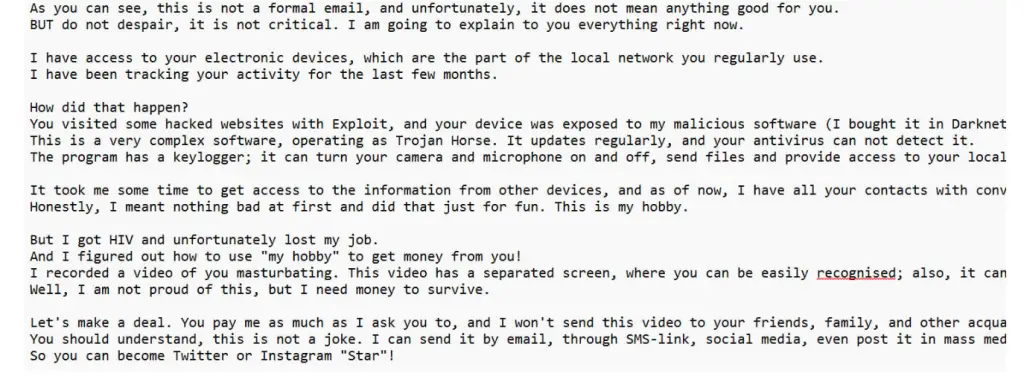
If you’ve ever opened your inbox and seen an email that starts with “We’ve known each other for a while”, you probably felt your heart drop for a second. The message usually goes on to say something like: “I’ve hacked your computer and recorded you through your webcam. If you don’t send me Bitcoin, I’ll send the video to your contacts.”
Yeah, that one. It’s going around a lot lately, and it’s 100% a scam.
In this post, I’ll break down what this “We’ve Known Each Other For A While” email scam really is, why people fall for it, and what you should do if you ever get one. Let’s keep it real and simple.
What the “We’ve Known Each Other For A While” Email Actually Is
This email is part of a sextortion scam, basically a fake blackmail attempt designed to scare you into sending money. The scammer claims they’ve hacked your device, watched you through your webcam, and recorded something embarrassing. Then they demand you send them a ransom in Bitcoin or another cryptocurrency, usually giving you a deadline like 48 hours.
The truth?
They don’t have anything on you. They never hacked you.
These scammers send out thousands of emails at once hoping that a few scared people will fall for it and pay up. It’s emotional manipulation, not real hacking.
How They Try to Make It Look Real
Here’s why this scam catches people off guard, it’s crafted to sound believable.
- They sometimes include one of your old passwords.
Don’t panic, that password probably came from an old data leak. Scammers buy leaked info from the dark web to make their lies look legit. - They make it sound technical.
The email might say they installed “a Trojan” or “malware” that gave them access to your camera. They throw around tech words hoping you won’t question them. - They play with fear and shame.
They know that once you start imagining what could happen if your contacts really saw something embarrassing, you’ll panic and act fast. - They demand crypto. Bitcoin is untraceable, which means once you send it, it’s gone for good. That’s why scammers love it.
What You Should Do If You Get This Email
First thing, don’t freak out. Seriously, it’s fake.
Here’s what you should do instead:
- Don’t reply. You’re not dealing with a real hacker. Just delete or report it.
- Don’t send money. They don’t have any footage or evidence, they’re bluffing.
- Change your passwords if you see one you’ve used before in the email.
- Turn on 2FA (two-factor authentication) on your accounts for extra safety.
- Run a quick antivirus scan if you just want peace of mind.
- Mark the email as spam or phishing so your email provider filters similar ones.
- Tell someone. Scammers rely on silence and shame, talking about it helps others avoid it too.
If you want to check whether your info was in a data leak, use HaveIBeenPwned.com, it’s a trusted free tool that shows where your email might have been exposed.
Why People Fall for It
Scammers know how to mess with emotions. Even people who are tech-savvy sometimes freeze when they see something that feels personal or threatening.
The mix of “I know you,” an old password, and a scary message is designed to make you panic and act without thinking. Remember, it’s all about fear, not facts.
Tips to Avoid Phishing Scams:
- Be Skeptical of Unexpected Communications:
- Be cautious with unsolicited emails, texts, or calls, especially those asking for personal or financial information.
- Verify the Source:
- Always verify the sender’s email address or phone number. Scammers often use addresses or numbers that look similar to legitimate ones.
- Look for Red Flags:
- Check for spelling and grammatical errors, generic greetings (e.g., “Dear Customer”), and urgent or threatening language.
- Don’t Click on Suspicious Links:
- Hover over links to see the actual URL before clicking. If it looks suspicious or doesn’t match the purported sender, don’t click it.
- Check the Website’s Security:
- When entering personal information online, ensure the website is secure. Look for “https://” in the URL and a padlock icon in the browser’s address bar.
- Avoid Downloading Attachments:
- Don’t open email attachments from unknown or suspicious sources. These could contain malware.
- Use Multi-Factor Authentication (MFA):
- Enable factor Authentication on your accounts so as to add an extra layer of security. This makes it harder for scammers to gain access even if they have your password.
- Report Phishing Attempts:
- Report suspicious emails to your email provider and the organization being impersonated. In the U.S., you can forward phishing emails to the Anti-Phishing Working Group at [email protected] and to the FTC at [email protected].
What Do You Do When You Suspect A Phishing Attempt
In this digital age and time, almost everyone has at one time received a phishing text or email and often times they fall victim and get scammed. This is why it is imperative that you are always careful when you receive any text or email because one careless click on a link can cause a whole lot of problems for you. Now if you suspect a phishing attempt, here is what I advise you do:
- Do Not Respond to the text, because you responding is actually giving access to the scammers, simply delete it when you receive.
- Quickly change your password if you have mistakenly clicked on the link or given away your login details. Change your password to a strong and unique password.
- Keep an eye on your accounts for any unauthorized transactions.
- Also scan you devices for any malware.
By following these tips, you can significantly reduce your risk of falling victim to phishing scams and keep your personal and financial information safe.
Conclusion
The “We’ve Known Each Other For A While” email scam is nothing more than a cheap scare tactic. The people behind it don’t know you, they haven’t hacked your computer, and they don’t have any videos.
If you get one, ignore it, report it, and move on. The more people talk about scams like this, the fewer victims these scammers can manipulate.
Stay smart, stay calm, and never send money to anyone threatening you online.
Just like the Disney Plus Scam Emails, the “We’ve Known Each Other For A While” Scam Email is a scam and everyone should be careful so you don’t fall victim.