
Robot vacuums are turning into full-blown robotic cleaning stations now. A few years ago, getting a robot vacuum that simply moved in straight lines felt impressive. Now companies are throwing around phrases like AI obstacle recognition, 25,000Pa suction power, hot water mop washing, laser navigation systems, and self-cleaning docking stations like we’re living inside a sci-fi appliance showroom. One of the newest names entering that battle is the Bcdroid A10 Ultra Robot Vacuum.
The marketing for this thing is aggressive. Massive suction numbers, AI-powered navigation, automatic mop cleaning, pet hair handling, edge cleaning, cable avoidance, all packed into one machine promising near hands-free floor maintenance.
But once you step outside the polished ads and start looking at how robot vacuums actually behave in real homes, the picture becomes a little more complicated.
What Is the Bcdroid A10 Ultra Supposed to Do?
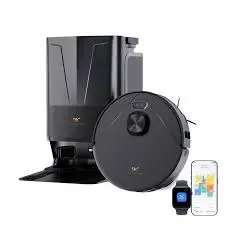
According to the product claims, the Bcdroid A10 Ultra Robot Vacuum combines:
- 25,000Pa suction power
- AI obstacle recognition
- RGB camera navigation
- Triple-line laser mapping
- Hot water mop washing
- Self-emptying dock
- Edge cleaning extensions
- Carpet detection
- Pet hair management
In simple terms, the company is trying to position this as a premium “do almost everything for you” cleaning system.
The 25,000Pa Suction Claim Sounds Wild… Because It Is
This is probably the first thing people notice.
The advertised suction number for the Bcdroid A10 Ultra Robot Vacuum sounds absurdly high compared to older robot vacuums. On paper, it suggests near industrial-level cleaning power packed into a compact autonomous machine.
But suction numbers in robot vacuum marketing can become misleading fast. Higher suction does not automatically equal dramatically better real-world cleaning. Floor type, brush design, airflow efficiency, debris pickup mechanics, navigation patterns, and battery management all matter just as much. Some companies also measure suction differently, making direct comparisons confusing for buyers.
So while the vacuum may absolutely deliver strong cleaning performance, those giant numbers alone shouldn’t be treated like guaranteed magic.
Deep Carpet Cleaning Still Pushes Battery Limits
One thing robot vacuums constantly battle is balancing power versus runtime.
The Bcdroid A10 Ultra Robot Vacuum reportedly uses a 6400mAh battery, which sounds solid on paper. But when maximum suction activates on thick carpet alongside advanced navigation systems, spinning brushes, AI cameras, and mop functions, power drains quickly.
That’s where many premium robot vacuums still hit physical limitations.
Deep carpet extraction, especially with pet hair, remains one of the hardest tasks for autonomous cleaners. Even strong robot vacuums can require multiple passes compared to upright vacuums designed specifically for heavy carpet cleaning. So while the A10 Ultra may handle daily maintenance well, buyers expecting it to fully replace deep manual vacuuming forever may need slightly more realistic expectations.
The AI Obstacle Avoidance Is Probably the Most Important Feature
This is where robot vacuums either feel futuristic or become incredibly annoying.
The Bcdroid A10 Ultra Robot Vacuum uses a mix of RGB camera vision and triple-line laser mapping to recognize objects and avoid collisions. In controlled environments, systems like this can work surprisingly well.
But real homes are chaotic.
Charging cables, socks, pet toys, dark rugs, reflective furniture, loose slippers, and uneven lighting constantly challenge robotic navigation systems. Some AI obstacle systems handle clutter intelligently one day, then randomly panic around harmless objects the next. That inconsistency still exists across almost every robot vacuum brand right now.
The difference usually comes down to how often those mistakes happen.
The Docking Station Is Trying to Do Everything
Modern robot vacuum docks are basically becoming mini appliances themselves.
The all-in-one station for the Bcdroid A10 Ultra Robot Vacuum includes:
- Hot water mop washing
- Automatic dust emptying
- Mop drying
- Water management
- Charging
- Brush maintenance systems
The 60°C hot water mop cleaning feature is particularly interesting because it addresses one of the nastiest realities of robot mops, dirty mop pads spreading grime around repeatedly That said, more automation also means more moving parts, more maintenance, and more potential failure points long term. Self-cleaning systems reduce manual work, but they don’t completely eliminate upkeep forever.
Edge Cleaning Still Isn’t Perfect
The marketing videos for robot vacuums always show perfect corner cleaning like the machines are tiny obsessive detailers.
Reality is usually messier.
The Bcdroid A10 Ultra Robot Vacuum appears to include extending edge brushes and corner outreach features, which definitely help. But corners, table legs, tight furniture gaps, and awkward room layouts still remain difficult areas for most robotic cleaners.
Robot vacuums have improved massively, but physics still exists.
Is Bcdroid a Legit Brand?
This is where some buyers may hesitate.
Unlike established robot vacuum companies with long reputations, newer smart home brands often face skepticism simply because consumers have less history to judge reliability, software support, warranty handling, and long-term durability.
That doesn’t automatically make the Bcdroid A10 Ultra Robot Vacuum fake or a scam. But with expensive smart home hardware, brand support matters almost as much as the hardware itself.
Especially once software updates, replacement parts, and app reliability enter the picture.
Is the Bcdroid A10 Ultra Worth Buying?
The Bcdroid A10 Ultra Robot Vacuum looks like an ambitious premium robot vacuum packed with modern features consumers genuinely want, strong suction, advanced navigation, AI obstacle recognition, self-cleaning systems, and automated mopping.
But the marketing absolutely pushes the technology toward “perfect fully autonomous cleaning robot” territory faster than reality probably allows right now.
Conclusion
The vacuum may perform very well for daily maintenance and smart home convenience, especially in cleaner, organized environments. But deep carpet cleaning, cluttered navigation, edge precision, and long-term reliability are still areas where even premium robotic cleaners continue evolving.
This doesn’t look like a scam product. It looks more like another example of smart home technology becoming genuinely impressive while still occasionally reminding you that robots are not quite human-level housekeepers yet.
Just like Fuelsync, it does not work as claim.