
Robot lawn mowers are starting to feel a lot like robot vacuums did a few years ago. At first, people laughed at them. Now? More homeowners are seriously considering letting AI-powered machines handle yard work completely. One of the biggest names entering that high-end battle is the WORX Landroid Vision 4WD WR344, a premium robotic mower promising wire-free navigation, advanced AI vision tracking, RTK-level positioning, and enough climbing power to tackle steep hills most robotic mowers avoid entirely.
On paper, it sounds incredibly impressive.
But when a robotic mower starts approaching the price of a serious appliance purchase, people naturally want to know whether the technology actually works in real-world yards or whether the marketing is racing ahead of reality again.
What Makes the WORX Landroid Vision 4WD WR344 Different?
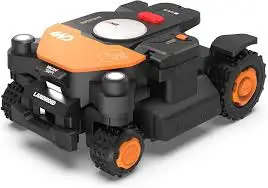
The biggest thing separating the WORX Landroid Vision 4WD WR344 from older robotic mowers is the removal of perimeter wires.
Traditional robot mowers usually depend on buried boundary wires to understand where they can and cannot cut. That setup works, but installation can become a frustrating project all by itself. WORX is trying to skip that entire process by combining:
- RTK Cloud GPS positioning
- vSLAM mapping
- AI-powered stereo vision cameras
- Smart obstacle detection
- 4WD terrain handling
In simple terms, the mower is constantly trying to “see” and understand your yard instead of blindly bouncing around it.
That’s a major leap forward in theory. The problem is that outdoor environments are messy, unpredictable, and full of things AI systems still struggle with.
- RTK Cloud GPS positioning
- vSLAM mapping
- AI-powered stereo vision cameras
- Smart obstacle detection
- 4WD terrain handling
In simple terms, the mower is constantly trying to “see” and understand your yard instead of blindly bouncing around it.
That’s a major leap forward in theory. The problem is that outdoor environments are messy, unpredictable, and full of things AI systems still struggle with.
The Navigation System Looks Impressive… Until Heavy Shade Appears
One of the biggest real-world challenges for smart outdoor robotics is inconsistent signal reliability.
The WORX Landroid Vision 4WD WR344 relies heavily on sensor fusion, meaning multiple technologies work together simultaneously to maintain accurate navigation. In open yards with strong sky visibility, the system appears surprisingly capable. The mower can create cleaner cutting paths and smarter movement patterns than older random-navigation models.
But dense trees, heavy shade, narrow side yards, fences, and complicated landscaping can still create problems. That’s where even premium robotic mowers sometimes begin hesitating, rerouting awkwardly, or struggling with positioning consistency. RTK GPS is powerful technology, but it still depends on maintaining stable environmental reference points. Once those conditions become cluttered, performance can become less predictable.
And unfortunately, real residential lawns are rarely perfect test environments.
The 4WD System Is Probably the Most Interesting Part
This is where the WORX Landroid Vision 4WD WR344 genuinely separates itself from many competitors.
Most robotic mowers hate hills. Once slopes become aggressive, cheaper units start slipping, digging ruts into grass, or simply giving up entirely. WORX clearly designed this model specifically to attack that weakness.
The adaptive 4WD chassis combined with front-wheel steering gives the mower far better traction than typical robotic systems. On moderate hills, it appears significantly more stable than older robotic mowers many homeowners are used to.
But that advertised 84% slope capability deserves context. Technically, the mower may handle steep inclines under ideal conditions, but real lawns include loose soil, wet grass, uneven traction, roots, bumps, and muddy sections. Pushing a robotic mower close to maximum advertised slope ratings repeatedly could still create wheel spin or turf damage in certain situations.
Marketing numbers always assume perfect conditions. Real yards rarely cooperate that nicely.
The Vision AI Still Has “Robot Brain” Moments
AI vision systems are improving fast, but they still occasionally behave like robots trying very hard to pretend they understand the world perfectly.
Early users discussing the WORX Landroid Vision 4WD WR344 mention moments where the mower handles obstacles intelligently one day, then awkwardly repositions itself around harmless objects the next. That inconsistency is pretty common with emerging AI navigation hardware.
Sometimes the system looks incredibly advanced. Other times it reminds you the machine is still interpreting your yard through cameras, sensors, and software guesses. That doesn’t make the mower bad. It just means buyers expecting flawless sci-fi automation may need to dial expectations back slightly.
The Setup Is Easier Than Wire Systems, But Not “Effortless”
One thing worth giving WORX credit for is simplifying installation compared to older perimeter-wire robotic mowers.
The lack of buried wire setup removes a massive headache for homeowners. But “wire-free” doesn’t necessarily mean completely maintenance-free or zero setup frustration. Smart mapping, calibration, app syncing, and positioning adjustments still require patience, especially for larger or more complicated properties. This is still advanced outdoor robotics, not magic.
Is It Actually Worth the Premium Price?
That depends heavily on the kind of homeowner you are.
If you:
- Love smart home technology
- Have a large or hilly yard
- Hate mowing regularly
- Want advanced automation
- Enjoy experimenting with premium gadgets
Then the WORX Landroid Vision 4WD WR344 probably feels exciting.
But if you expect perfection right out of the box with zero maintenance, zero mapping tweaks, and flawless navigation in every environment, you may end up frustrated. The technology is impressive, but robotic outdoor systems still have real-world limitations companies rarely emphasize in advertisements.
Is the WORX Landroid Vision 4WD WR344 a Scam?
No, the WORX Landroid Vision 4WD WR344 does not appear to be a scam. This is a real high-end robotic mower packed with genuinely advanced technology. The AI vision system, RTK-assisted navigation, and 4WD terrain handling make it one of the more ambitious consumer robot mowers currently entering the market.
But the marketing absolutely pushes the technology toward “perfect autonomous lawn care” territory faster than reality probably allows right now.
Conclusion
The mower looks most impressive in cleaner, more open environments with manageable terrain. Complex landscaping, heavy shade, extreme slopes, and inconsistent yard layouts still challenge even premium robotic systems.
In other words, this feels less like a fake product and more like very early futuristic lawn technology that’s impressive, expensive, and still learning how to behave like it belongs in every backyard.
Just like Fuelsync, it does not work as claim.