
Onyclean is one of those products that caught my attention because there is surprisingly little solid information about it. The Onyclean Anti-Fungal Pen is being promoted as an easy brush-on treatment for problem nails, with ingredients such as Vitamin E, jojoba seed oil and bergamot oil. The idea is simple enough: instead of dealing with creams or other messy treatments, you twist the pen, brush the formula onto the nail and repeat the process twice a day.
That sounds convenient, but convenience is not really what made me look twice at Onyclean. The bigger question is what exactly this product is, who is behind it and whether there is enough evidence to justify the claims being made around it. After looking through the available information, I would be cautious about treating Onyclean as a proven anti-fungal treatment. The product itself may be real, but it is a very new name with limited independent information, and most of what you can find about it comes from promotional material rather than established customer or clinical sources.
What is Onyclean?
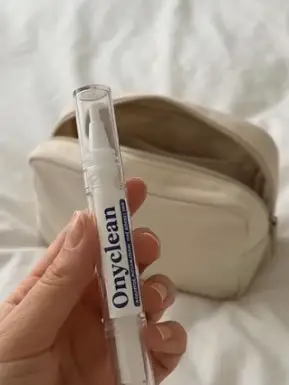
The Onyclean Anti-Fungal Pen is a small brush-style applicator designed to be applied directly to the nail and surrounding skin. According to the product’s published directions, the nail should first be washed and dried, then the base of the pen is twisted to release the formula before a thin layer is brushed onto the affected area. The recommended routine is twice a day, in the morning and at night.
The formula is another part of the marketing. Onyclean highlights Vitamin E, bergamot oil and jojoba seed oil, while the published ingredient list also includes squalane, sea buckthorn fruit oil, fragrance and several carrier ingredients. What I noticed, however, is that the website gives the ingredients but does not provide their concentrations. That makes it difficult to judge how much of the highlighted ingredients are actually present in each pen.
The product is clearly designed to appeal to people who want something simple and less intimidating than visiting a clinic or using a more complicated treatment. A little pen that can sit in a bathroom cabinet and be brushed onto a nail twice a day is an easy concept to sell. The question is whether the convenience comes with enough evidence behind it.
My biggest problem with Onyclean is how little history it has
When I look at a product like this, I expect to find some kind of track record. That might be independent reviews, long-term customer experiences, retailer listings, clinical information, or at least a history that makes it possible to work out where the product came from and how long people have actually been using it.
Onyclean does not have much of that at the moment. The most recent material I found describing the product was published on October 1, 2026, and even that article identifies itself as a paid advertorial and says the finished pen has not been independently tested for the review. It also states that no independent study of the finished product was located.
That is a fairly important detail for anyone searching for Onyclean reviews. There is a big difference between a product having a published ingredient list and having independent evidence that the finished product actually works. At the moment, the first one exists. The second one is much harder to find.
I also found no established body of independent Onyclean customer reviews during my search. The product’s own material reports a 4.8 rating from more than 21,000 customers, but it does not identify a named third-party review platform for those numbers. The same material displays several testimonials on the sales page. Those are claims presented by the seller, rather than reviews I would treat as independently verified customer feedback.
It looks like a generic product with a brand name attached
From the information available, I cannot establish a clear manufacturing history for the pen. The manufacturer or formulator is not identified in the materials I reviewed, while several different names appear across the storefront and promotional pages, including Onyclean, BioCore Renew and Core Renew. There are also different business names and addresses associated with the various pages.
That does not prove that Onyclean is a scam or that it is definitely being dropshipped from China. I would not make that claim without evidence showing where the actual product is manufactured and shipped from. But it does leave me with the impression of a fairly generic brush-on nail product that has been given its own branding and sold through promotional landing pages.
For me, that matters because there is a difference between knowing that a product exists and knowing who actually makes it. If I am buying something that is supposed to address a persistent nail problem, I would rather have a clear manufacturer, established product history and independent information about the formula than a polished sales page with very little background behind it.
The ingredient list sounds better than the evidence
Onyclean puts a lot of attention on its plant oils and Vitamin E. Jojoba seed oil, bergamot oil, sea buckthorn oil, squalane and Vitamin E all sound appealing when they are presented together, especially in a product marketed as a gentler alternative to more aggressive treatments.
But ingredients by themselves do not prove that a finished product can clear a fungal nail infection.
This is something I think gets lost in a lot of online product advertising. An ingredient can have a particular property in isolation without proving that a specific finished product containing that ingredient will produce the results being advertised. In Onyclean’s case, I could not find an independent clinical study on the finished pen that demonstrates the advertised results. The available review material makes the same point: the ingredients are published, but the finished product has not been independently tested in the material examined.
There is also no percentage given for the main ingredients. So when the page highlights Vitamin E, bergamot and jojoba as its key ingredients, I still do not know how much of each is actually in the pen. That is useful information I would want before deciding whether the formula is worth paying for.
What about the anti-fungal claims?
This is where I would be particularly careful with the wording.
Onyclean is marketed around nail fungus and problem nails, but the evidence I could find does not allow me to say that Onyclean works for fungal nails. There is no independent clinical trial of the finished pen that I could locate, and the percentage-based results used in promotional material are not accompanied by enough information to independently evaluate them.
That does not prove the pen does nothing. It simply means there is not enough independent evidence for me to tell readers that it is an established treatment.
There is another reason I would not rely entirely on an online nail pen when dealing with a persistent nail problem. Discolored or thickened nails are not automatically caused by fungus. Injuries, psoriasis and other conditions can produce similar changes, and figuring out what is actually causing the problem matters before choosing a treatment.
So if somebody has been dealing with a nail that has changed significantly and they are assuming it must be fungus, I would not let a product advertisement make that diagnosis for them.
Onyclean pricing is not as straightforward as it first appears
Another thing I noticed while looking into Onyclean is that there is not one simple price that applies everywhere.
The brand’s storefront currently shows a $14.99 one-time option and a $9.99 subscription that renews every 30 days. A separate promotional offer page shows different package prices, including $39.98 for one pen, $69.96 for three and $99.99 for six.
That is something I would pay attention to before entering payment details. When the same product appears on different sales pages with different pricing structures and terms, I want to know exactly which offer I am buying and whether it comes with recurring billing.
The storefront clearly advertises an auto-renewing option. The promotional page I reviewed did not make the subscription terms equally clear, so I would not assume the two purchasing routes operate in exactly the same way. The order summary and confirmation email should be checked carefully before payment.
For me, this is not about making the price sound worse than it is. A $14.99 product and a $99.99 bundle are very different purchases, and a subscription is different again. Buyers should know exactly which one they are agreeing to.
The return policy also deserves a closer look
The same issue comes up with the refund terms.
The storefront says returns are available within 90 days of delivery, with conditions around authorization and original packaging, and generally requires the customer to pay return shipping. The promotional offer page also refers to a 90-day guarantee, but its wording is not identical to the storefront’s policy.
That may sound like a small technical issue, but it becomes important when you are buying a product online and have never used it before. I would want to know which policy applies to my actual order, particularly if I am buying through an advertisement that takes me to a separate sales page.
I would also keep the order confirmation and the page showing the price and offer at the time of purchase. If there is ever a disagreement over what was promised, having those records is much better than trying to remember what the advertisement said weeks later.
Does Onyclean have real customer reviews?
This is one of the weakest parts of the Onyclean story for me.
The brand claims a very large number of customers and displays a high rating, but I could not find the kind of independent review history I would normally expect from a product with such a large customer base. The available promotional material itself says that its search for independent Onyclean reviews did not turn up independent pages about the product.
That does not mean the customers are fake, and I would not make that accusation without evidence. It simply means that the large customer number should not be confused with a large, independently verifiable review history.
When I see a new product claiming thousands of happy customers but cannot find much discussion outside its own sales material, I become more interested in the missing information than the headline rating.
That is especially true with a product that is making health-related claims.
Is Onyclean a scam?
I would not call Onyclean a confirmed scam based on what I found. There is an actual product, a published ingredient list, instructions for use and identifiable purchasing pages. The bigger issue is that there is not enough independent information to give the product the level of confidence its marketing seems to invite.
The product also has some characteristics that make it look like a newly branded generic item rather than an established nail-care brand. The manufacturer is not clearly identified in the material reviewed, independent reviews are difficult to find, and the evidence supporting the finished product’s anti-fungal claims is limited. The different sales pages also make the pricing, subscription and return information more complicated than I would like.
So if the question is “Is Onyclean legit?”, my answer would be that I cannot establish that it is fraudulent, but I also would not describe it as a well-established, independently proven anti-fungal treatment. Right now, there is simply too much of the product’s story coming directly from its own marketing.
What I would want to know before buying Onyclean
If I were considering this product, I would want straight answers to a few basic questions before paying for it. Who manufactures the pen? Where is it actually made? What is the concentration of each highlighted ingredient? Is there an independent laboratory or clinical study on the finished formula? Which refund policy applies to the exact checkout page? Is there any recurring charge attached to the order?
I would also want to know exactly what the seller means when it calls the product anti-fungal. If the product is being sold as a cosmetic nail-care formula, that is different from having evidence that it treats an actual fungal infection. The sales language should not be allowed to blur those two things.
And if I were buying it, I would save a screenshot of the offer, price and terms before checking out. With multiple Onyclean sales pages showing different prices and conditions, that is a simple precaution that could save a lot of frustration later.
Conclusion
After looking into Onyclean, I think the product is much less established than its advertising makes it appear.
The brush-pen idea is convenient, and the ingredient list is available. Vitamin E, jojoba oil, bergamot oil, squalane and sea buckthorn oil may sound like a pleasant nail-care formula, but I could not find independent clinical evidence showing that the finished Onyclean pen clears fungal nail infections. The product also has very little independent review history, and the manufacturer is not clearly identified in the material I reviewed.
That is why I would not buy Onyclean based purely on its before-and-after advertising or the high review number displayed on its own sales material. The biggest problem for me is not that the pen looks unusual or that the ingredients are unfamiliar. It is that there is not enough independent history behind the product to know whether the marketing matches the real-world results.
The possibility that this is simply a generic, private-label or dropshipped nail pen is something I would keep in mind, but I would not state that as a confirmed fact without evidence of its supply chain. What can be said is that Onyclean currently looks like a relatively new and lightly documented product, and that is not enough for me to treat its anti-fungal claims as proven.
For anyone searching Onyclean reviews, that is probably the most useful takeaway: the pen may be a real product, but the evidence surrounding it is much thinner than the sales page would have you believe.
Check out Mansculpt wave therapy plus that I talked about earlier.