
BlueLume Glasses are being marketed as a convenient answer for people who are tired of switching between reading glasses, computer glasses and sunglasses. The idea is appealing. One pair is supposed to help with near and far viewing, filter blue light from screens and darken when you go outside, so you can supposedly wear the same glasses throughout the day instead of keeping several pairs nearby.
At first glance, there is nothing particularly strange about the concept. Photochromic lenses are real, ready-to-wear reading glasses are common and blue-light filtering coatings are widely sold. What made me look more closely at BlueLume was the way all of these fairly familiar features are packaged together and presented as though they create a much more advanced vision solution than a normal pair of mass-produced glasses. After looking into the product and the claims around it, I think buyers need to separate what the lenses can reasonably do from what the advertising may lead them to expect.
What are BlueLume Glasses?
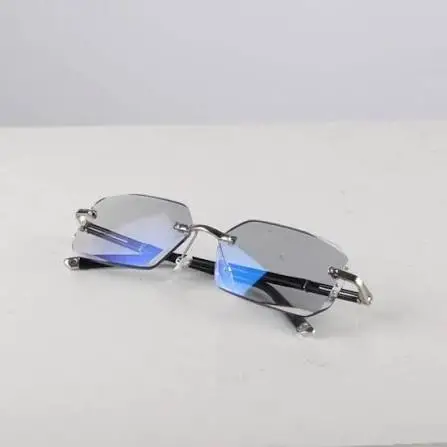
BlueLume Glasses are non-prescription, ready-to-wear glasses designed around several features in one frame. The product is promoted as having near-to-far viewing support, photochromic lenses that darken outdoors, a blue-light filtering feature and a lightweight frame. The package is also advertised as including a protective case and cleaning cloth.
The appeal is easy to understand. If you normally keep reading glasses on your desk, another pair in your car and sunglasses by the door, having one pair that can adapt to different situations sounds useful. The BlueLume sales material specifically presents the glasses as an alternative to constantly changing between different types of eyewear.
The problem is that “one pair for everything” sounds much better than it actually works for many people’s individual eyesight needs. A ready-to-wear lens is not the same thing as a prescription made specifically for your eyes, and that matters when the product is being marketed as something that can handle both near and far vision.
The photochromic feature is real, but it is not unique to BlueLume
One part of the BlueLume advertising that I would not make into a bigger mystery than it needs to be is the transition lens claim. Photochromic lenses have been around for years. They are designed to darken when exposed to ultraviolet light and become clearer again when the wearer moves indoors.
So when BlueLume says its lenses can change from clear to darker outdoors without batteries or electronics, that is a perfectly plausible type of lens technology. Photochromic eyewear is readily available from many manufacturers and sellers. There are even generic photochromic and blue-light glasses being sold through large marketplaces at considerably lower prices than the promotional prices attached to branded versions.
What I would not do is assume that the existence of photochromic technology automatically proves that BlueLume is a special or superior product. It simply means that one of its main advertised features is based on an established type of lens.
There are also practical limitations with photochromic glasses. The speed and degree of darkening can vary, and the lenses may not behave exactly the same way in every environment. For example, the BlueLume promotional material itself acknowledges that windshield UV filtering can affect how quickly the lenses darken while driving.
That is very different from the impression you can get from a short advertisement showing someone walking outside and instantly having perfectly tinted sunglasses.
The near-to-far claim is where I would be more careful
The more interesting part of BlueLume is the claim that one non-prescription pair can support viewing from close reading distance to farther away.
This is where I would be cautious about expecting too much from an inexpensive ready-to-wear pair. People’s eyes are not all the same, and somebody who needs a prescription for distance vision, has astigmatism, has different correction requirements between the two eyes or has another diagnosed vision problem cannot necessarily replace that correction with a generic pair of glasses bought online.
BlueLume’s own promotional material acknowledges that a custom prescription may still be necessary for people with individual vision needs or diagnosed eye conditions. It also says that the product should not be regarded as a replacement for professional eye care.
That qualification is important because “near-to-far” can sound like the glasses are essentially doing the work of prescription progressive lenses. They are not automatically equivalent simply because the marketing uses similar language.
For someone who only wants inexpensive reading assistance or a convenient pair for occasional use, ready-to-wear glasses may be perfectly adequate. For somebody who actually needs corrective lenses, I would not treat BlueLume as a substitute for an eye examination and properly fitted prescription eyewear.
What about the blue-light filtering?
This is another area where the advertising deserves some context.
BlueLume markets its lenses as filtering blue light and associates that feature with screen use and everyday eye comfort. That sounds attractive if you spend hours looking at a phone, laptop or monitor, but the medical evidence does not support some of the stronger blue-light glasses claims that circulate online.
The American Academy of Ophthalmology says there is no scientific evidence that blue light from digital devices damages the eyes, and it does not recommend special blue-light-blocking eyewear for computer use. It also notes that digital eye strain is more closely associated with things such as reduced blinking, dry eyes and prolonged screen use.
That does not mean somebody cannot personally prefer wearing blue-light filtering glasses. People can find certain lenses more comfortable, and a particular coating may suit someone’s preferences. The issue is the reason for buying them. I would not pay a premium for BlueLume because I believed the glasses were medically protecting my eyes from damage caused by phone or computer screens. The available evidence does not support that expectation.
If screens are making your eyes uncomfortable, taking regular breaks, adjusting screen position and brightness and remembering to blink are much more established approaches. The American Academy of Ophthalmology recommends the 20-20-20 approach, which involves looking at something at least 20 feet away for 20 seconds every 20 minutes.
BlueLume looks more impressive in the advertisement than the product category actually is
This is probably the biggest thing I would point out to anyone reading BlueLume Glasses reviews.
The marketing combines several features that already exist separately and gives them a very convenient “one pair does everything” presentation. Near-to-far viewing, photochromic lenses and blue-light filtering sound impressive when they are listed together, but none of those terms by itself tells you how well the actual glasses will perform for your particular eyesight.
I also found it difficult to separate BlueLume’s own customer-review claims from independently verified customer feedback. One promotional BlueLume site currently claims 27,392 Americans have tested the glasses and displays 2,489 “verified reviews,” along with detailed testimonials from named customers. However, those figures and testimonials are presented on a BlueLume sales site rather than coming from an independent review platform.
That does not automatically make the reviews false. It simply means I would not treat those numbers as independent proof of product performance.
This is especially relevant because the testimonials make some very strong comparisons, including claims about replacing expensive progressive lenses and using the glasses for both reading and driving. Those are individual marketing testimonials, not clinical evidence that the glasses can replace prescription eyewear for the average person.
The price is another thing worth thinking about
BlueLume is sold through promotional-style pages that emphasize discounts, free shipping, guarantees and limited-time offers. One current promotional page advertises a 60% discount and a 90-day money-back guarantee.
That kind of offer is common in direct-to-consumer eyewear, but it can make the original “regular” price less useful as a comparison point. If a pair of glasses is almost always being advertised at a large discount, I would look at what the final checkout price actually is rather than getting too focused on the percentage supposedly being saved.
The bigger question is what you are paying for. If the product is essentially a ready-to-wear photochromic and blue-light filtering pair with some near-vision assistance, there are many products in this broad category. Generic versions of photochromic blue-light glasses are available through major marketplaces for much less than some branded promotional offers. For example, current Jumia listings show generic versions selling for only a few thousand naira, although quality and specifications can vary considerably between products.
That does not prove BlueLume is overpriced, because I cannot verify that the lenses, materials or manufacturing are identical. It does show why I would not assume that the BlueLume branding itself makes the underlying product unique.
Are BlueLume Glasses a medical vision solution?
No, and I think this is one of the most important points to understand before buying them.
BlueLume Glasses are consumer eyewear, not a replacement for a professional eye examination or individualized prescription lenses. If you have blurry distance vision, headaches when reading, double vision, significant changes in eyesight or another persistent vision problem, buying a generic pair of glasses online does not address the underlying reason for those symptoms.
Even the current BlueLume promotional material acknowledges that some people may still require custom prescription lenses and professional eye care.
The glasses may be useful as an inexpensive convenience product for somebody whose needs happen to match the available lens design. That is a much more realistic way to look at them than assuming one pair can replace every type of prescription eyewear.
So, are BlueLume Glasses legit?
I would describe BlueLume as a real consumer eyewear product built around technologies that are themselves real, but I would be careful about the broader impression created by its marketing.
There is nothing inherently unusual about a pair of glasses having photochromic lenses. There is nothing unusual about blue-light filtering coatings either, and ready-to-wear reading glasses have been sold for years. The part that needs more caution is the suggestion that putting these features together automatically gives you a universal vision solution.
I also would not rely heavily on the large review numbers shown on promotional BlueLume pages without independent verification. The brand’s own pages make impressive claims about customer numbers and satisfaction, but those are still seller-presented figures.
For me, the bigger issue is value. If you need a prescription, I would spend the money on an actual eye examination and proper corrective lenses rather than expecting BlueLume to replace them. If you simply want inexpensive ready-to-wear glasses with photochromic and blue-light features, there are plenty of similar products available, so the BlueLume marketing alone does not give me a strong reason to assume that these glasses are dramatically different from the alternatives.
Conclusion
After looking at what BlueLume actually offers, I think the product is easier to understand once you take away some of the marketing language. It is a pair of non-prescription ready-to-wear glasses combining several familiar features: photochromic lenses, blue-light filtering and some form of near-to-far viewing support.
The photochromic part is believable because the technology is established. The glasses can also be useful for someone who wants the convenience of having one pair that changes tint outdoors instead of carrying separate sunglasses. But I would not buy them because I believed the blue-light filtering would protect my eyes from screen damage, because the American Academy of Ophthalmology does not find strong evidence for that claim.
I would also be realistic about the near-to-far feature. It may work adequately for some people, but a generic lens cannot be expected to provide the same individualized correction as prescription eyewear. That becomes particularly important if you already have a known vision problem.
So when people search for BlueLume Glasses reviews, I think the fairest conclusion is that the product should be viewed as convenient ready-to-wear eyewear rather than some revolutionary replacement for prescription glasses. The marketing makes the combination sound more exceptional than the technology itself really is, and I would judge the purchase on the actual price, lens specifications and your personal vision needs rather than on the sales pitch alone.
Check out Mansculpt wave therapy plus that I talked about earlier.