
I have bought enough pairs of reading glasses over the years to know that I am not expecting miracles from an inexpensive pair. What I want is something that is comfortable enough to wear, clear enough to read with, and sturdy enough that the frames do not start falling apart after a few weeks. That is why TruVision Readers caught my attention. They are positioned as affordable everyday reading glasses rather than an expensive prescription eyewear option, with different magnification strengths and styles available for people who simply need a little help seeing small print.
At first, the price is probably what attracts most people. TruVision Readers are considerably cheaper than buying designer frames or having multiple pairs of prescription glasses made, and they are available in different strengths for reading, close-up work and computer use. Some models also include blue-light filtering, which makes them particularly appealing to people who spend a lot of time looking at phones, tablets or computer screens.
After looking at what these glasses actually offer, I think they make more sense when you treat them as inexpensive over-the-counter readers rather than expecting them to perform like custom prescription eyewear. They have some practical advantages for the money, but there are also limitations that are worth understanding before buying.
What are TruVision Readers?
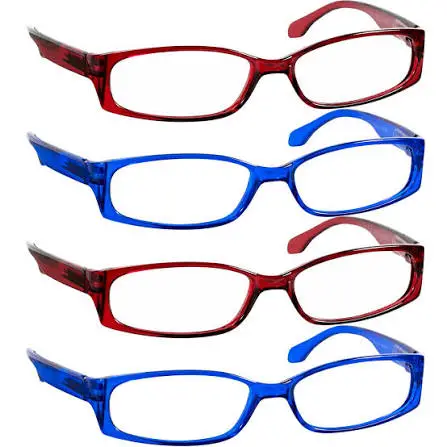
TruVision Readers are ready-to-wear reading glasses available in a range of strengths. They are designed for people who have difficulty seeing small print up close and want an inexpensive pair they can keep around the house, office, car or wherever they normally read.
The frames are generally lightweight, with plastic or polycarbonate construction depending on the model, and some versions have spring hinges intended to make the glasses more comfortable for everyday use. They are sold in different magnifications, so someone who needs a lower-strength reader does not have to buy the same lens strength as somebody who needs stronger magnification.
That basic approach is nothing unusual, but I actually think that is part of the appeal. TruVision is not trying to reinvent reading glasses. The product is essentially meant to give you an affordable pair of readers without having to spend a lot of money every time you need another pair.
The biggest advantage is the price
One of the reasons TruVision Readers have attracted so many buyers is that they are relatively inexpensive, especially when purchased in multipacks. Current retailer listings show TruVision models available in different strengths and multi-pack configurations, making it possible to keep several pairs in different places instead of constantly carrying one pair around. Walmart, for example, currently lists several TruVision Reader models and strengths, with some three-packs selling for around $20 to $25.
That can make a big difference in real life. Reading glasses have a habit of disappearing when you need them. I have had the experience of looking for a pair only to find that they are sitting beside the bed, on the kitchen counter or somewhere else entirely, so having inexpensive backup pairs is actually useful.
This is where I think TruVision Readers make more sense than spending a lot of money on a single pair of expensive frames. If one pair gets scratched, misplaced or left at work, replacing it is not a major expense.
The trade-off, of course, is that you should not expect the same materials or individualized fit you would get from prescription eyewear.
How do TruVision Readers feel to use?
The general design is lightweight, which is exactly what I would want from a pair of readers that I might put on and take off several times throughout the day. You do not necessarily want a heavy frame sitting on your face every time you pick up a book or look at your phone.
Customer feedback on retailer listings is generally favorable. One current Walmart listing shows a 4.4 out of 5 rating from 62 ratings, while another TruVision model has a 4.3 out of 5 rating from 179 ratings. Customers commonly mention the affordability and usefulness of the glasses, although, as you would expect with budget eyewear, not every review is positive.
Some buyers have also mentioned issues with the frames feeling somewhat flimsy or developing squeaks with use. That does not surprise me for glasses in this price range. The point of inexpensive readers is usually convenience and affordability rather than premium construction.
If you are expecting a pair of glasses that feels like a $200 designer frame, you are probably going to be disappointed. If you want something inexpensive that lets you read the newspaper, a book, a menu or your phone more comfortably, the expectations are very different.
The different strengths are important
One thing I like about ready-to-wear readers is that you can choose the magnification that works best for you instead of being locked into one strength.
TruVision Readers are sold in multiple powers, with listings covering a broad range of magnifications. That means there are options for people who only need mild assistance as well as people who need stronger reading correction.
But this is also where people need to be realistic about what over-the-counter readers can and cannot do.
Both lenses have the same strength, and the glasses are not individually made for your eyes. If your two eyes require different prescriptions, you have significant astigmatism or you have another vision problem that needs correction, a pair of generic reading glasses is not going to give you the same result as prescription lenses.
That does not make TruVision Readers a bad product. It simply means they are designed for a particular purpose. They are convenient readers, not a replacement for an eye examination.
What about the blue-light filtering versions?
Some TruVision Readers are marketed with blue-light filtering features, which is useful if you spend a lot of time using a computer or phone. I would just be careful about taking the phrase “blue-light blocking” to mean that the glasses are medically necessary for screen use.
The American Academy of Ophthalmology says there is no strong scientific evidence that the blue light coming from computer screens damages the eyes, and it does not recommend special eyewear simply for computer use. Digital eye strain is more closely associated with prolonged close-up viewing, reduced blinking and dry eyes.
So I would consider the blue-light feature a possible extra rather than the main reason to buy TruVision Readers. If you like the lenses and find them comfortable while using a screen, that is fine, but I would not pay a large premium because you believe the blue-light filter is protecting your eyes from screen damage.
For people who spend hours at a computer, taking regular breaks and looking away from the screen can be more useful than simply putting on a pair of blue-light glasses.
Are TruVision Readers as good as prescription glasses?
No, and they are not really supposed to be.
This is one of the easiest ways to misunderstand budget reading glasses. A pair of ready-made readers can work perfectly well if your only problem is needing additional magnification for close-up text. They are convenient because you can buy them without getting a prescription.
But they are not customized to your eyes.
A prescription pair can account for the exact correction needed in each eye, astigmatism, distance vision and other individual requirements. TruVision Readers simply provide a predetermined magnification that you choose from the available strengths.
That makes them useful for the right person but unsuitable as a general replacement for professional eye care. If your vision has changed noticeably, you are experiencing persistent headaches or eye discomfort, or you are struggling to see both near and far, I would not try to solve the problem by repeatedly buying stronger readers.
What I like about TruVision Readers
For me, the biggest selling point is practicality. These are the sort of glasses you can buy in a few different strengths, keep in different rooms and replace without feeling like you have wasted a lot of money.
The price is reasonable, the designs are fairly simple and there are enough strength options to make them useful for ordinary reading. The retailer ratings are also generally positive, which is more reassuring than relying only on testimonials displayed on a brand’s own website.
I also like the fact that you do not have to treat a pair of inexpensive readers like a precious possession. If I leave a pair beside the television or accidentally take them to work, it is not the end of the world.
That sounds like a small thing, but it is exactly what makes cheap reading glasses useful.
Where TruVision Readers fall short
The frames are not going to feel particularly luxurious, and some customers have reported that they can feel a little flimsy or develop minor issues over time. That is the compromise that comes with buying inexpensive eyewear.
There is also the fact that the glasses are not personalized. You have to choose the strength that seems appropriate, and that may take some trial and error. Someone who has more complicated vision needs may find that the glasses never feel quite right because they were never designed specifically for that person’s eyes in the first place.
I would also avoid buying them simply because a listing describes them as “blue-light blocking.” That feature sounds more impressive than the evidence supporting the health benefits actually is. The American Academy of Ophthalmology does not recommend blue-light glasses as a necessary solution for computer-related eye strain.
Are TruVision Readers worth the money?
For the right buyer, I think they can be.
If you need basic reading glasses and already know approximately what strength works for you, TruVision Readers are a reasonably practical budget option. The multipacks are particularly useful because you can keep a pair in several places without spending a fortune.
The retailer reviews also support the idea that many customers buy them for exactly that reason. They are inexpensive, lightweight and good enough for everyday reading, even though some buyers have complaints about the frames.
I would not put them in the same category as professionally prescribed eyewear, and I would not expect premium frame quality. But that is not really what you are paying for.
The value is in having a functional pair of readers available when you need them.
Conclusion
After looking at the product, pricing and customer feedback, I think TruVision Readers are best viewed as simple, affordable reading glasses rather than anything more complicated. They are not going to replace a prescription eye exam, and the blue-light versions should not be treated as some kind of essential protection against screen damage.
What they do offer is convenience. There are several magnification strengths, the frames are lightweight, and the price makes it possible to buy multiple pairs without spending the kind of money you would spend on prescription or designer eyewear. Current Walmart customer ratings are also generally positive, with several models sitting above four stars.
The drawbacks are mostly what I would expect from budget readers. The frames are not especially premium, some users have reported that they feel flimsy or develop small issues with use, and the generic lens design will not work for everybody.
So if you are searching to know if TruVision Readers are worth buying, I would say they make sense if your needs are straightforward and you want inexpensive backup reading glasses. Just do not confuse an affordable over-the-counter reader with a personalized prescription pair. For everyday close-up reading, that may be all you need, and that is where TruVision seems to make the most sense.
Check out Mansculpt wave therapy plus that I talked about earlier.