
If you’ve seen the flashy ads on Instagram or TikTok for Vital AI Smart Glasses, you’ve probably been intrigued, just like I was. The promise? A sleek, all-in-one pair of AI-powered smart glasses that can translate languages, answer questions in real time, sync with your devices, and basically act like a wearable personal assistant straight out of a sci-fi movie.
But are the Vital AI Smart Glasses really as smart as they claim? I actually bought and used them for two weeks, here’s everything you need to know before spending your money.
What Are Vital AI Smart Glasses?
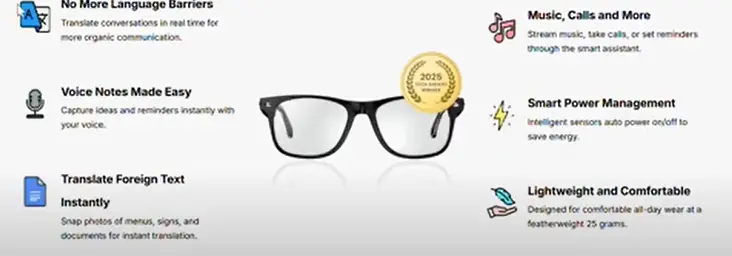
The Vital AI Smart Glasses are marketed as AI-enabled wearable tech that can do things like:
- Translate over 35+ languages on the spot
- Connect to your smartphone via Bluetooth
- Let you ask questions and get voice responses via ChatGPT integration
- Play music and take calls with hidden bone conduction speakers
- Display notifications and weather updates in real time
They come in a pretty minimal, modern design, kind of like a cross between Ray-Bans and something a startup CEO would wear at a TED Talk.
My Real Experience With Vital AI Smart Glasses
Let’s break this down, the good, the bad, and the seriously questionable.
What I Liked:
- They actually look good. This surprised me. The design is clean and not overly bulky like some older smart glasses I’ve seen. They didn’t scream “tech gadget.”
- Music playback is clear. The built-in bone conduction speakers are surprisingly decent. I could listen to music or take calls without blasting it out loud for everyone else.
- ChatGPT integration works (sometimes). I asked basic questions and got decent responses, like the weather or quick facts. Pretty cool when it works.
What I Didn’t Like:
- Translation? Not reliable. I was excited about the real-time language translation feature, but it was super inconsistent. Sometimes it picked up the wrong words or took too long to respond. Not great in real-life conversations.
- Laggy performance. It’s clearly still early-stage tech. The glasses froze a couple of times while trying to use the voice assistant, and reconnecting to Bluetooth was a hassle.
- Limited AI functionality. While they call them “AI Smart Glasses,” most of what they do still relies on your phone. It’s not as seamless or independent as they make it sound.
- Battery life is short. After just 3–4 hours of mixed use (music, notifications, assistant), I had to charge them again.
Is Vital AI a Scam?
Not exactly a scam, the Vital AI Smart Glasses do exist and have some working features. But are they worth the high price tag? In my opinion: not yet.
It feels like the brand is riding the AI hype wave without delivering truly next-gen functionality. There’s no augmented reality (AR), no visual display overlay, it’s mostly voice-based AI tools baked into a decent-looking Bluetooth headset.
Also, good luck finding legit reviews or a solid customer support line. The company behind Vital AI doesn’t provide much transparency about where the glasses are manufactured, and I struggled to find real tech specs.
Conclusion: Are Vital AI Smart Glasses Worth It?
Only if you love experimenting with new tech.
If you’re a tech nerd like me who’s curious about wearable AI, you might enjoy playing around with these glasses. But if you’re expecting polished, Apple-level innovation or real-time language translation that just works, you’ll probably be disappointed.
They look cool, the sound quality is decent, and the ChatGPT assistant is fun to try, but the overall execution still feels beta-level at best.
Check out the Frownies Patch I reviewed earlier.