
Nearly 9,000 five-star reviews.
A $75 bottle.
And a bold promise: molecular-level hair repair in just four minutes.
That alone is enough to make anyone curious about the K18 Leave-In Molecular Repair Hair Mask. I kept seeing it everywhere, salons, TikTok, and recommendation lists for damaged hair. The claims sounded impressive, but also a little too polished. So I decided to look beyond the hype and really understand what this product is, what it does, and whether the science actually supports the marketing.
This review is based on real research, ingredient analysis, user feedback, and how the product performs in real-life use, not just brand promises.
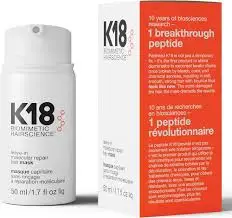
First Impressions: Luxury Price, Minimalist Product
Let’s be honest: $75 for a small bottle of leave-in treatment is not a casual purchase.
When you first get the K18 Leave-In Molecular Repair Hair Mask, the packaging is simple, almost clinical. No flashy design, no heavy fragrance, no thick creamy texture like traditional deep conditioners. It feels more like a treatment than a mask in the usual sense.
And the directions are different too.
No conditioner.
No rinsing.
Just apply, wait four minutes, and style as usual.
That alone makes it stand out from most hair repair products.
The Big Claim: “Clinically Proven Molecular Repair”
One of the biggest selling points of K18 is the claim that it works at a molecular level using a patented peptide called sh-Oligopeptide-78 (also branded as K18PEPTIDE).
According to the brand, this peptide reconnects broken polypeptide chains inside the hair structure, not just surface smoothing or temporary coating.
Now here’s where things get nuanced.
The peptide technology itself is scientifically plausible, and dermatologists and cosmetic chemists generally agree that peptide-based repair has real potential. The product was reportedly developed over about a decade in a biotech lab, which adds credibility to the concept. However, when independent analysts looked for publicly available, peer-reviewed clinical trials specifically proving the peptide works exactly as marketed, those studies were not easy to locate in full public detail.
That doesn’t automatically mean the product doesn’t work.
It just means the “clinically proven” language may be broader than what consumers assume.
K18 vs Bond Repair Products (Like Olaplex)
A lot of people compare K18 to bond builders.
Traditional bond repair products mainly focus on repairing disulfide bonds in the hair. K18’s peptide is marketed as working deeper by targeting polypeptide chains, which are part of the hair’s structural framework.
In simple terms:
- Bond repair = fixing certain structural links
- Peptide repair = attempting to rebuild broader protein structure
That’s a more advanced claim, and in theory, it explains why heavily bleached or chemically processed hair tends to respond better to K18 than mildly dry hair.
Ingredient Concerns: Are They Actually Bad?
Some people get worried when they see ingredients like:
- Phenoxyethanol
- Geraniol
- Linalool
- Alcohols
At first glance, these sound intimidating. But in formulation context, they are not unusual.
Phenoxyethanol is a common preservative used in many high-end hair and skincare products. Geraniol and linalool are fragrance components that can be irritating for very sensitive scalps, but they are widely approved for cosmetic use.
The controversial alcohols in K18 actually serve a functional purpose, they help the peptide penetrate the hair shaft instead of just sitting on the surface. That’s likely why the texture feels lightweight instead of heavy or greasy.
If you have a sensitive scalp, though, patch testing is still a smart idea.
Real Results: What Users Actually Notice
Looking at thousands of K18 Leave-In Molecular Repair Hair Mask reviews, a pattern shows up.
People with:
- Bleach damage
- Heat damage
- Relaxed or chemically processed hair
often report noticeable improvements in softness, elasticity, and breakage reduction.
Meanwhile, people with relatively healthy hair sometimes say:
- “It felt nice but not life-changing”
- “Good, but not worth $75”
- “Similar to a deep conditioner for my hair type”
This difference matters a lot.
K18 seems to perform best when the hair is genuinely damaged, not just dry or frizzy.
The TikTok Dupes Problem
There are many so-called “K18 dupes” trending online, especially on TikTok. But here’s the key issue: most of them do not contain the patented sh-Oligopeptide-78 peptide.
They may mimic the texture or branding language, but without the same peptide technology, they are fundamentally different products.
So while a dupe might work as a conditioner, it’s not technically replicating the same mechanism K18 claims to use.
The Price: Is $75 Justified?
This really depends on your hair type.
If your hair is severely damaged from bleaching, coloring, or chemical treatments, the cost may feel more reasonable because you’re using a targeted repair treatment rather than a standard conditioner.
But if your hair is:
- Low damage
- Virgin hair
- Only mildly dry
you may not see results dramatic enough to justify the price. In that case, a high-quality deep conditioner could deliver similar softness for a fraction of the cost.
What K18’s Disclaimers Quietly Suggest
Something many people overlook is that even the brand’s own guidance emphasizes cumulative use and results varying based on hair condition.
That alone tells you this is not an instant miracle fix, despite the “4-minute repair” headline.
Hair structure doesn’t permanently transform overnight. Even advanced cosmetic science still works within biological limits.
Conclusion
So, is K18 worth it?
If your hair is heavily bleached, processed, or breaking easily, it may be one of the few treatments that actually feels different from a regular mask.
If your hair is relatively healthy, it might feel like an expensive luxury rather than a necessity.
In the end, K18 Leave-In Molecular Repair Hair Mask isn’t a miracle cure, but it’s also not empty hype. It’s a specialized repair treatment that works best for the people who actually need deep structural hair recovery, not just everyday conditioning.
Check out the Frownies Patch I reviewed earlier.